


I enjoy painting on river rocks because the smooth surface makes it easy to add simple details.
Nature themes fit well since the shapes already suggest things like hills or water.
I put together 18 ideas that focus on basic illustrations such as trees leaves and small animals.
Most of these use just a few colors and do not require special tools.
They are the kind of projects I work on when I want something quick and relaxing to do.
Chick Painted River Rock for Spring Displays
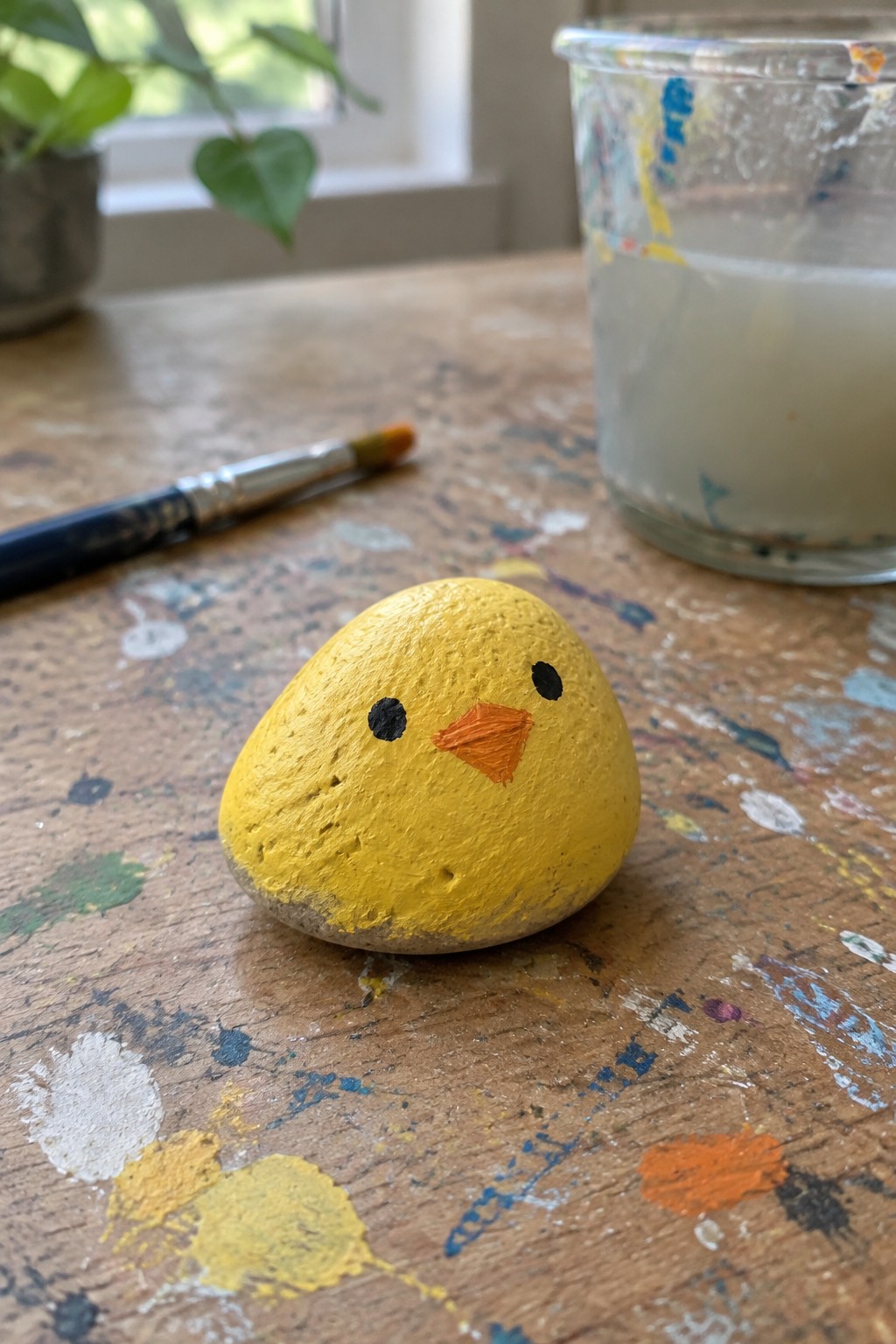
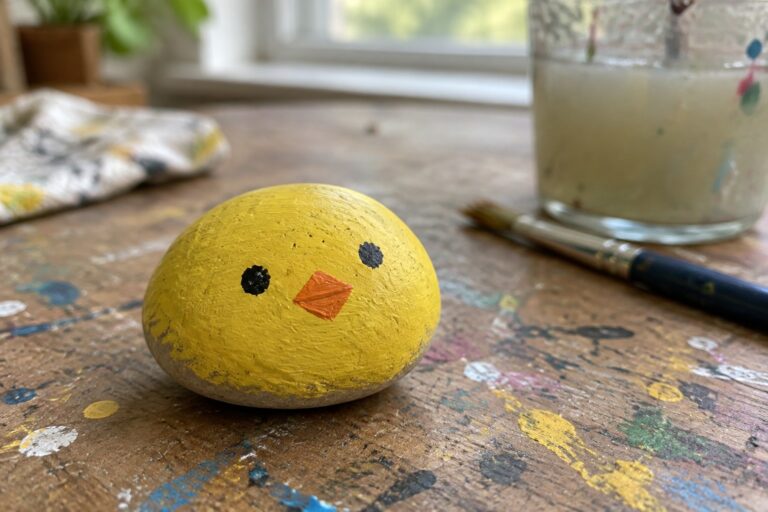
A small rounded river rock painted solid yellow creates a chick design using just two black dots for eyes and a simple orange triangle beak. The pebble’s natural curve forms the body while the smooth surface lets the paint sit evenly without extra prep. This approach falls into the animal rock category with minimal details that keep the focus on the stone shape itself.
What makes this idea useful is how the rounded edges help the finished rock sit steadily in a planter or along a garden path. The basic color areas and small motifs adapt easily to other pebble sizes or even turn into a duckling by changing the beak angle slightly. For garden decor this kind of painted rock adds a quick seasonal accent without needing much space or advanced brushwork.
Strawberry River Rock Painting

A smooth oval river rock works as the base for this strawberry design by letting its rounded form stand in for the fruit itself. The painter covers the main surface in solid red, adds scattered white dots to suggest seeds, and finishes the top with a green crown of pointed leaf shapes. This food-inspired approach keeps the motif simple and recognizable while following the stone’s natural curve.
What makes this idea useful is how well it suits garden beds, planters, or porch pots as a small seasonal accent. The basic color blocks and dot pattern adapt easily to other rock sizes or shapes, and the same fruit motif could shift into a set of berries or vegetables for variety. The small scale also makes the finished piece easy to move around or include in a nature-themed collection without needing extra display space.
Ladybug River Rock Painting
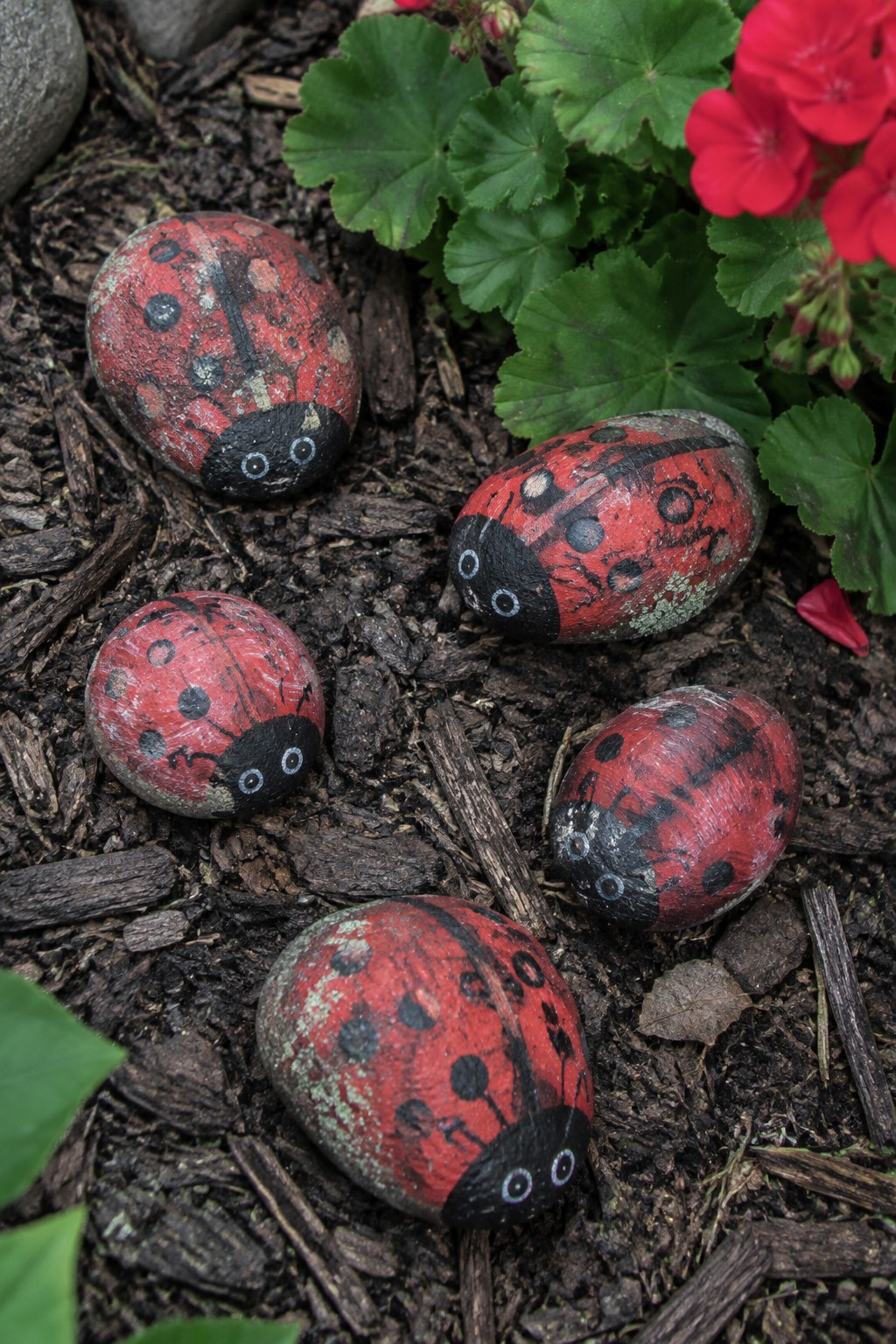
Ladybug designs painted on smooth, rounded river rocks create simple bug accents that suit garden beds or planters. The oval shape of each stone supports the classic ladybug body, with red covering the main surface and black spots scattered across it. A solid black area at one end forms the head, using small white circles with black centers for eyes. This style fits the bug rock category and stays clearly recognizable as painted stones rather than figurines.
What makes this idea useful is how the rounded rock shape already suggests the insect body, so only basic color blocking and dots are needed. The design adapts easily to different stone sizes by changing the number or size of spots. For garden decor, these rocks blend into mulch or sit near potted plants without looking out of place. The same motif can be reworked onto flatter stones by stretching the wing lines or used as a quick project for multiple rocks at once.
Sunset Landscape Painted on an Oval River Rock

A smooth oval river rock serves as the base for this miniature landscape painting. The design shows a sunset sky in blended purples and oranges above a body of water, with dark pine tree silhouettes along the far shore and matching reflections below. A simple white circle marks the sun at the center, and the natural curve of the stone helps the horizon line sit evenly across the surface. This belongs to the nature-inspired decorative stone craft category.
The elongated shape gives the scene room to spread without feeling cramped. You could repeat the same gradient and silhouette approach on a flatter stone or shrink the trees for a smaller pebble. A painted rock like this works especially well on a windowsill or nestled among real stones in a planter. The motif could easily be changed into a mountain range at dusk or a quiet forest edge by adjusting the water line and adding more tree layers.
Painted Mushroom Rocks for Garden Planters
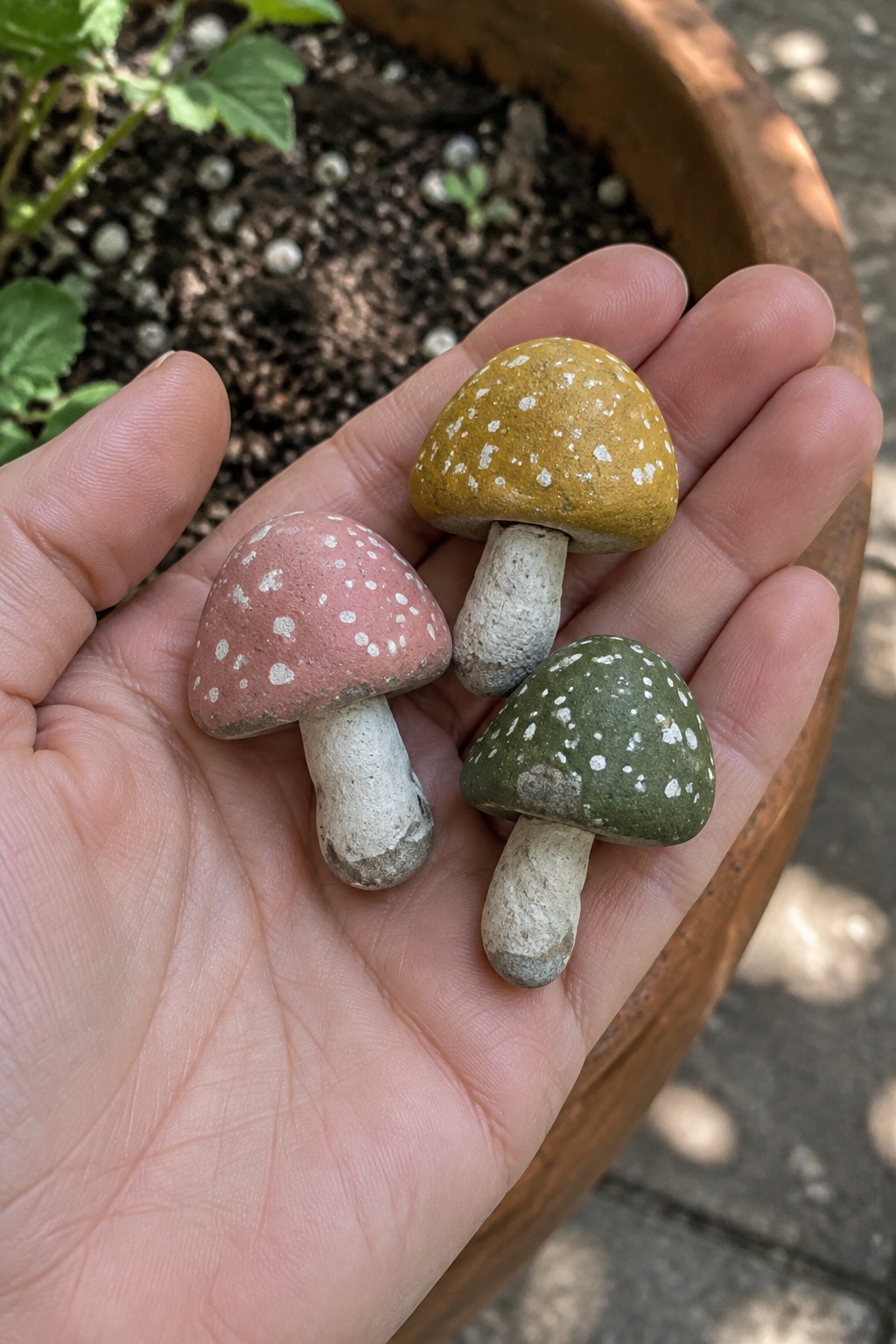
River rocks painted as mushrooms use the stone’s rounded shape for the cap and the narrower base for the stem, with simple color blocking in muted tones like rose, ochre, and green plus scattered white dots to suggest natural speckling. The design works because the paint follows the curved surface without needing fine detail, and the off-white stems ground each piece as a miniature toadstool. This approach fits the decorative stone craft category and creates a small set of nature-inspired pieces meant for outdoor or planter use rather than indoor display only.
What makes this idea useful is how the compact size lets the rocks sit inside pots or along garden edges without competing with plants. The basic dot pattern and limited color palette make it simple to adapt by swapping in different cap colors or scaling the motif up onto larger stones for path markers. For garden decor, these painted rocks work especially well tucked into mulch or around the base of containers where they add a woodland element without requiring perfect symmetry. The same idea could be simplified further by painting just the caps on flatter pebbles for a quicker version.
Frog Face on a River Rock
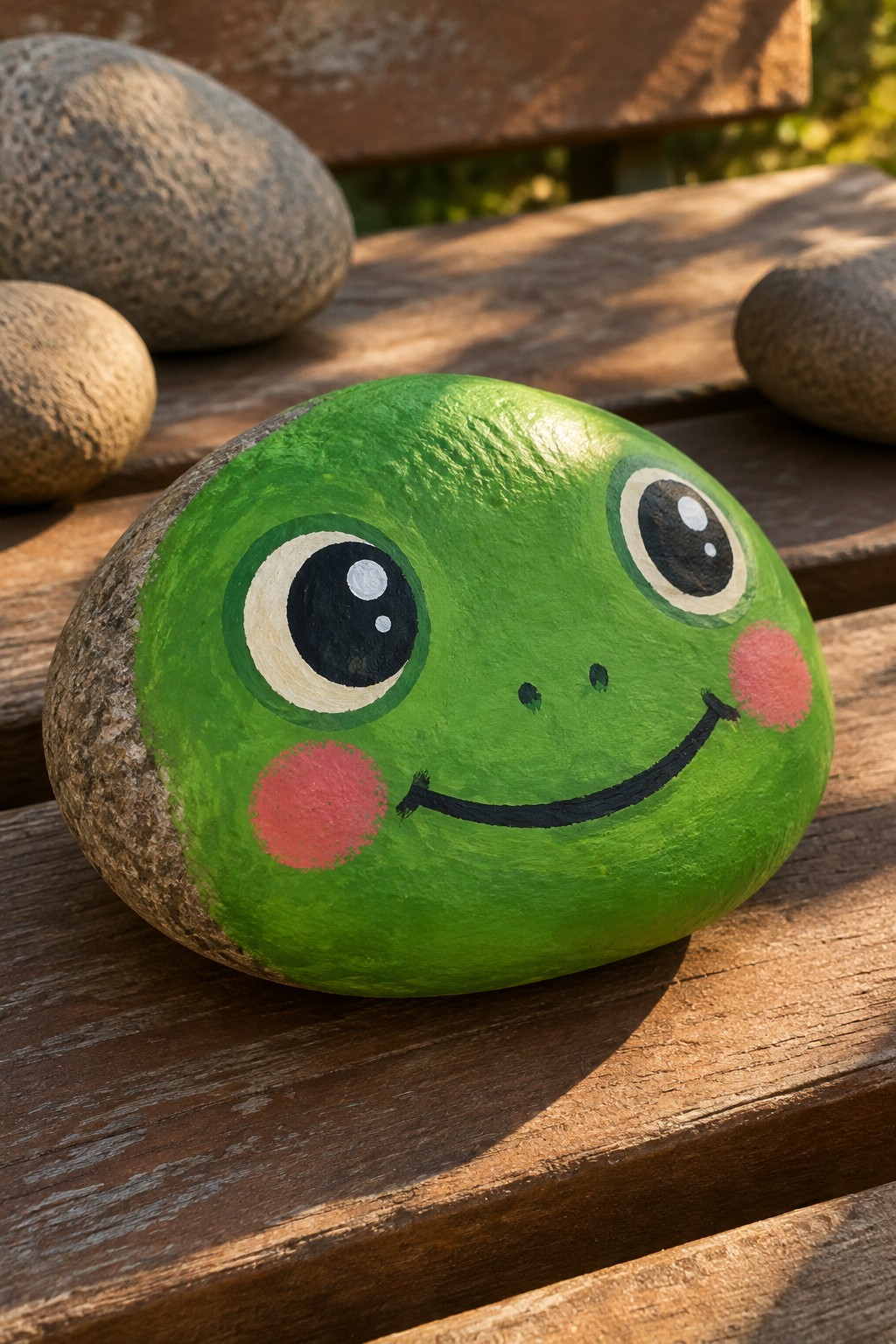
A rounded river rock gets a bright green base coat across most of its surface to create a frog face. Large eyes with white rings and black centers sit near the top, while small pink circles mark the cheeks and a single curved line forms the mouth. The natural curve of the stone helps the painted features wrap around the form without needing extra shaping or layers.
This approach works well for garden beds, planter edges, or porch steps where a small pop of color stands out. The simple color blocking and basic outlines make it easy to repeat on rocks of different sizes or adjust the eye placement if the surface is flatter. You could change the cheek color or add small dots for variety while keeping the same frog layout.
Fern Frond on an Oval River Rock
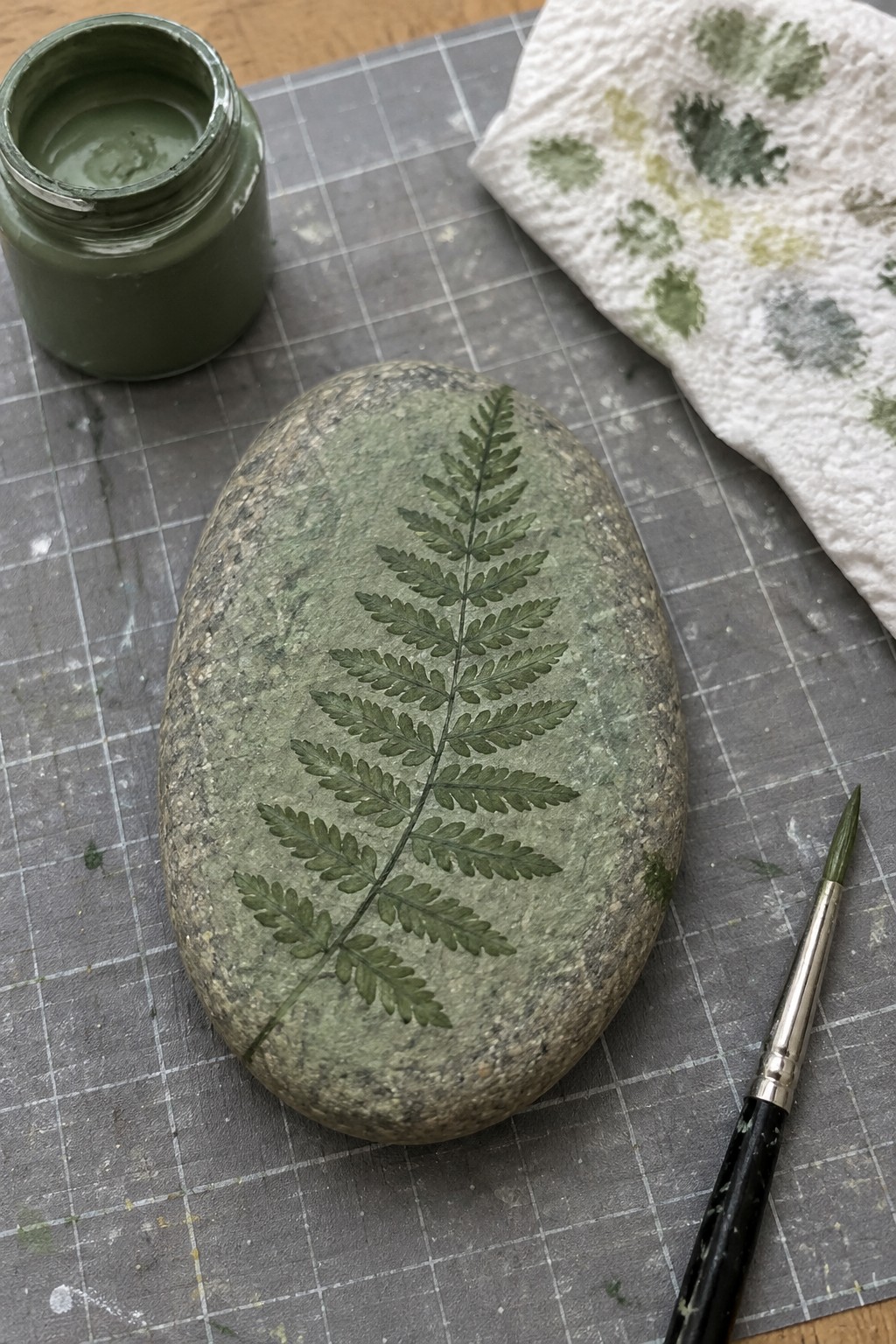
Painting a detailed fern frond across an oval river rock creates a clean nature illustration that uses the stone’s natural length and curve. The design runs vertically with layered fronds that follow the rock’s shape rather than fighting it. Green paint in slightly different tones gives the leaves dimension while the stone’s rough texture remains visible in unpainted areas. This approach works as a garden decor rock or small accent piece for planters and shelves.
The rock shape does a lot of the work here since the elongated form already matches a fern’s growth pattern. You could adapt the same motif to a flatter stone by shortening the fronds or use a single darker green for a simpler version. This type of painted rock fits well in mulch beds, on porch steps, or as part of a larger collection of nature-themed stones. The visible stone texture through the paint keeps the finished piece from looking too polished.
Sunflower Motif on a Rounded River Rock

A sunflower rock painting works well on a rounded river rock because the curved surface lets the large yellow petals wrap naturally around the stone. The design uses bold color blocking with bright yellow petals, dark brown centers dotted for texture, and green leaves filling the gaps between flowers. This approach fits the flower rock category and turns an ordinary garden stone into a nature-inspired accent that blends with real plants.
What makes this idea useful is how the multiple sunflowers fill the rock without needing a flat surface, so the same motif adapts easily to different sizes of stones. For garden decor this kind of painted rock sits nicely in flower beds or along paths where it picks up the yellow tones from surrounding marigolds. The simple petal shapes could be simplified further for smaller pebbles or swapped for other blooms like daisies to match different garden themes.
Wave Design on an Elongated River Rock
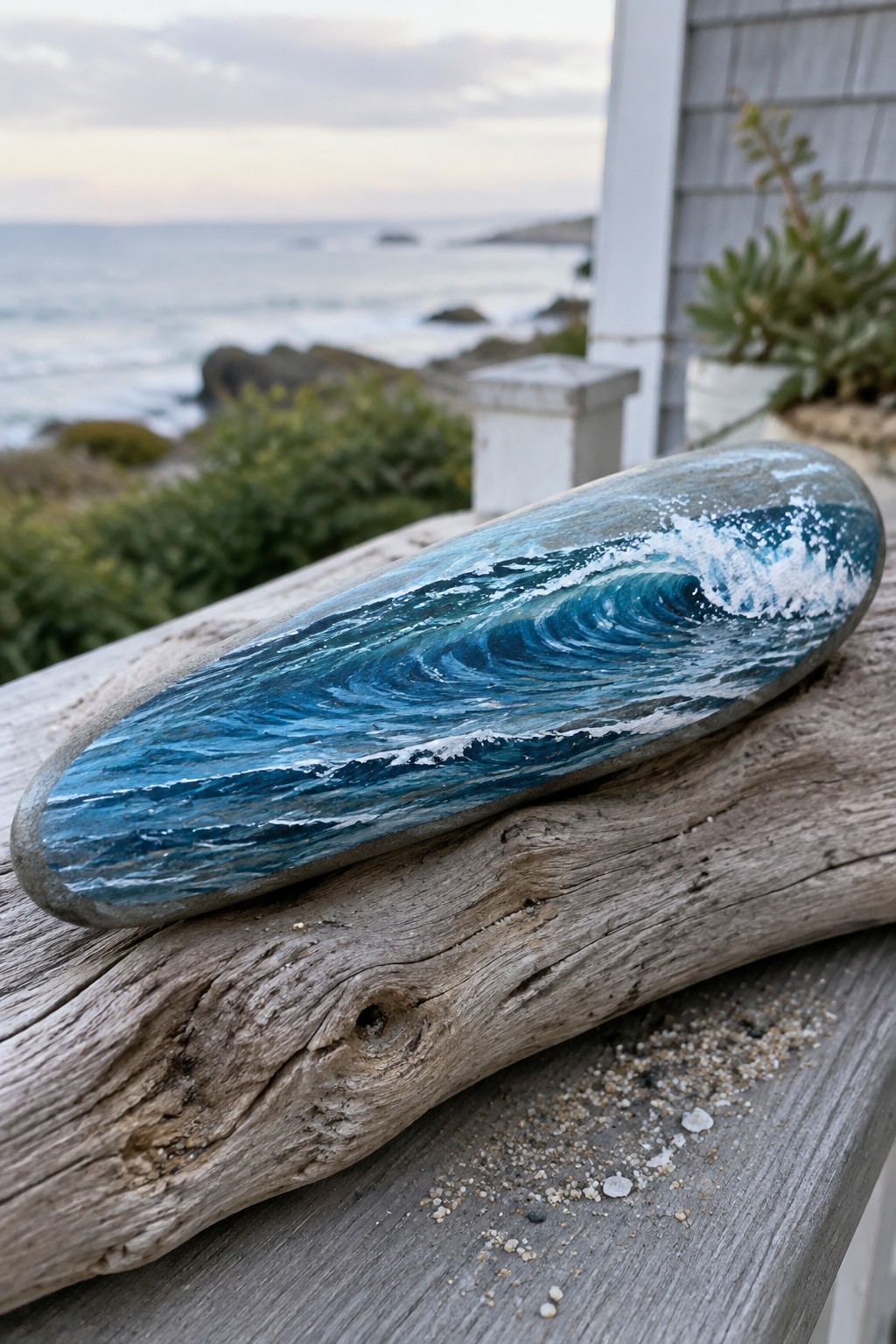
An elongated, smooth river rock works well for a wave scene because its narrow shape matches the horizontal flow of water. The design uses several blue tones to build a curling wave with white foam along the crest and trailing edges. The paint follows the stone’s natural curve so the wave appears to move across the surface rather than sit flat on top. This approach keeps the project in the nature-inspired category by using the rock itself as the ocean surface.
The rock shape does a lot of the work here since the length already suggests motion. You can repeat the same wave on any similar oval stone by blocking in the darker water first then adding the white foam last. A painted rock like this works especially well as a shelf accent or placed among real seashells in a bathroom or coastal display. The motif could easily be changed into a simpler ripple pattern if you want to make several matching pieces for a garden path.
Bumblebee Design on a River Rock
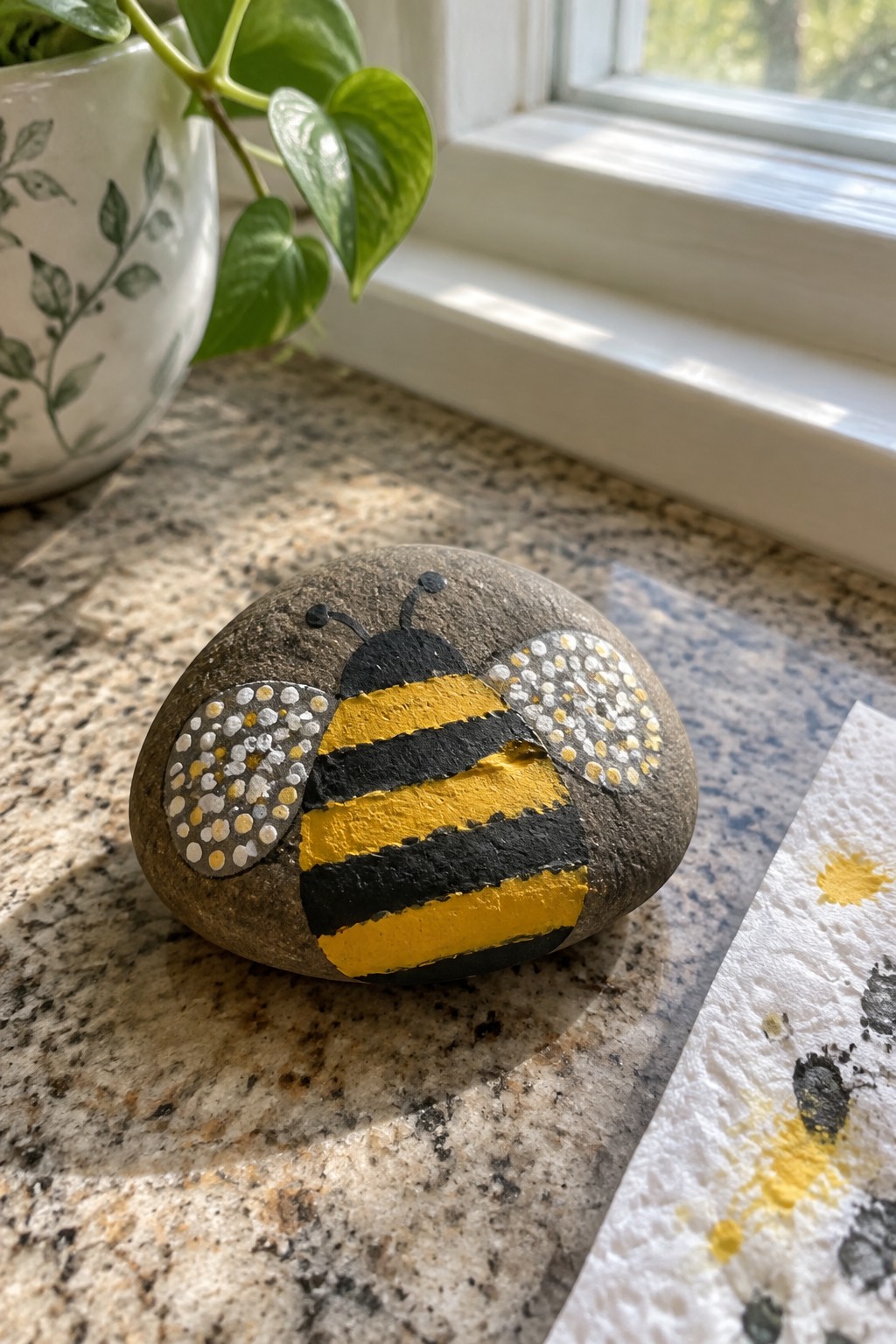
A smooth, rounded river rock painted as a bumblebee creates a compact bug rock that fits the nature-inspired theme. The stone’s oval form allows the yellow and black stripes to follow the curve naturally, while the black head with simple antennae sits at one end. White and yellow dotted wings placed on either side complete the motif without requiring extra space or flat surfaces. This approach keeps the project focused on the rock’s existing shape rather than fighting it.
The rock shape does a lot of the work here since most oval stones already suggest a bee’s body. You can adapt the same stripe pattern and dotted wings to smaller pebbles for a set or enlarge the black sections on a bigger stone for more impact. A painted rock like this works especially well tucked into planters, along garden paths, or grouped with other insect designs for seasonal porch displays. The simple color blocking also makes it easy to swap the bee for other bugs like ladybugs or dragonflies using the same base layout.
Fox Face on an Oval River Rock
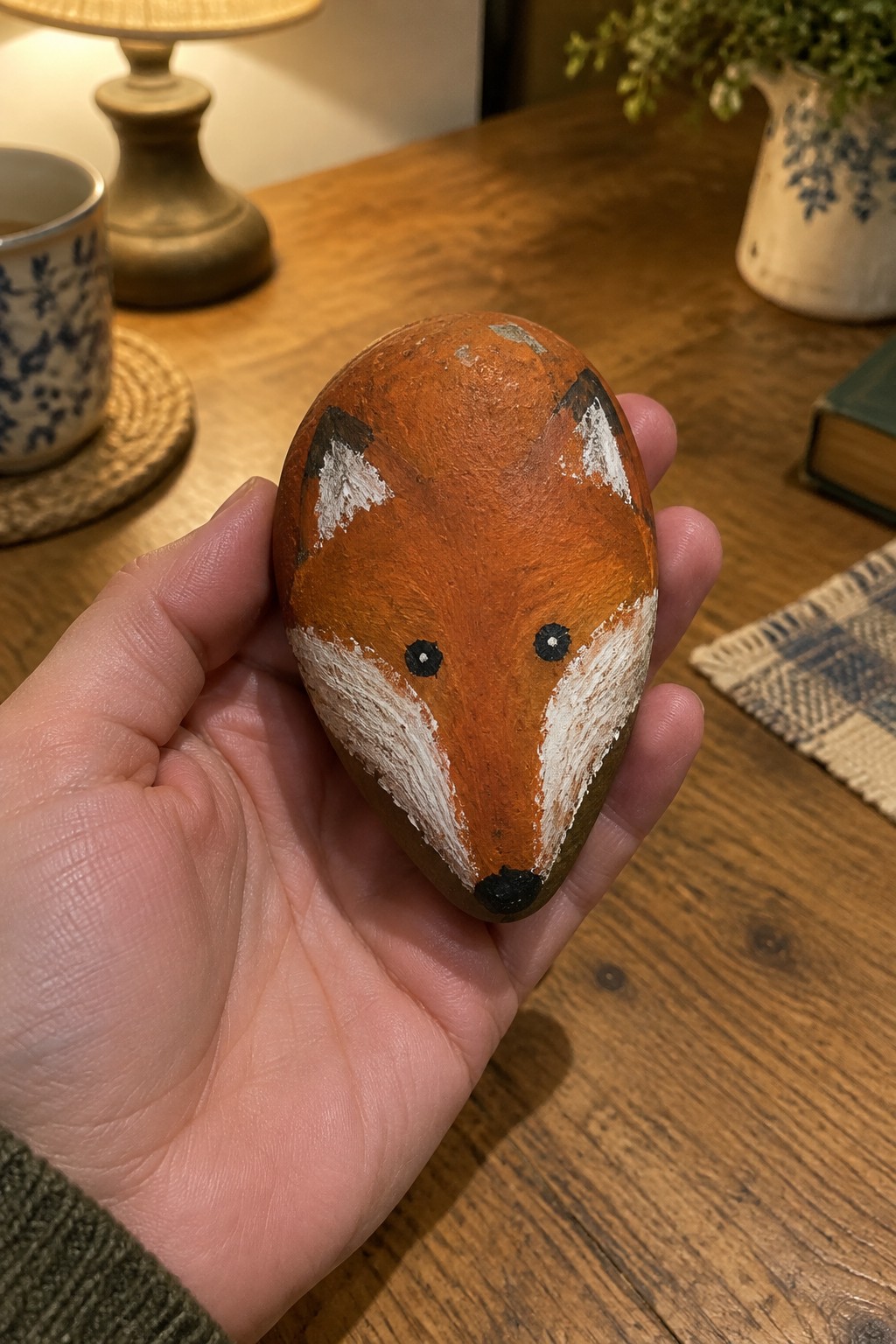
A fox face painted on an oval river rock uses the stone’s tapered end as the snout and its rounded sides as the head. The design relies on broad orange coverage with white blocks for the muzzle and ear interiors plus small black dots for the eyes and nose. The paint follows the stone’s natural curve without extra outlines, which keeps the motif simple and readable from a short distance. This approach fits the animal rock category and works well because the smooth surface accepts color evenly while the shape itself supplies the basic proportions.
The rock shape does a lot of the work here since the pointed tip becomes the snout without any carving. A painted rock like this works especially well as a shelf accent, tucked into a planter, or placed along a garden path where its small size fits easily among other stones. The simple color blocking makes this easy to adapt by changing the ear color or muzzle shape to create a different woodland animal on a similar oval stone. The same layout can be scaled up on a larger rock or simplified further by dropping the inner-ear details.
Nest and Speckled Egg River Rocks
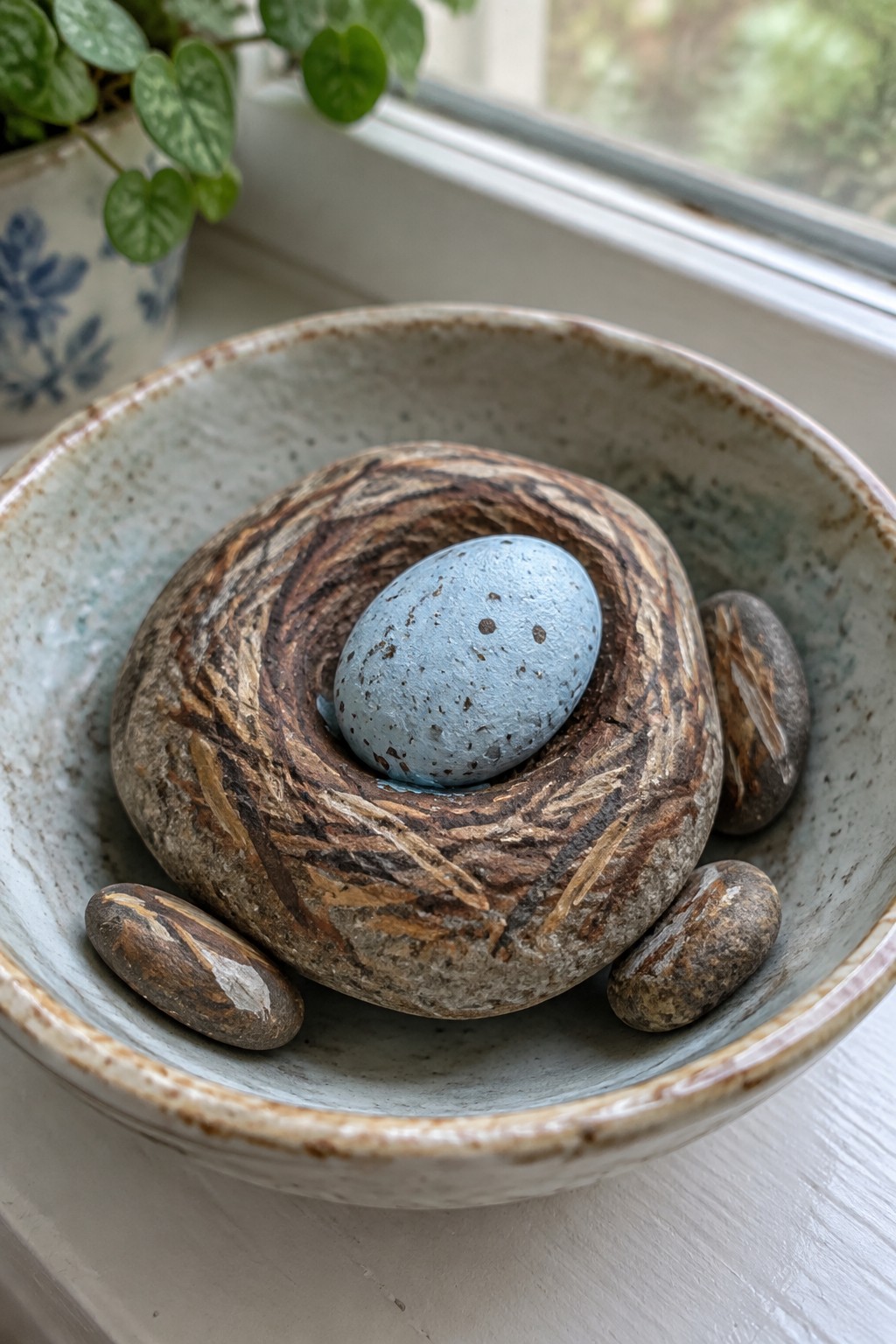
A larger river rock receives layers of brown, tan, and gray paint in loose, overlapping strokes that follow its curved surface and create the look of woven twigs. The center holds a shallow depression where a smaller oval river rock painted soft blue with dark speckles rests like an egg. Two smaller stones sit beside the nest to complete the grouping. This approach uses the natural rock shapes and simple color blocking to build a nature scene without needing fine detail work.
The rock shape does a lot of the work here because the nest stone already has a hollow that holds the egg rock in place. You can adapt the same twig pattern onto flatter stones for a shelf display or use smaller pebbles to make a set that fits inside a plant pot. The speckled egg stands out clearly against the darker nest, so changing the blue to other muted tones lets you match different seasons while keeping the same layout. A clustered set like this works especially well for garden beds or porch displays because the pieces stay together without extra hardware.
Pine Tree Silhouette on a River Rock
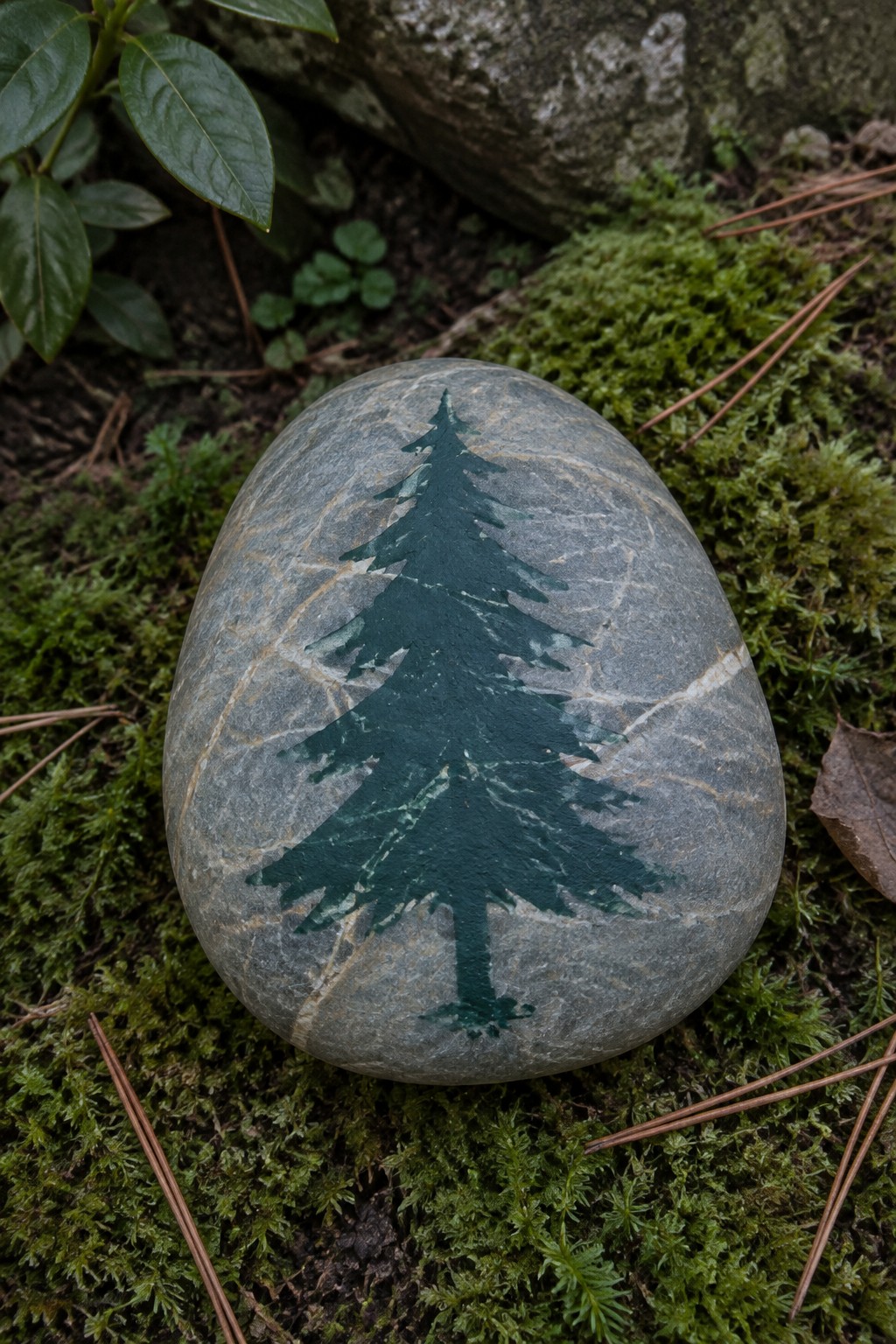
A smooth, oval river rock serves as the base for this nature-inspired project, with a dark green pine tree painted across its surface in simple color blocking. The design uses the stone’s natural gray tones and subtle veining to create contrast, letting the tree shape stand out without extra outlines or shading. This approach fits the garden decor rock category, where the motif draws directly from outdoor scenery rather than adding faces or patterns.
The rounded stone shape helps the tree design feel balanced because the wider top section matches the spread of the branches. A painted rock like this works especially well placed in a planter, tucked into mulch, or set on a porch step as a small accent. You could adapt the idea by swapping the pine for an oak or fir outline or scaling it down onto smaller pebbles for a matching set. The clean motif keeps the focus on the nature illustration, which tends to photograph clearly for sharing.
Mountain Range on a River Rock
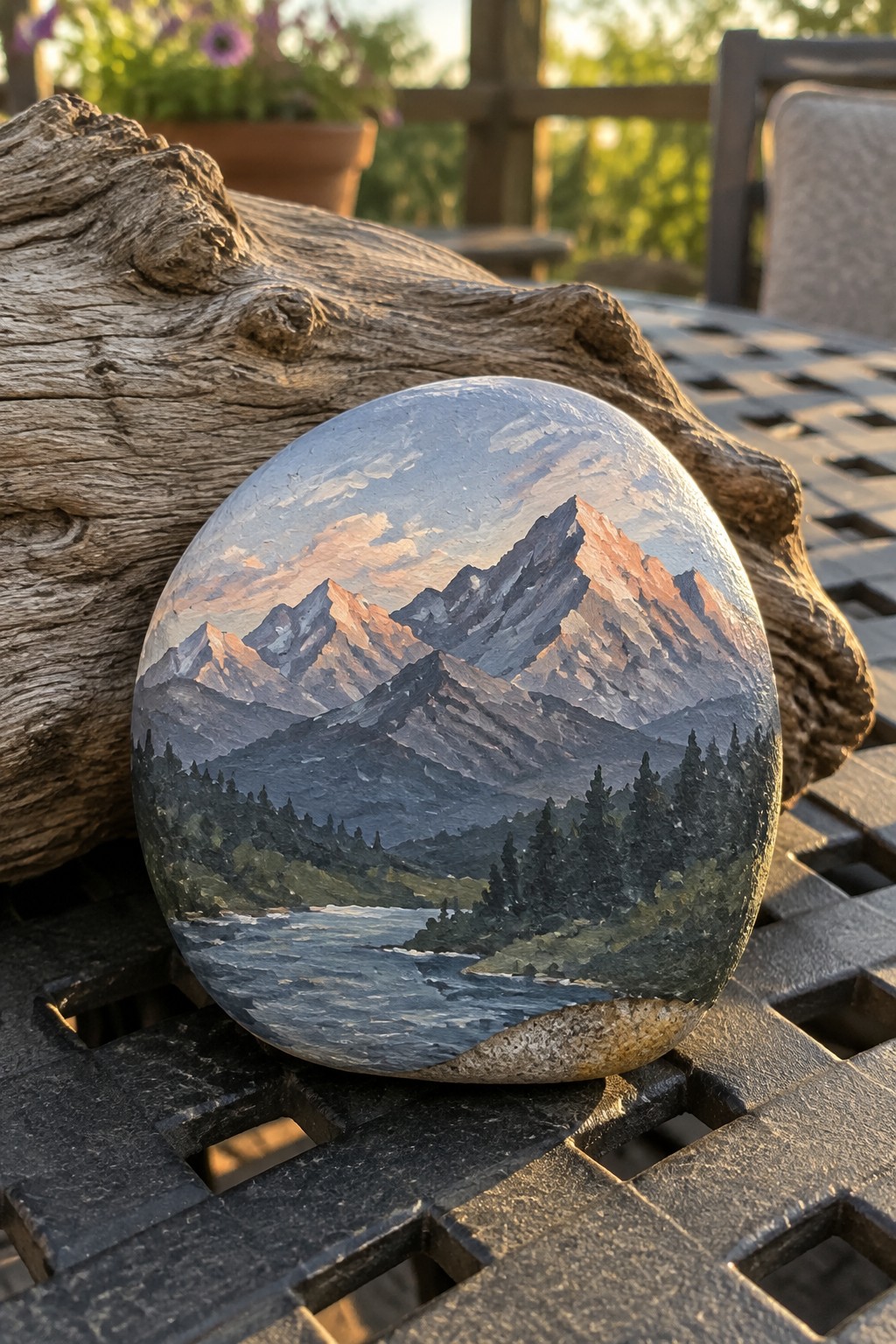
A smooth, oval river rock works well for this landscape project because its rounded surface lets the painted mountains curve naturally across the stone. The design uses layered peaks with warm highlights on the ridges, dark forested slopes below, and a river running along the bottom edge. Simple color blocking and visible brush strokes give the scene depth without needing tiny details. This fits the nature illustration category as a decorative stone that can sit on a shelf, desk, or garden ledge.
The rock shape does a lot of the work here by letting the landscape wrap slightly around the edges instead of sitting flat. A painted rock like this works especially well as a patio accent, planter topper, or small gift for someone who likes hiking or camping. You could simplify the same idea onto a flatter stone with fewer peaks or swap the sunset tones for a daytime sky. The small scale makes it easy to try on any rounded river rock you already have without buying special supplies.
Wildflower Meadow on an Oval River Rock
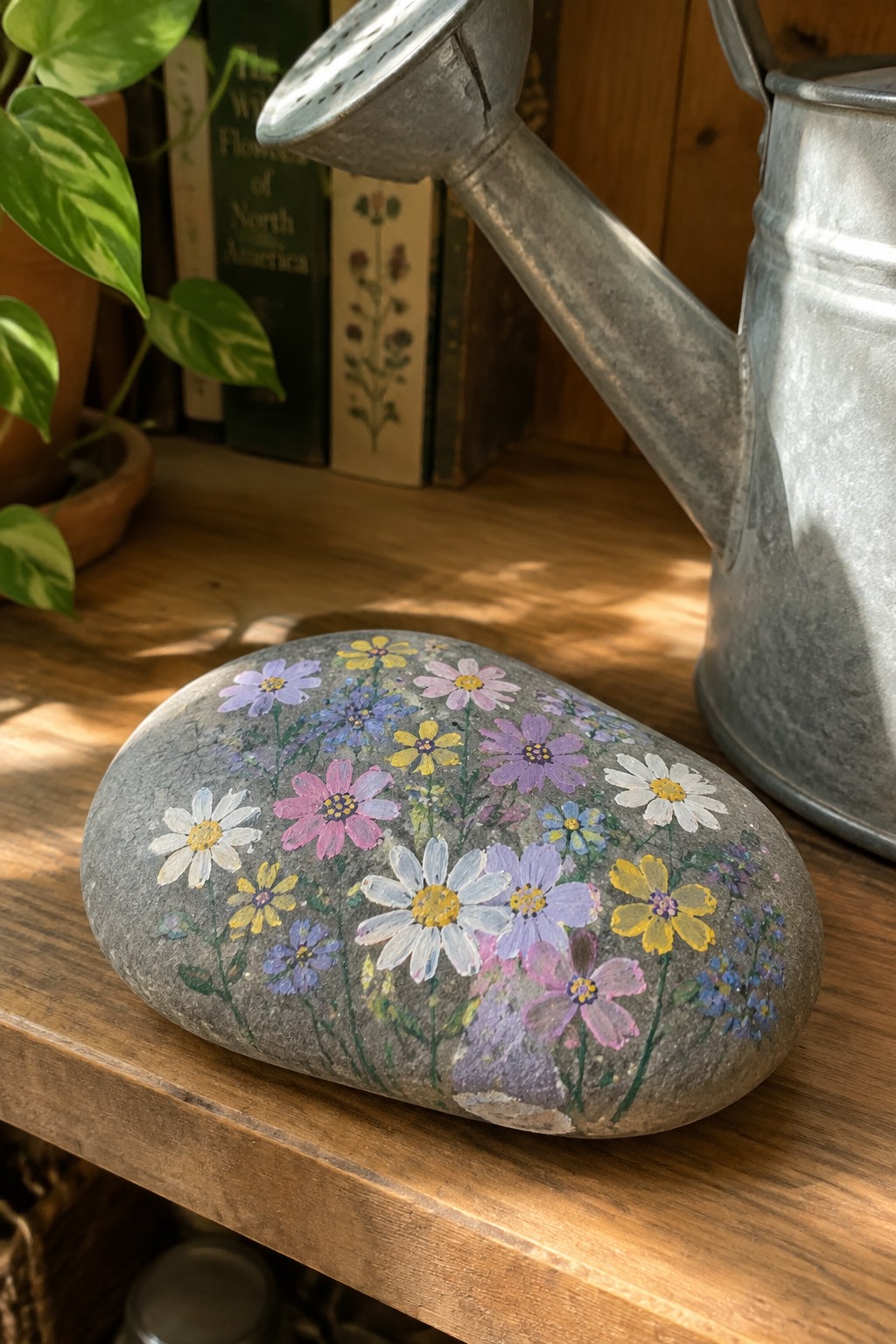
A smooth oval river rock works well for this project because its rounded shape and flat top surface let the painted flowers spread across the stone naturally. Multiple small blooms in white, pink, purple, yellow, and blue fill the surface, linked by thin green stems and leaves that curve with the rock’s form. The design fits the garden decor rock category and turns the stone into a compact piece of nature-inspired decoration.
What makes this idea useful is how the oval shape supports a full floral layout that looks balanced without extra framing. You could adapt it by reducing the number of flower types or shifting the colors to match plants already in your garden beds or planters. The small scale also makes the rock easy to place on shelves, porch steps, or as a single accent among real potted plants.
Monarch Butterfly Wing Rock
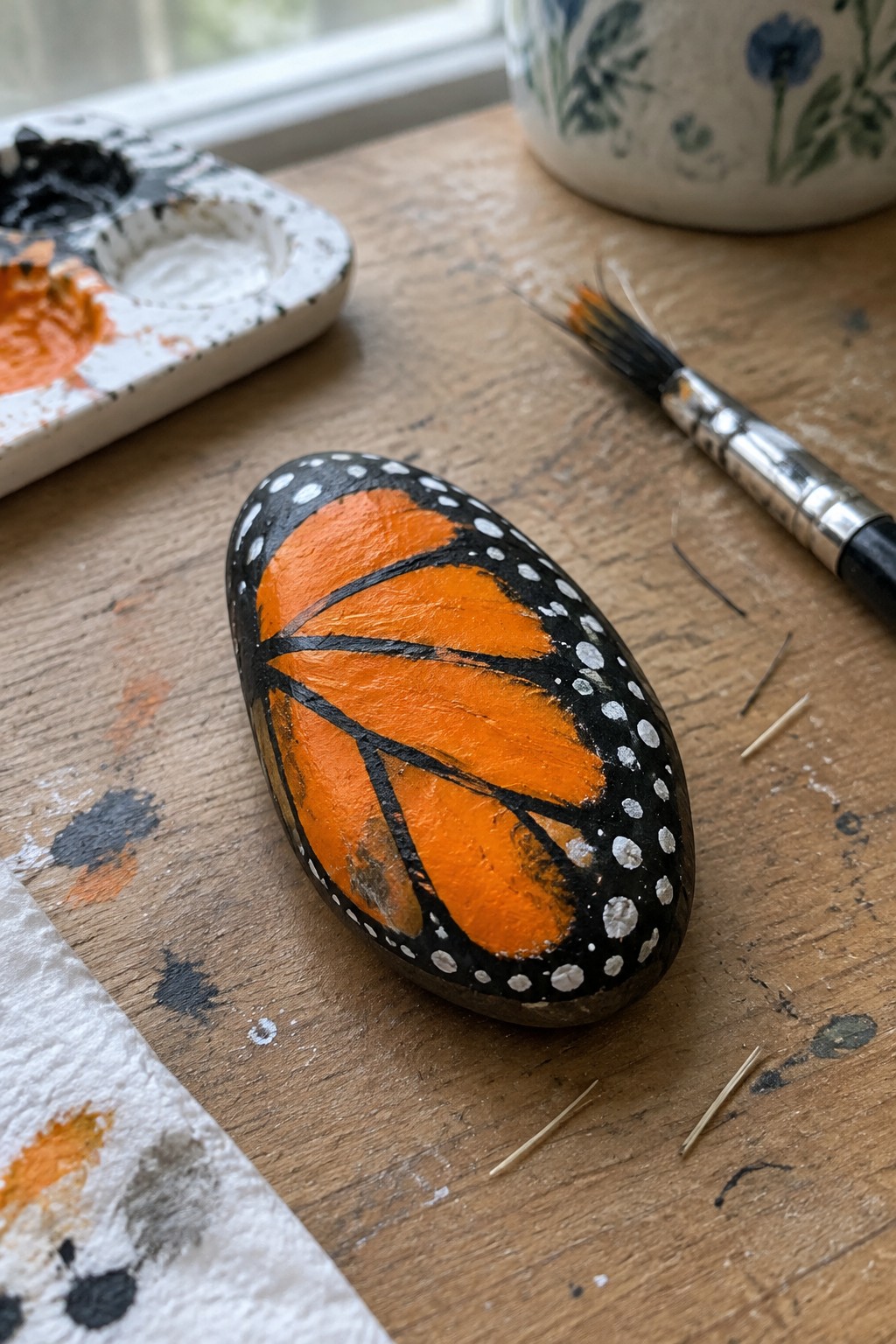
A smooth oval river rock makes a strong base for this monarch butterfly wing design. Orange paint fills the main sections while black lines form the veins and a border of white dots adds the signature edging. The curved surface of the stone helps the wing shape feel natural without extra shaping. This fits the nature-inspired animal rock category.
What makes this idea useful is how the rounded form already suggests a wing outline. The same color blocking could be simplified on a smaller pebble or expanded across a flatter stone for a different effect. A painted rock like this works especially well as garden decor tucked into flower beds or planters. The motif could easily be changed into other butterfly species by swapping the orange for different wing colors and adjusting the dot spacing.
Botanical Branch River Rock
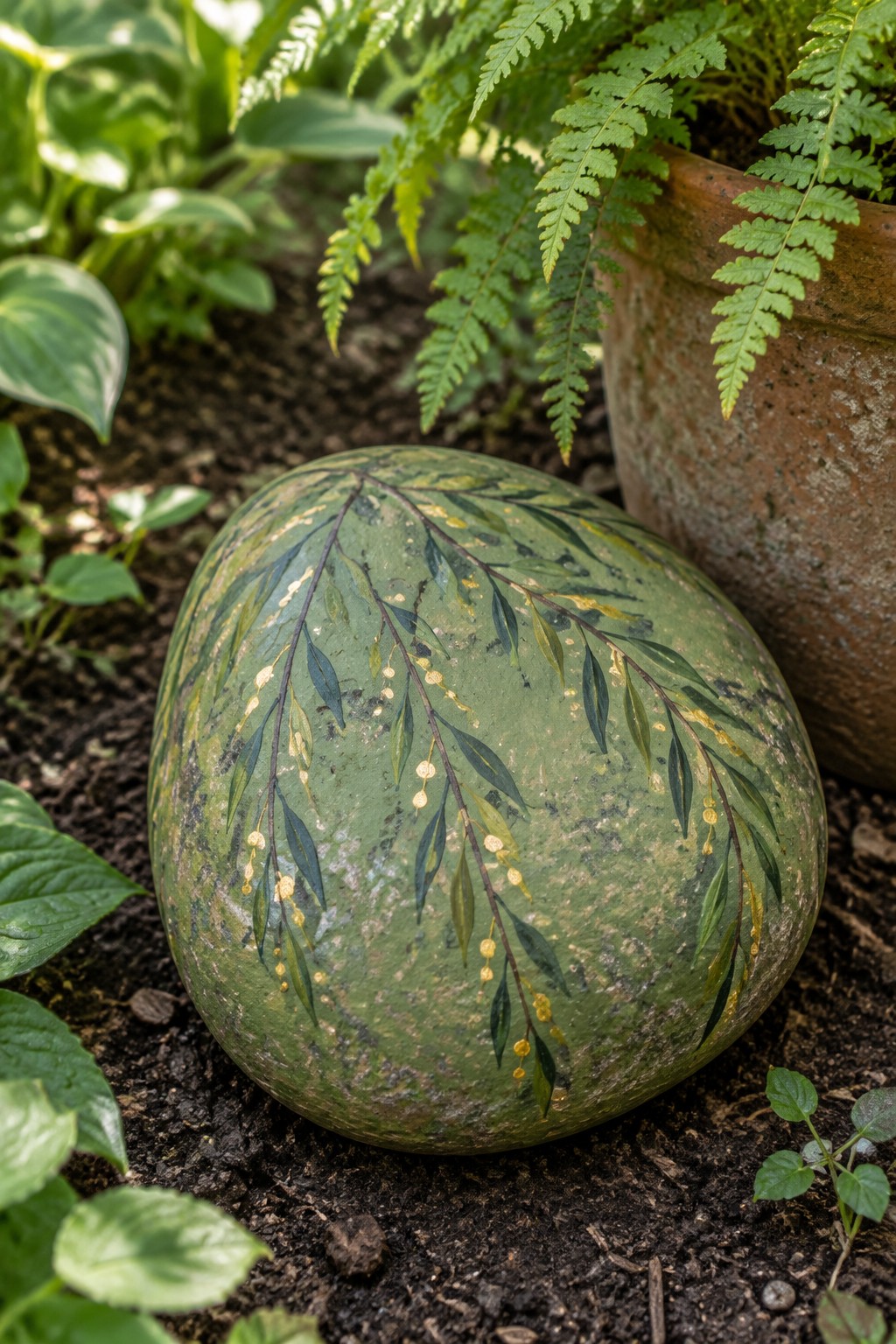
A rounded river rock painted in muted green creates a natural base for a branch motif that wraps across the curved surface. Darker stems support layered leaves in several green tones, while small yellow dots mark berry or bud clusters along each stem. The design uses the stone’s oval shape to let the branches trail in multiple directions without crowding.
This kind of painted rock works well nestled in mulch beds or set among potted plants on a patio. The simple stem-and-leaf layout can be shortened or lengthened to match different rock sizes, and the yellow accents can be swapped for other colors to match seasonal flowers. For garden decor, the muted green base helps the rock blend with real foliage instead of standing out as obviously painted.
Autumn Leaf Motifs on River Rocks
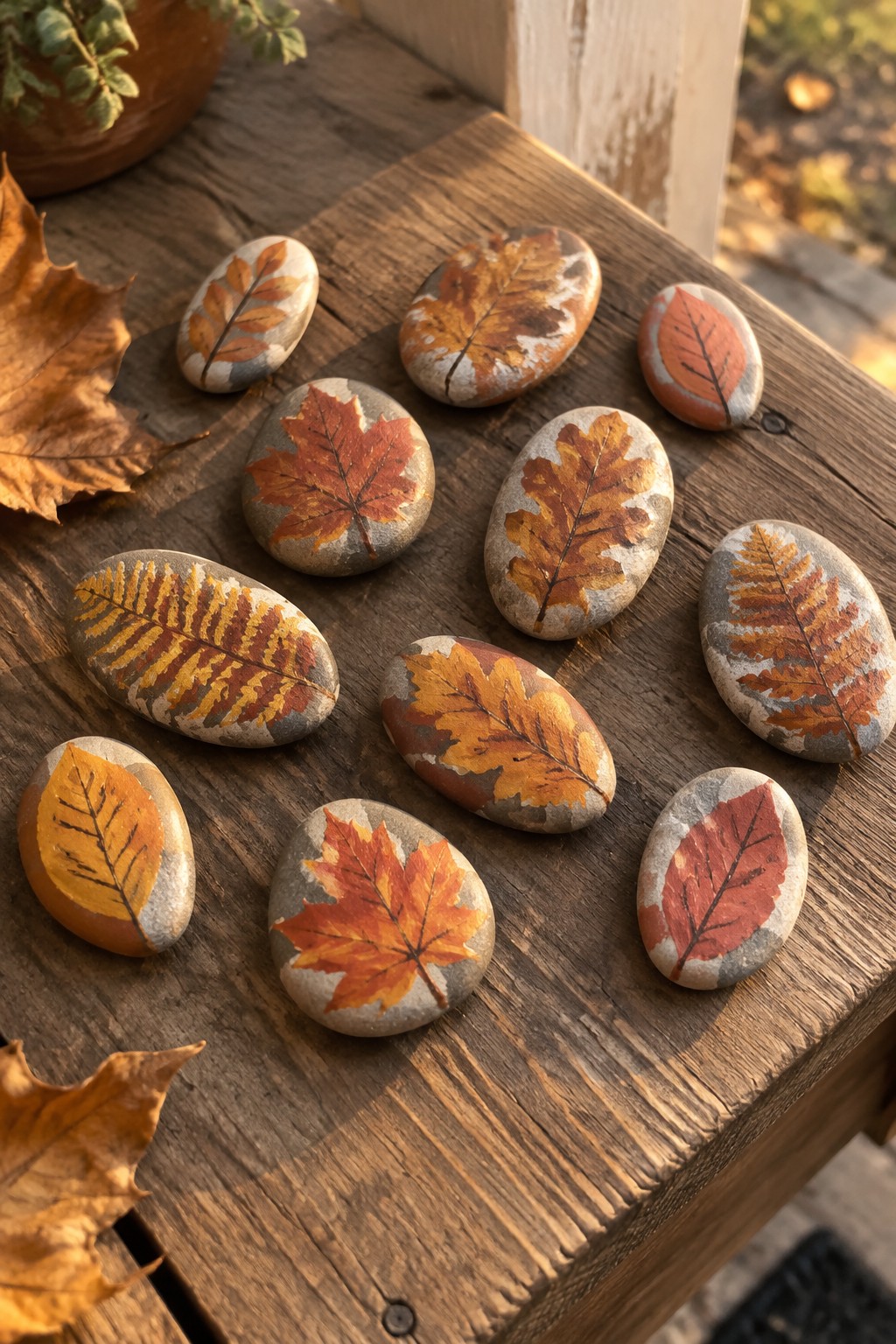
Smooth river rocks painted with fall leaves create a seasonal nature craft that uses the stone’s natural shape as the canvas. Oval and rounded stones work well because their curved surfaces let leaf shapes like maple, oak, and fern sit naturally without awkward cropping. The designs use warm oranges, yellows, reds, and browns with visible vein lines to mimic real foliage, leaving some stone exposed for contrast. This approach belongs to the painted rock collection category focused on nature-inspired illustrations.
What makes this idea useful is how easily the leaf motif adapts to different rock sizes and fall color palettes. The same style works in planters, along porch steps, or as small accents in flower beds where the rocks blend with actual leaves. You can simplify the veins to basic outlines on smaller stones or expand the design across larger ones for more impact. The rounded edges and visible stone texture help the finished pieces look intentional rather than overly polished, which makes them easy to photograph for seasonal decor boards.
Frequently Asked Questions
What paint should I use for durable nature illustrations on river rocks? Acrylic paints work best because they stick well to stone surfaces and offer a wide range of colors perfect for leaves, skies, and wildlife. Apply thin layers and let each one dry fully before adding details to avoid smearing.
How do I prepare river rocks before starting any of the 18 painting projects? Wash the rocks with mild soap and warm water to remove dirt and oils, then allow them to dry for at least a day. Light sanding creates a smoother base if the surface feels rough, which helps illustrations look cleaner.
Which nature inspired designs from the list are easiest for beginners? Simple shapes such as single leaves, basic flowers, or small birds require fewer colors and less precision. Practice the outlines on paper first, then transfer them to the rock using a pencil before filling in with paint.
How do I protect finished painted rocks for outdoor display? After the paint dries completely, brush on two coats of clear outdoor sealant or use a waterproof spray. This step shields the illustrations from rain, sun, and fading so the rocks stay vibrant in gardens or along paths.
Where can I find good river rocks without harming the environment? Gather stones from your own property or buy smooth ones at craft stores and garden centers. Avoid taking rocks from protected riverbanks or parks to keep natural areas undisturbed.
