


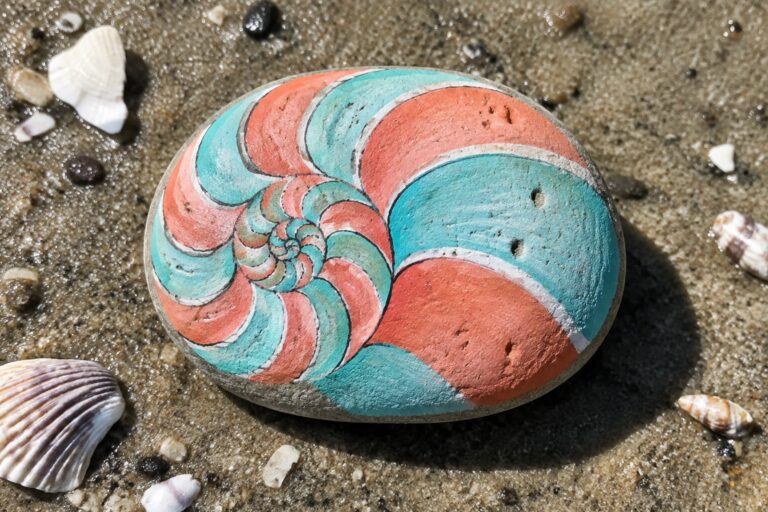
I often paint rocks during the summer months.
My ideas usually come from the ocean since I love collecting seashells when I can.
Lately I have been trying out different wave designs and shell motifs on the rocks I find.
These projects do not take much time and they turn out nicely.
I put together some of my favorites in this list.
Spiral Nautilus Rock for Summer Displays
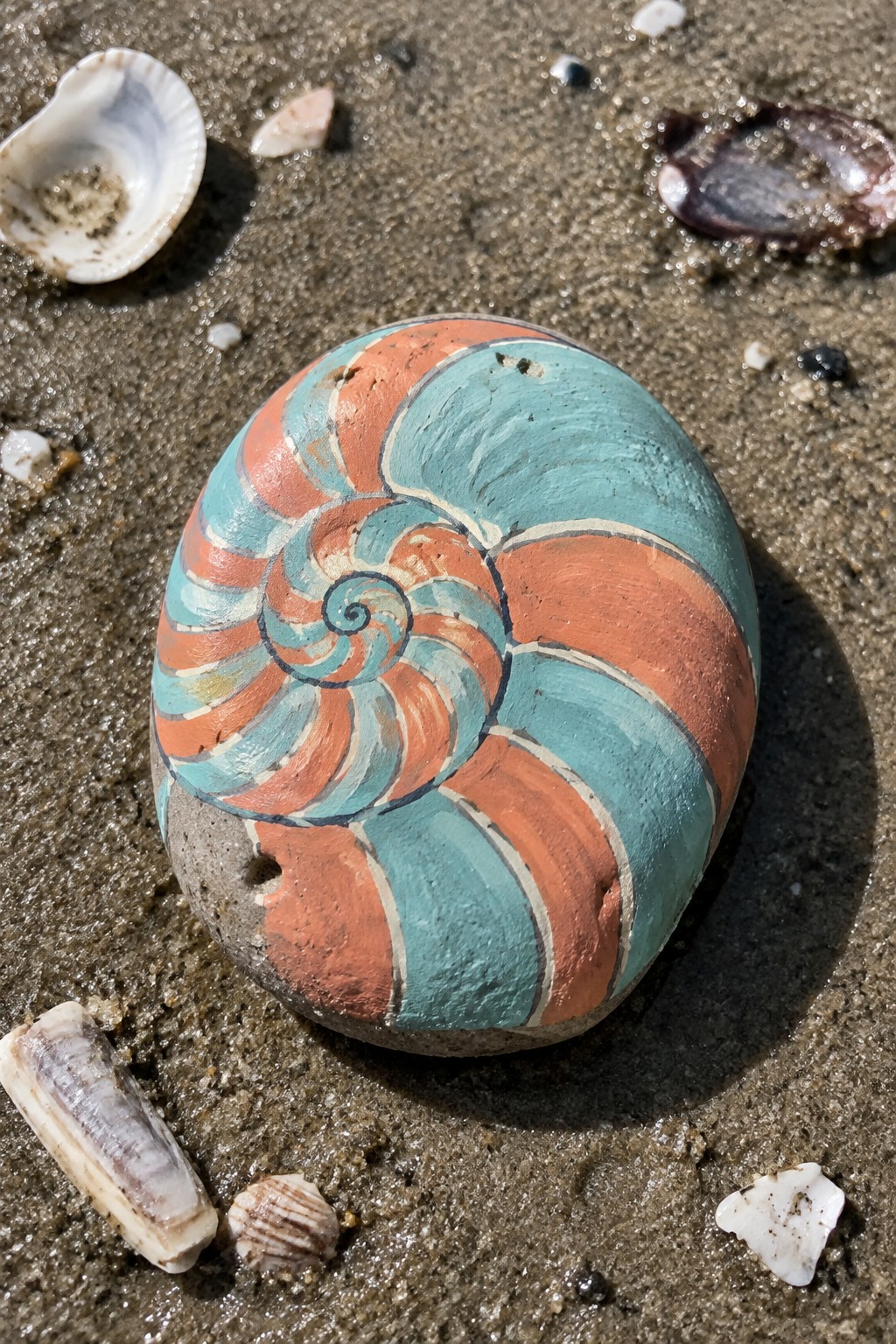
A rounded beach stone painted with wide bands of coral orange and sea teal forms a tight spiral that echoes a nautilus shell. Thin white lines separate the color sections and follow the natural curve of the rock, letting the stone’s shape do most of the work. The simple color blocking and clear outlines keep the design readable even from a short distance. This approach turns an ordinary smooth stone into a decorative piece that fits the summer seashell theme.
What makes this idea useful is how well the rounded form supports the spiral without extra shaping. The same banded pattern could be repeated on a flatter stone for a windowsill accent or scaled down onto several smaller pebbles for a table display. Because the colors stay bold and the lines stay basic, the design adapts easily to whatever rock shape you find on a summer walk.
Wavy Ocean Rock
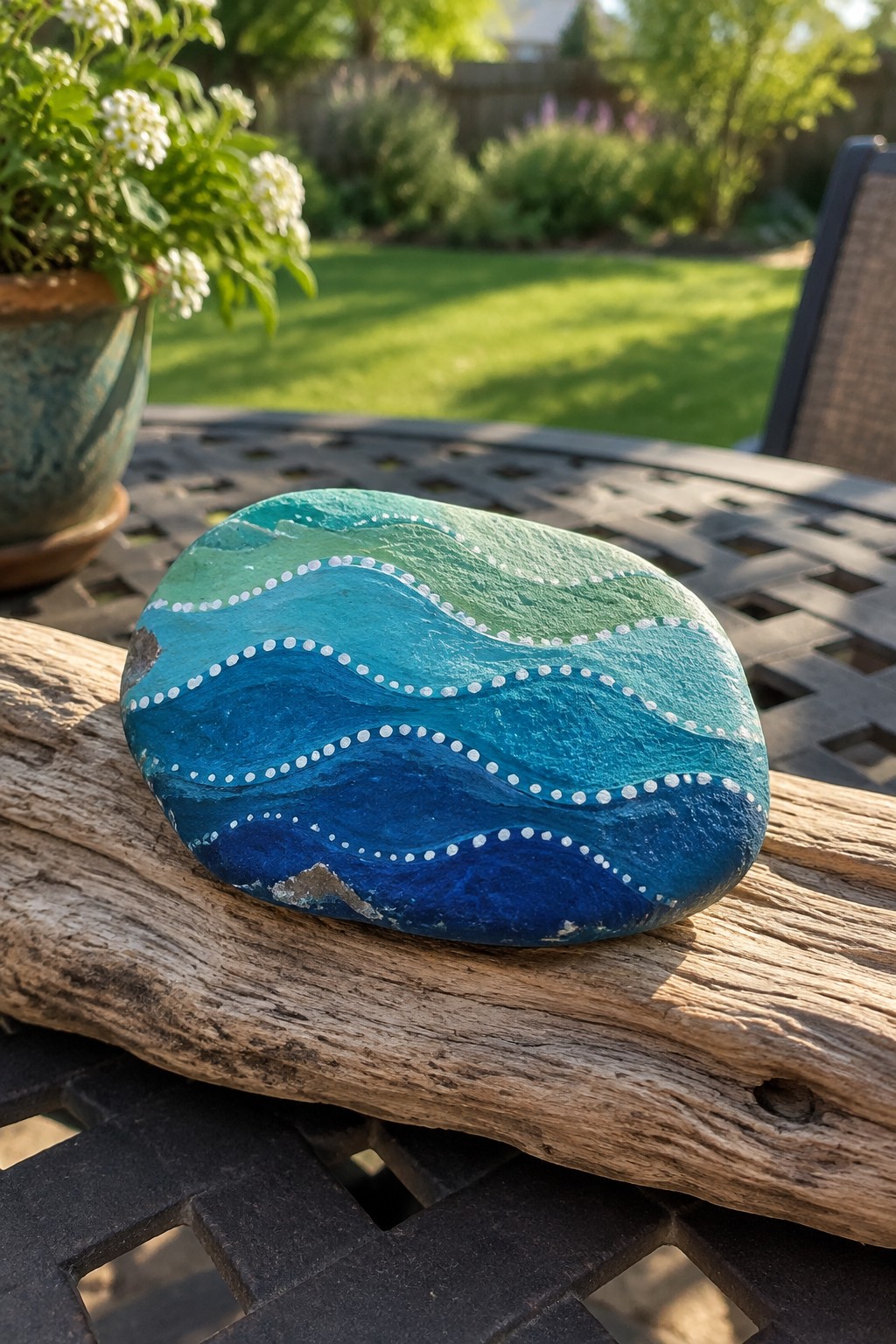
A smooth oval stone works well for this project because its rounded surface lets the painted waves follow a natural curve. Horizontal bands of blue and green create the water effect while white dots trace each wave line to add simple contrast. The design stays easy to paint on any medium-sized rock that has a fairly flat top area.
What makes this idea useful is how the wave pattern scales to different stone sizes without needing extra details. You can reuse the same color blocking on a smaller pebble for a windowsill or enlarge it on a bigger rock for a patio planter. The dotted lines help the design read clearly from a distance so it stands out in a garden bed or on a porch table. For a seashell twist you could add a few small shell outlines along one edge instead of extra dots.
Seashell Designs on Smooth Rounded Stones
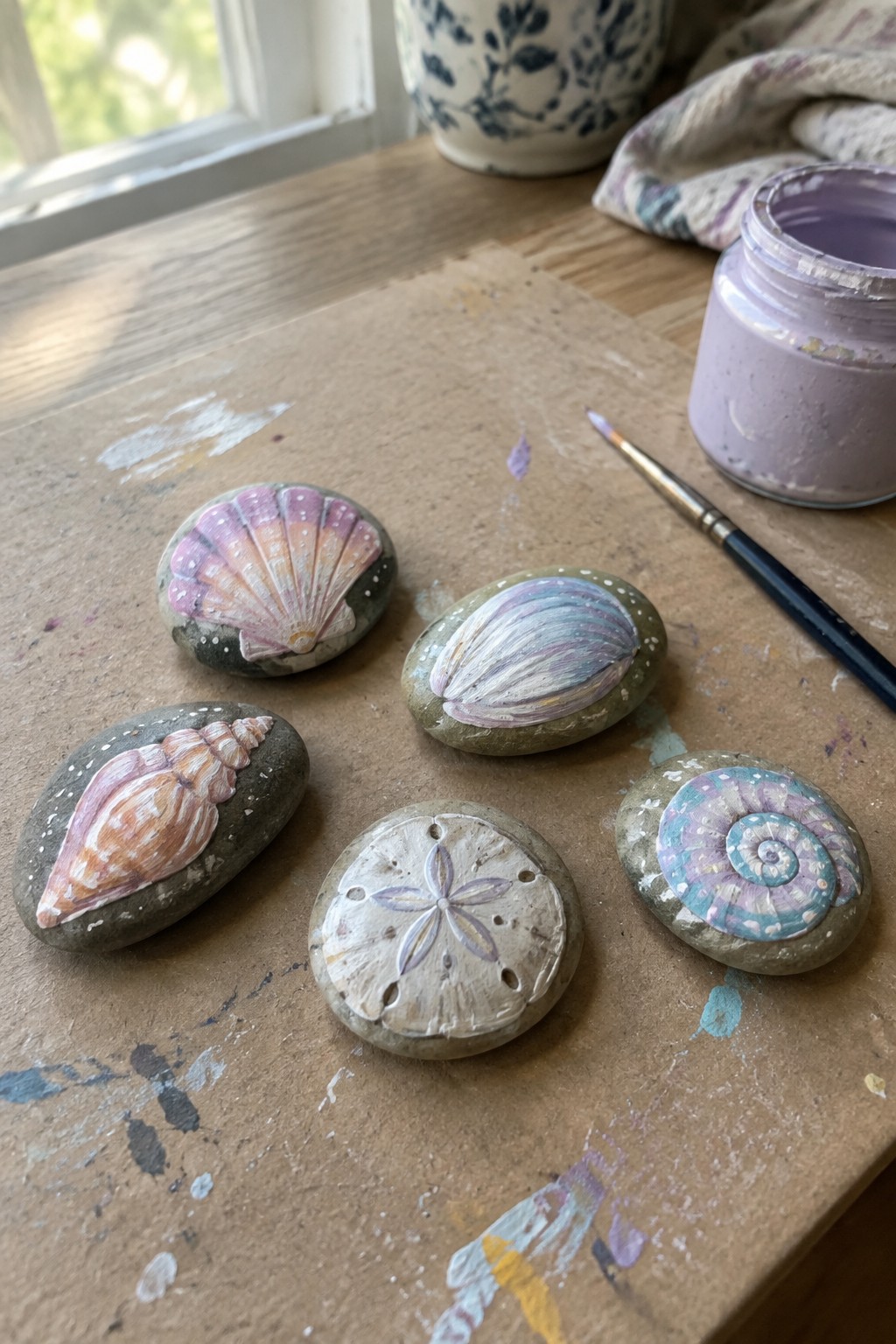
Smooth, rounded stones work as the base for these seashell paintings because their natural curves match the shapes of real shells. One stone carries a pink and orange scallop, another shows a conch in warm tones, while the remaining three feature a sand dollar, a blue spiral shell, and a wavy shell in soft pastels. The designs stay simple with clear color sections and light outlines so the shell forms read clearly against the stone surface.
What makes this idea useful is how easily the same shells can move from a windowsill display to a planter or porch table. The small size means you can paint several in one afternoon and group them together for more impact or keep them separate as single accents. You could change the pastel palette to brighter summer colors or repeat just the scallop and sand dollar on flatter stones for a different arrangement.
Seashell Fan Painted Rock
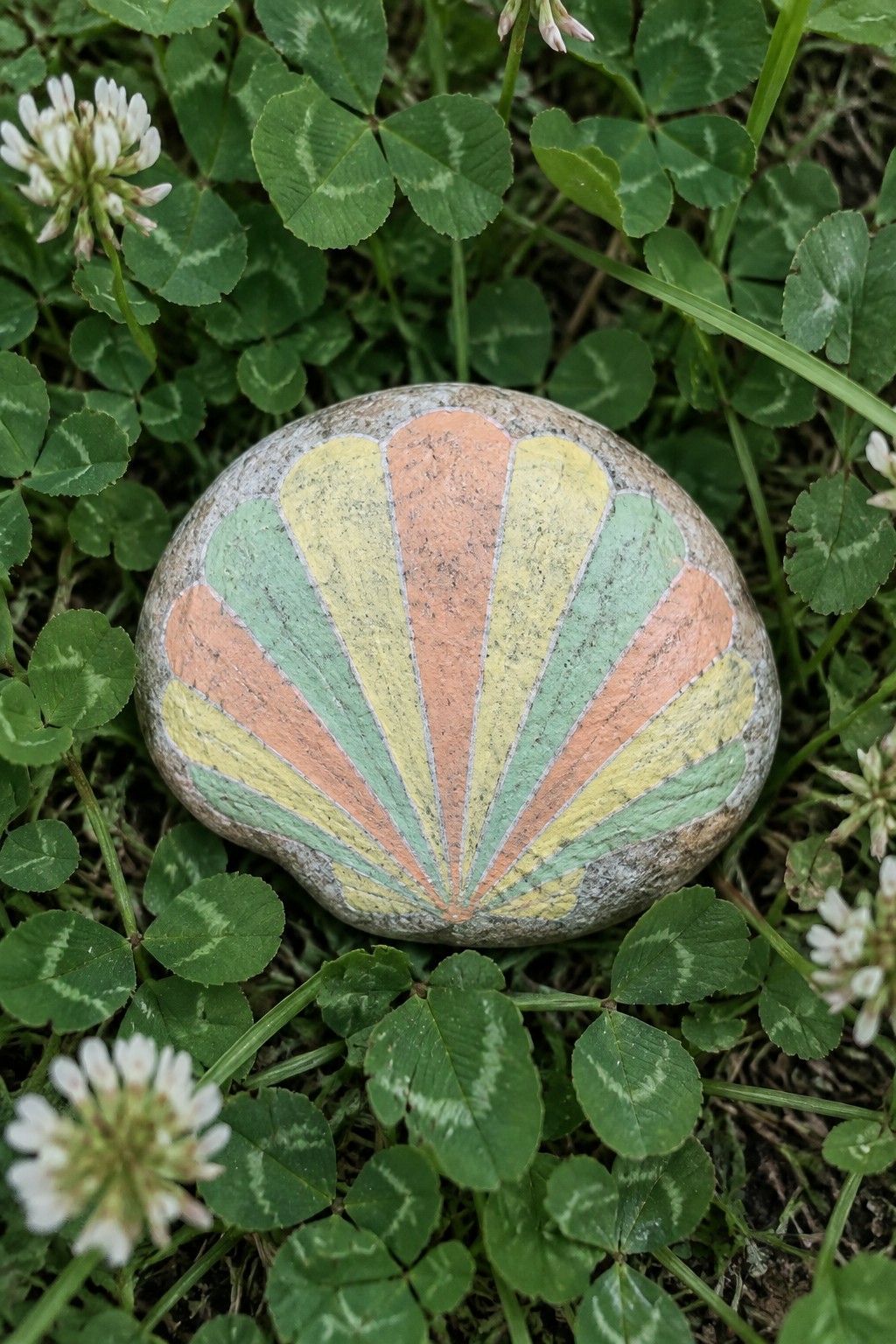
A smooth, rounded garden stone serves as the base for this seashell fan design, with radiating stripes in peach, yellow, and soft green meeting at a single point near the bottom edge. The curved surface lets the painted bands follow the rock’s natural shape, creating a scallop-shell effect through simple color blocks and thin dividing lines. This approach fits the decorative stone craft category and draws directly from seashell motifs for summer projects. The design stays effective because the stone’s texture shows through the paint in places, giving it a handmade look without extra detailing.
What makes this idea useful is how the fan pattern works on any rounded rock you find at the beach or garden center. You can change the stripe colors to match other summer decor or shrink the same layout onto smaller stones for a group display in a planter. The central meeting point keeps the motif balanced even if your lines are not perfectly even. In a flower bed or on porch steps, the rounded shape stays in place while the shell pattern reads clearly from a short distance.
Sand Dollar Painted Stone
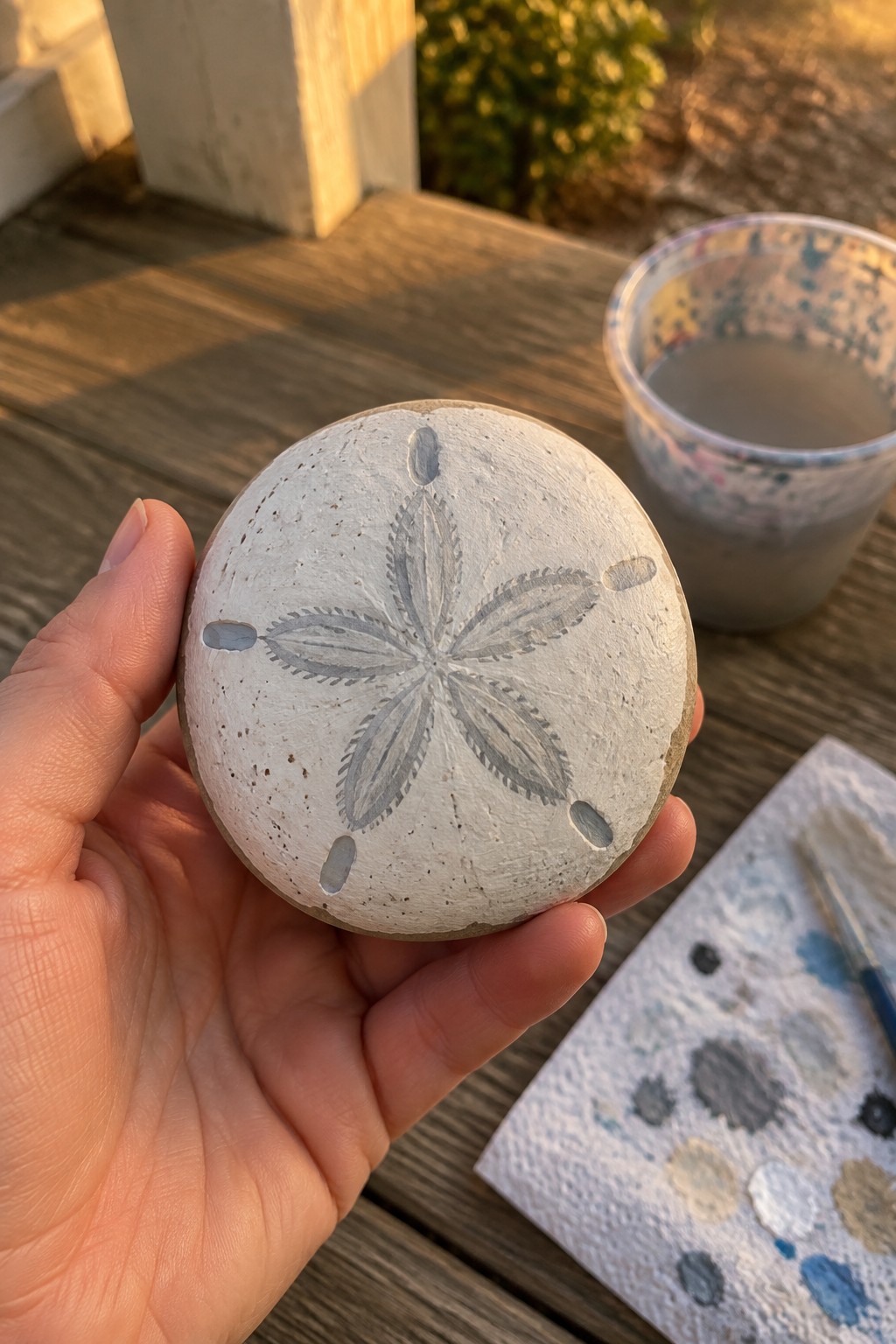
A rounded stone receives a sand dollar design painted in soft gray over a light base coat. The motif shows the five-part star pattern with scalloped edges and small oval marks spaced around the outside. This creates a clear seashell accent on an actual physical rock that works for summer displays.
The rock shape does most of the work here since the natural round form already matches a sand dollar outline. You can place it in a planter, on a porch step, or among other beach-themed stones without extra framing. The same design adapts easily to a smaller pebble by keeping just the center star or to a larger flat stone by adding more detail around the edges. It holds up in outdoor collections because the simple color blocking stays visible even after weather exposure.
Wave and Seashell Garden Stone
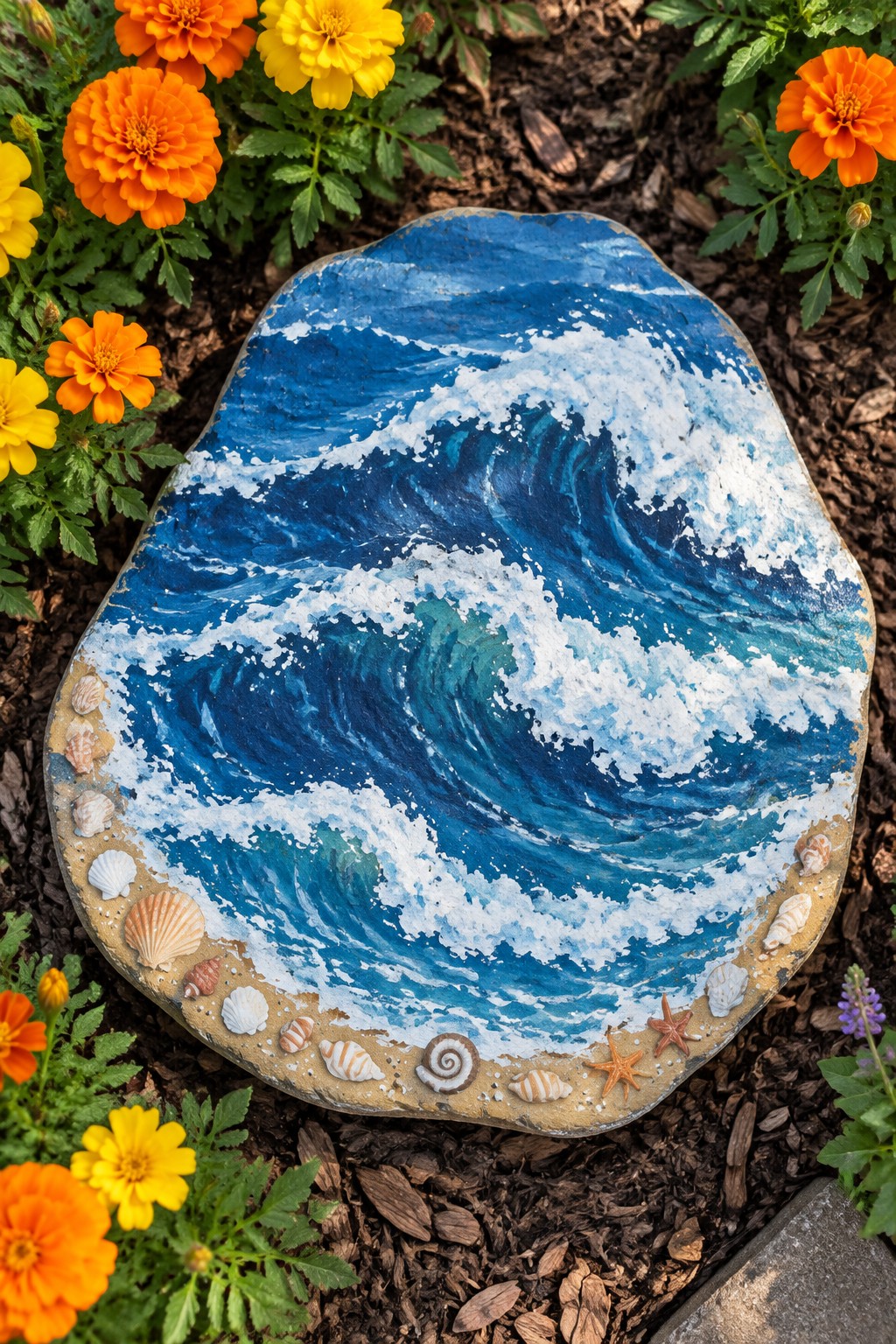
A large irregular garden stone works well for this project because its flat surface and curved edges let the wave design wrap naturally across the rock. Layers of blue and teal paint create the swirling water while white highlights show the foam and movement of the wave. Small seashells and starfish are placed along the lower border to finish the beach look without covering the entire surface. This approach turns the rock into a decorative stone craft that fits summer garden displays.
What makes this idea useful is how the wave pattern uses the rock’s natural shape to guide the flow of the design. You can adapt it to smaller stones by keeping just the white foam lines and a few shells along one edge. The blue color stands out against mulch or soil, so the finished piece works in flower beds, near planters, or along a garden path. For a quicker version, simplify the wave to basic curved strokes instead of detailed layers.
Sunset Waves with Seashell Detail on a Smooth Stone
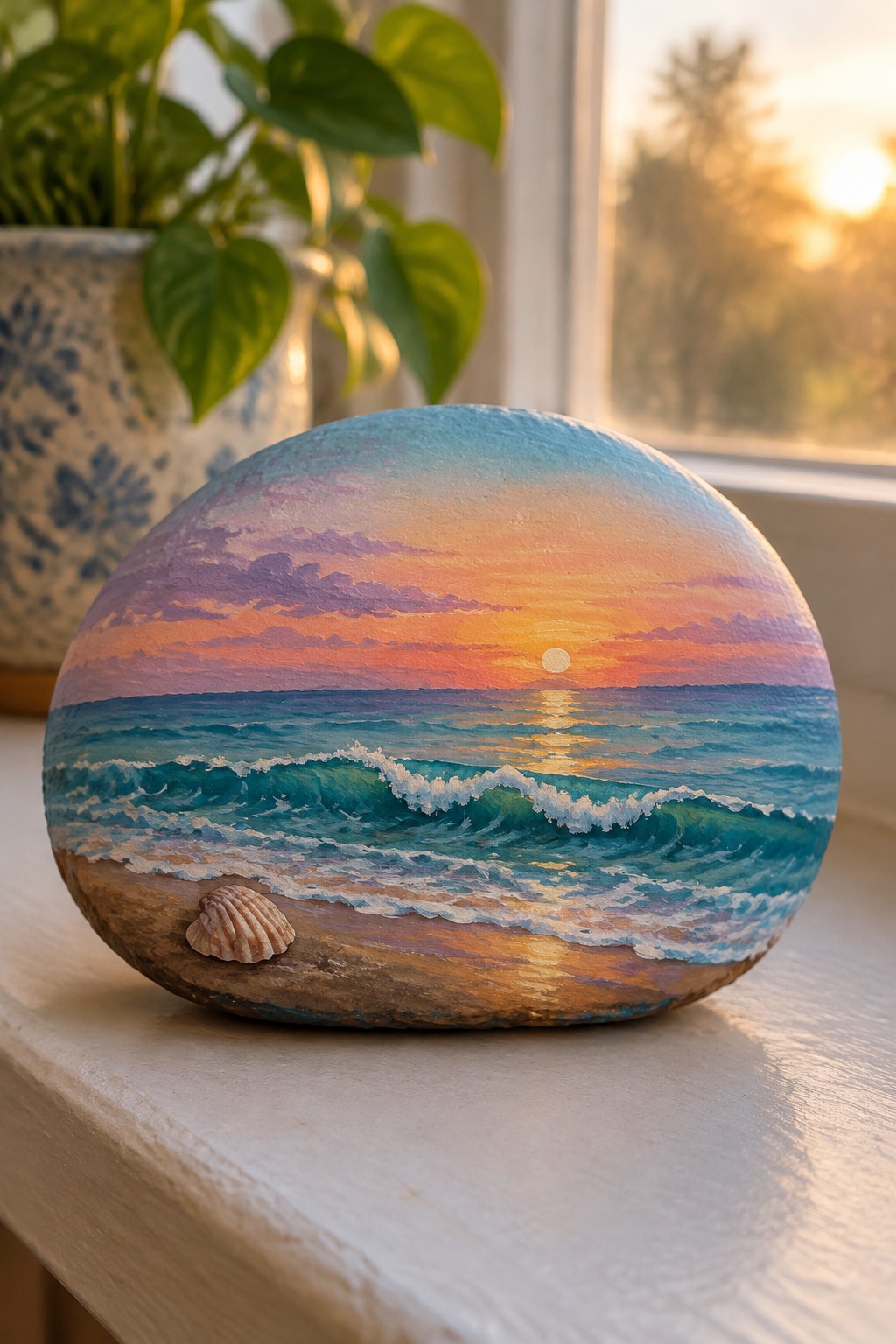
A smooth, rounded stone works well for this project because its curved surface lets the horizon line sit naturally between the sky and water sections. The upper half uses blended sunset colors that fade into each other, while the lower half shows layered wave shapes in different blues and greens with white edges to suggest foam. A small seashell rests on the brown-painted base area to tie the whole scene together as a beach view. This fits the waves and seashells category as a compact decorative stone rather than a flat canvas painting.
What makes this idea useful is how the rock’s oval shape already gives the wide ocean view without extra framing. You could scale the same layout down to a smaller pebble by using fewer wave lines or swap the sunset for a simpler blue sky if you want a quicker version. A painted rock like this works especially well tucked into a planter or on a porch shelf since the curved surface catches light and makes the colors stand out in real life. The seashell accent could be swapped for a painted starfish or left off entirely if you prefer a clean wave-only design.
Striped Wave Rock with Seashell Accent
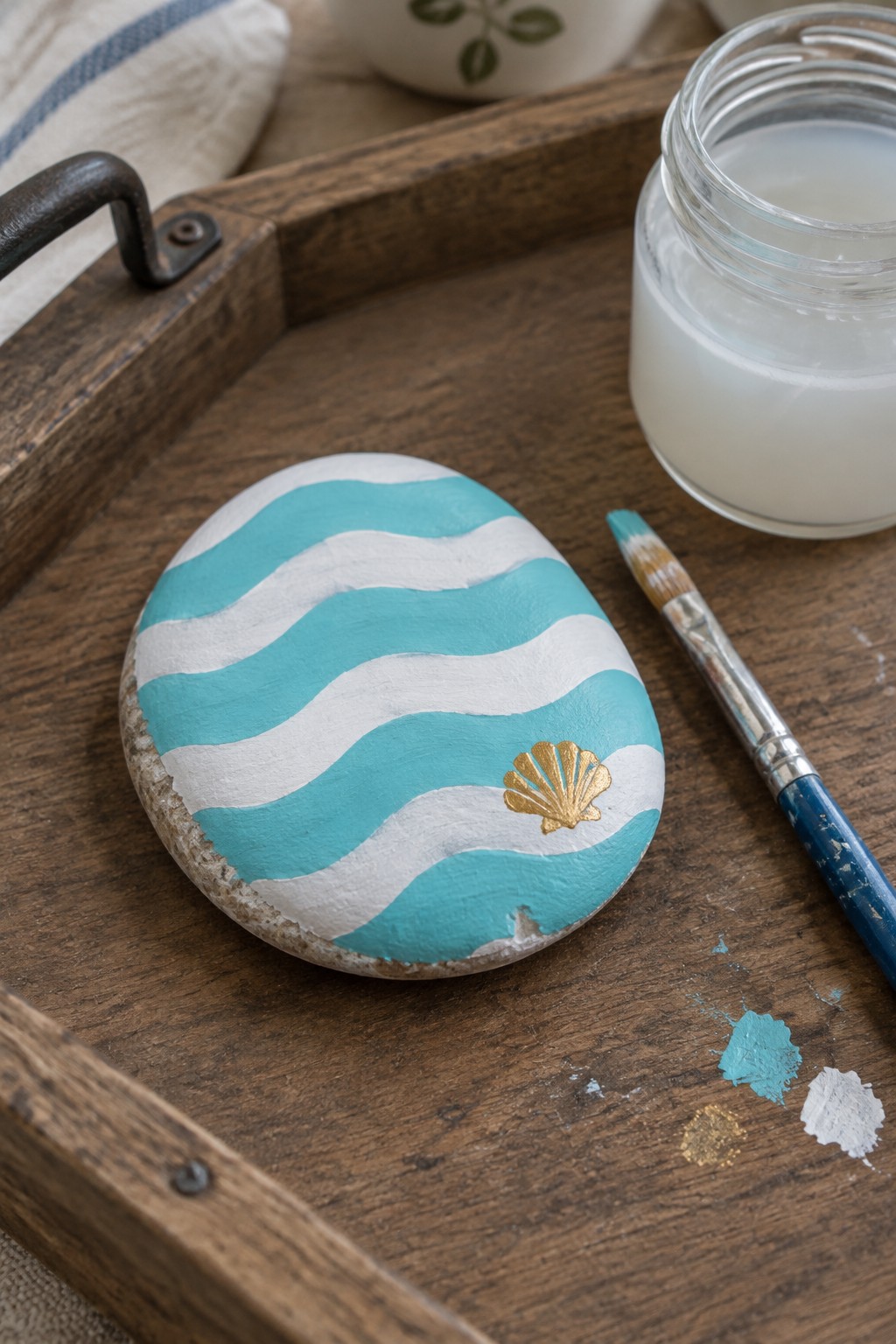
A rounded stone gets painted with wide turquoise and white horizontal waves that follow the natural curve of the rock surface. The design uses simple color blocking to suggest moving water and adds a small gold seashell motif on one of the white bands. This approach works well as a decorative stone craft because the wavy lines stay easy to repeat even when the rock shape is uneven. The finished piece reads clearly as a summer wave and seashell project without needing extra details.
What makes this idea useful is how the wave pattern adapts to any oval or flatter river rock you collect. You can swap the turquoise for other beachy shades or skip the gold shell and use a stencil instead if freehand feels tricky. For garden decor, this type of painted rock sits nicely in a planter or along a porch step where the stripes catch the light. The small size also makes it simple to paint a few at once for table displays or to tuck into summer party favors.
Seashell Designs on Beach Stones
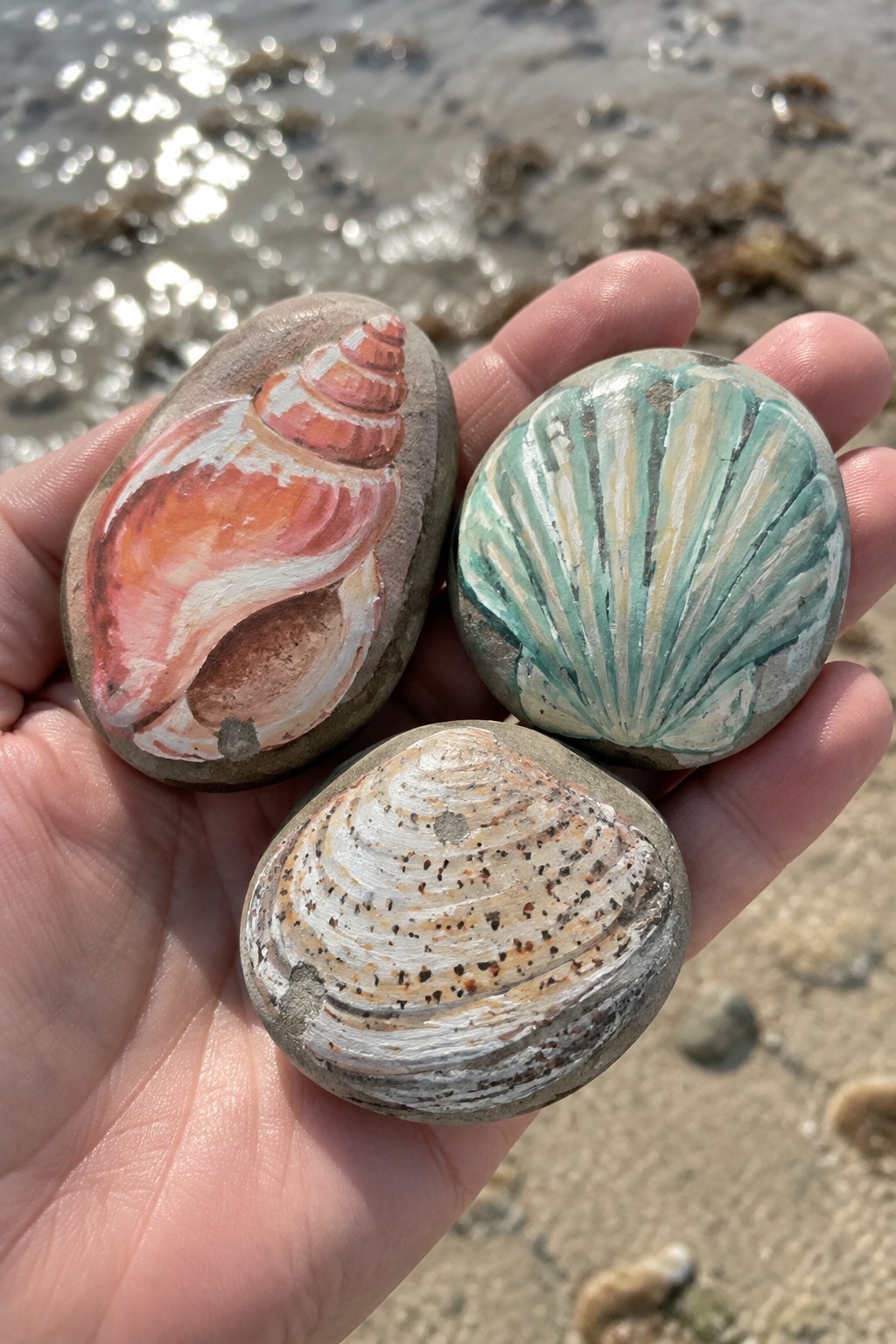
Paint three smooth, rounded beach stones with seashell motifs to create a simple summer set. One stone gets a spiral shell in coral pink and white that follows the rock’s curve. A second stone uses radiating strokes in teal and beige to form a fan shape. The third combines horizontal bands and small dots for a layered clam appearance. These painted stones work as a cohesive group because the natural rock shapes already suggest shell forms.
What makes this idea useful is how well the rounded edges support curved shell outlines without extra shaping. The small scale lets you finish a full set in one afternoon and place them in planters, along a windowsill, or in a beach bag as portable decor. You can swap the color palette to match other summer themes or enlarge the same motifs on bigger stones for garden paths. The designs stand out on Pinterest because they pair recognizable beach subjects with the actual texture of real stones.
Wave Mosaic Painted Stone
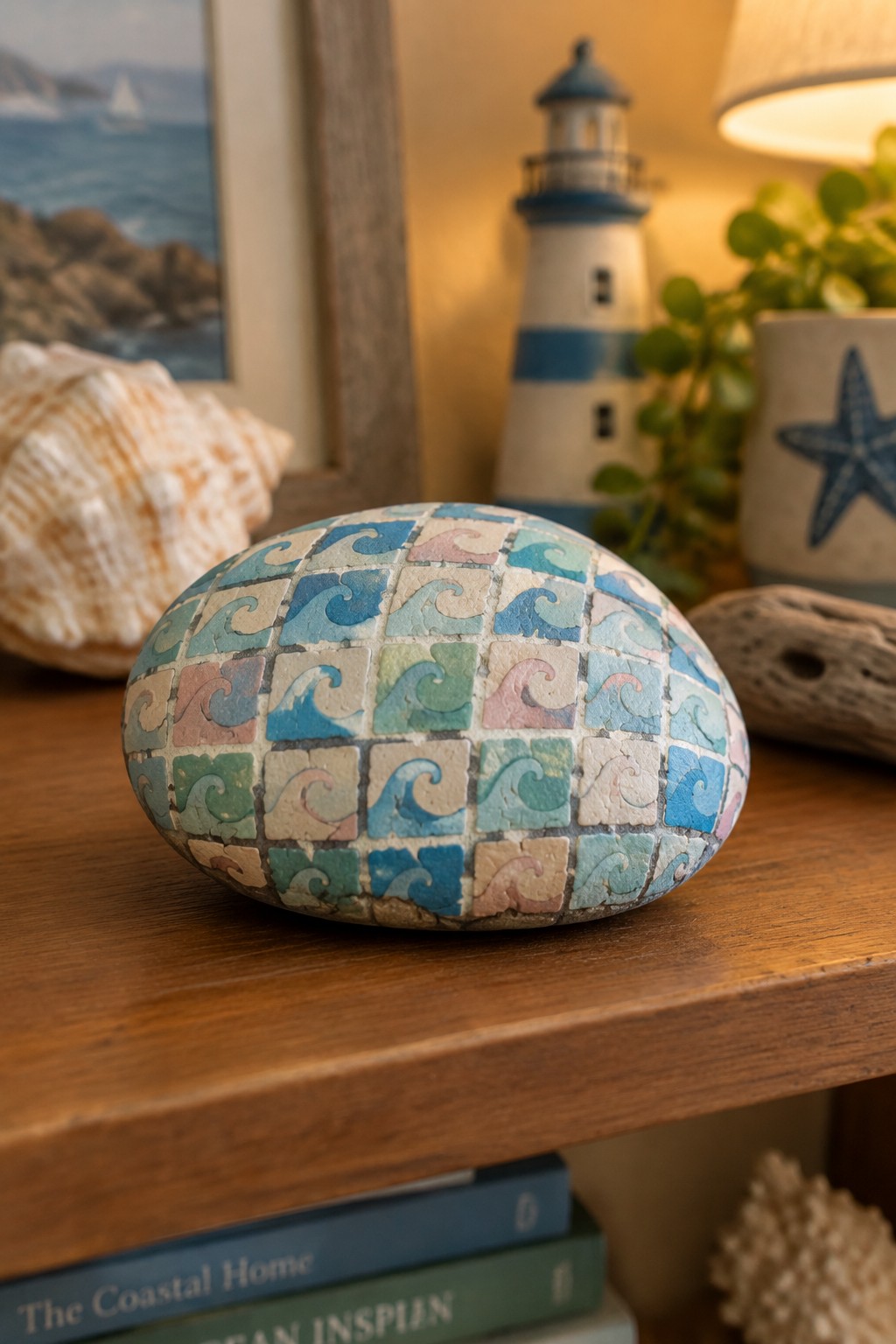
A smooth rounded rock works well for this project because the curved surface lets the grid of small wave squares wrap naturally around the form. Each square holds a simple stylized wave in shades of blue, teal, green, and soft pink, creating a tiled mosaic pattern that suggests ocean movement without needing a single large scene. The design stays contained within the rock shape, making it easy to see the full pattern from different angles on a shelf or table.
What makes this idea useful is how the repeated wave motif can be scaled up or down depending on rock size. A smaller stone could use fewer rows for a quicker version, while a larger one allows more color variation across the grid. This type of painted rock fits summer displays on mantels, in planters, or near windows where the coastal colors catch light. The pattern adapts easily by swapping in sunset oranges or deeper navy tones if you want a different seasonal feel.
Seashell with Concentric Wave Rings
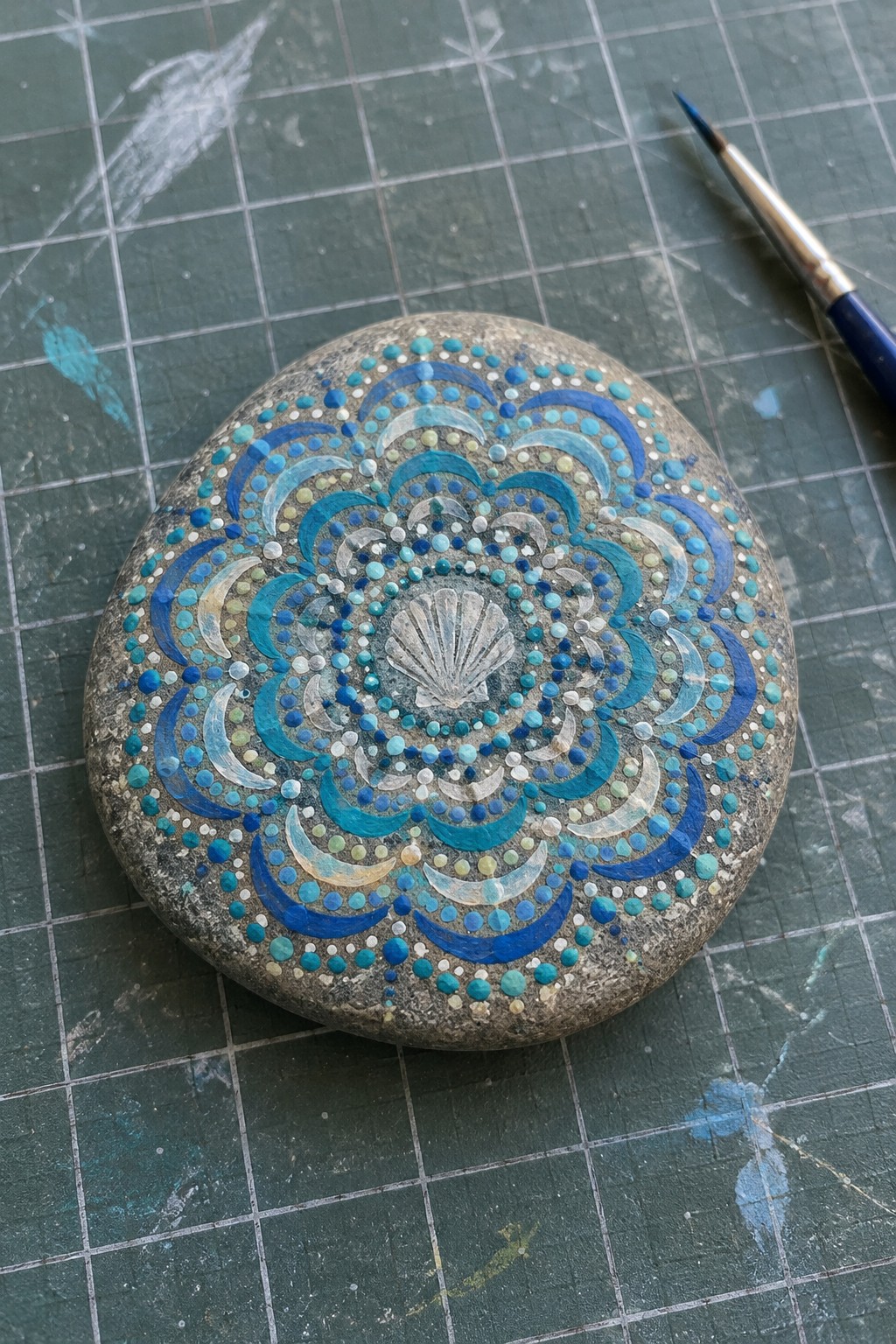
A rounded stone with a naturally flat top surface makes a good base for this design because it lets the central white seashell sit clearly in the middle. The painter built outward with rings of dots and curved wave shapes in different blues and teals, leaving the outer edge of the rock unpainted so the stone texture frames the pattern. This approach turns a simple beach stone into a decorative piece that fits the waves and seashells theme without needing extra materials.
What makes this idea useful is that the same layout works on stones of different sizes as long as the surface stays fairly flat. The dot and crescent pattern can be simplified by using fewer rings or made more detailed by adding extra colors. For garden decor, this type of painted rock sits well in a planter or along a path where the blue tones stand out against soil or mulch. The motif could easily be changed by swapping the seashell for a simple wave or by using a different set of summer colors while keeping the ring structure.
Seashell Rock with Simple Face Details
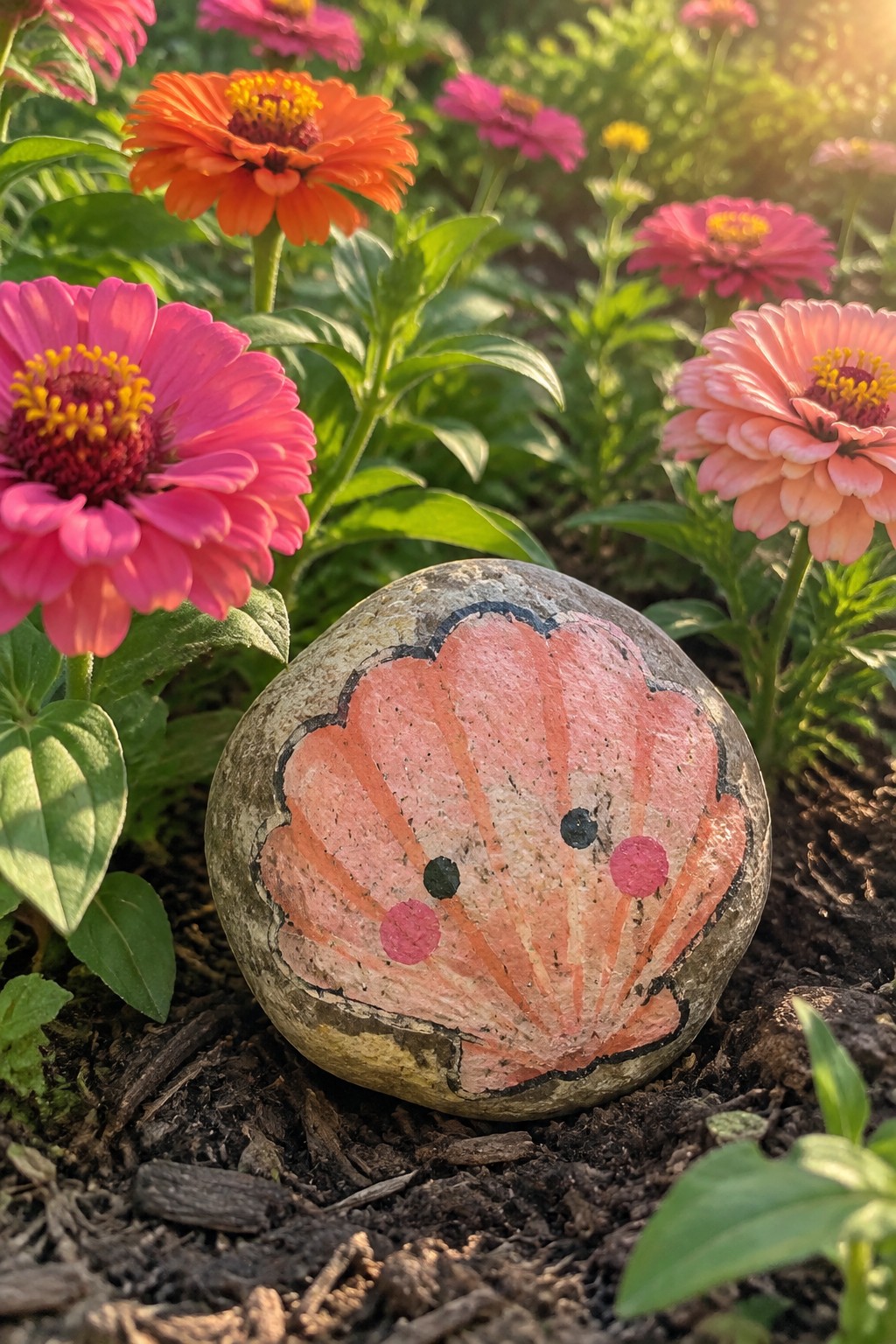
A rounded garden stone works as the base for a seashell design painted in soft coral and peach tones with black outlines marking the ridges and outer edge. Two small black dots and two pink dots create eyes and cheeks that give the shell a light, friendly expression. The natural curve of the stone helps the shell shape sit naturally without extra shaping or carving.
What makes this idea useful is how well it fits summer planters, flower bed borders, or small porch displays. You can repeat the same coral palette across several rocks for a loose collection or drop the face details to keep the look more realistic. The motif also adapts easily to different stone sizes since the main work is blocking in the shell form and adding a few ridge lines.
Seashell Accents on a Wave Gradient Rock
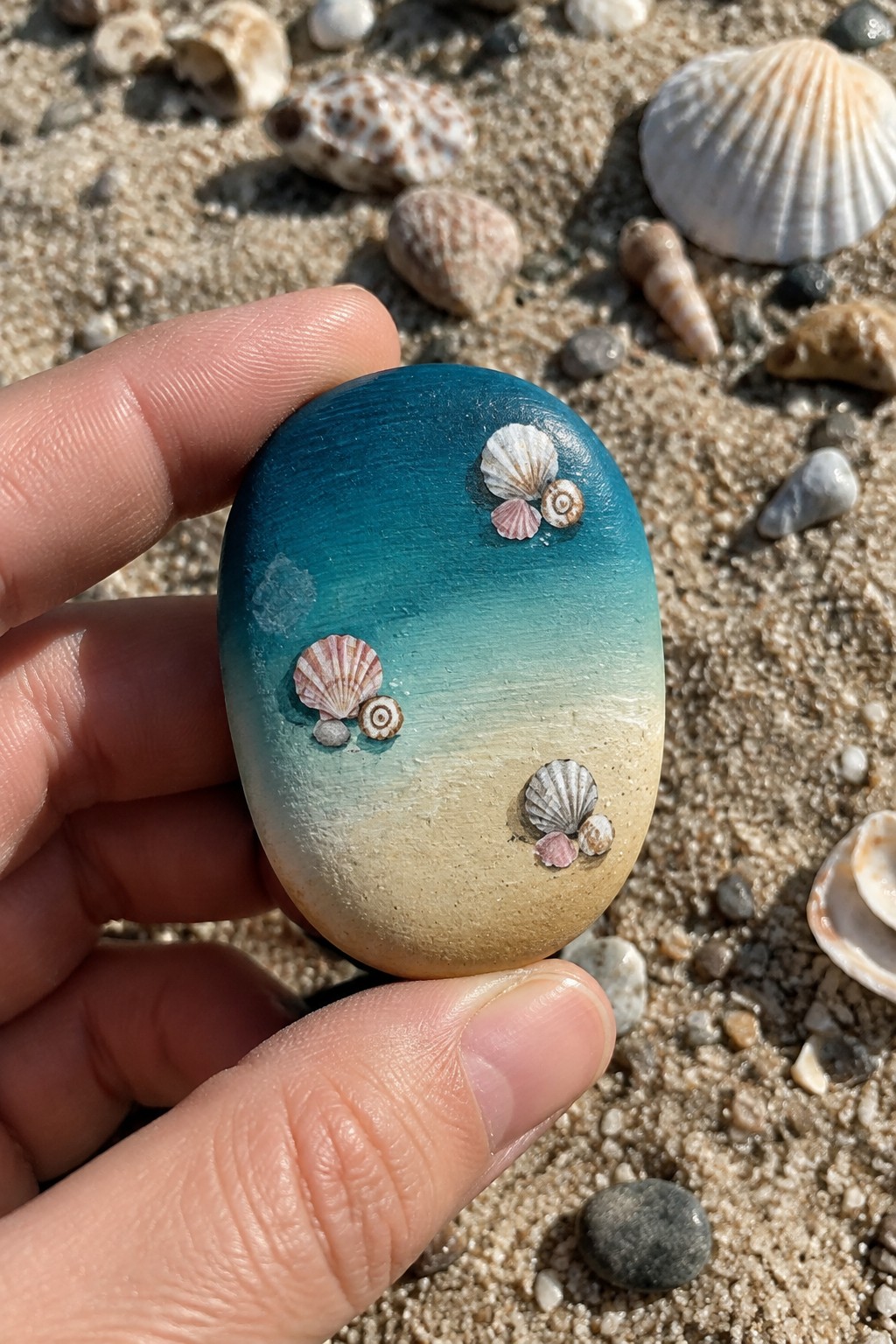
A smooth oval rock painted with a dark blue to teal gradient that fades into a sandy beige lower section creates a simple ocean and shore scene. Several small seashells in white, pink, and brown tones are placed in three loose clusters across the surface to suggest shells scattered along the waterline. The rounded form of the stone lets the color transition follow the natural curve without added lines or borders.
This type of painted rock works well tucked into a planter, set on a windowsill, or grouped with other summer pieces for a porch display. You can change the shell colors or spacing to match different stone sizes while keeping the same gradient layout. The compact scale makes it simple to adapt using basic acrylics and a few reference shells from a beach walk.
Wave Designs on Rounded Beach Stones
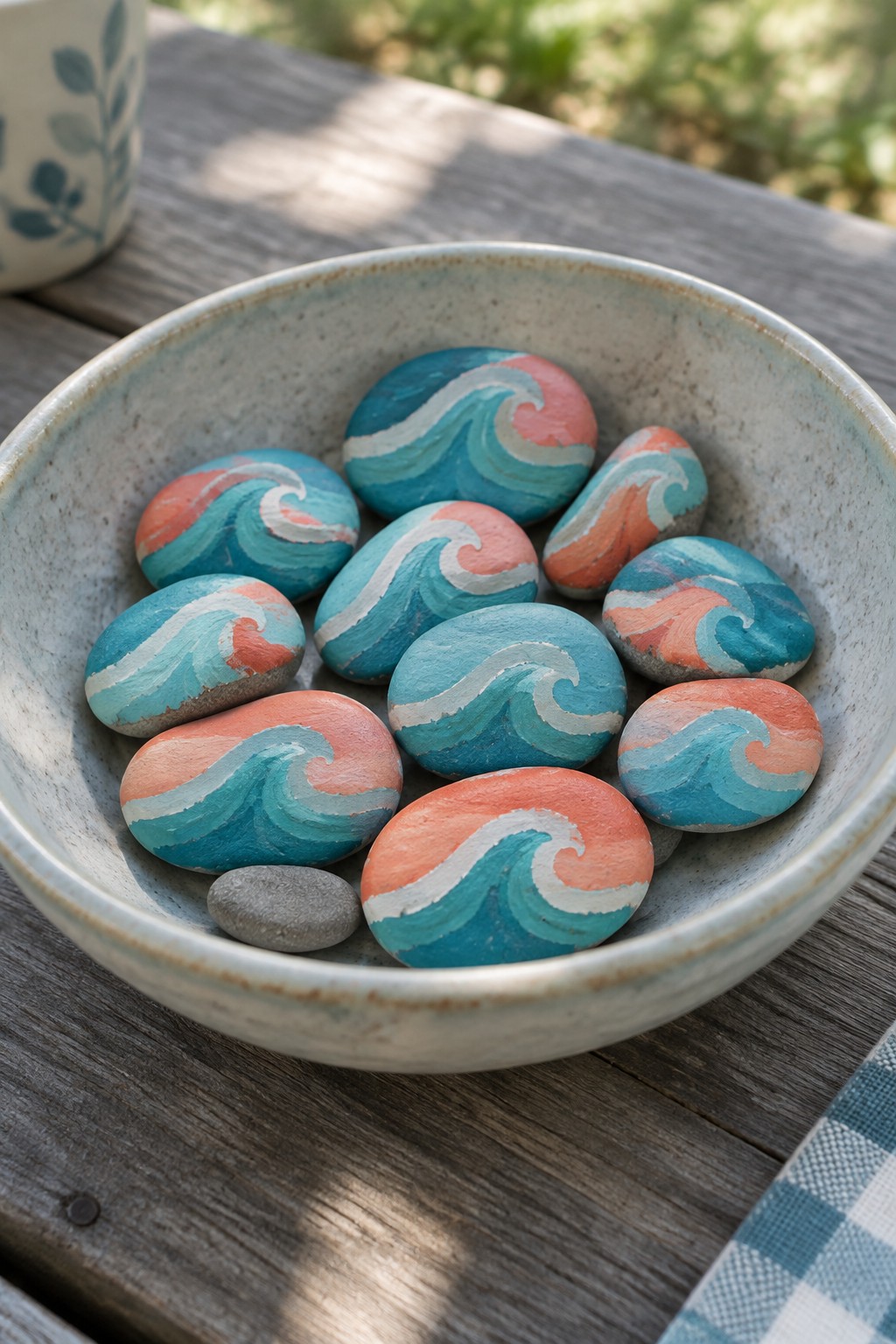
Painted rocks with swirling wave patterns offer a direct way to bring summer ocean themes onto actual stones. Rounded river rocks or beach stones work best because their smooth, curved surfaces let the wave lines follow the natural shape without extra prep. The design uses layered blues, teals, and coral with white accents to create motion across each stone, turning a simple motif into a ready-made collection for seasonal displays.
These painted stones fit easily into planters, porch trays, or table centerpieces when you want a summer accent without much space. The wave pattern adapts well to different sizes, so the same idea can move from large focal stones to smaller pebbles scattered in a bowl. A quick change in color balance, such as swapping coral for deeper navy, lets the design shift from bright beach style to calmer coastal tones while keeping the core wave layout intact.
Spiral Seashell Rock for Summer Displays
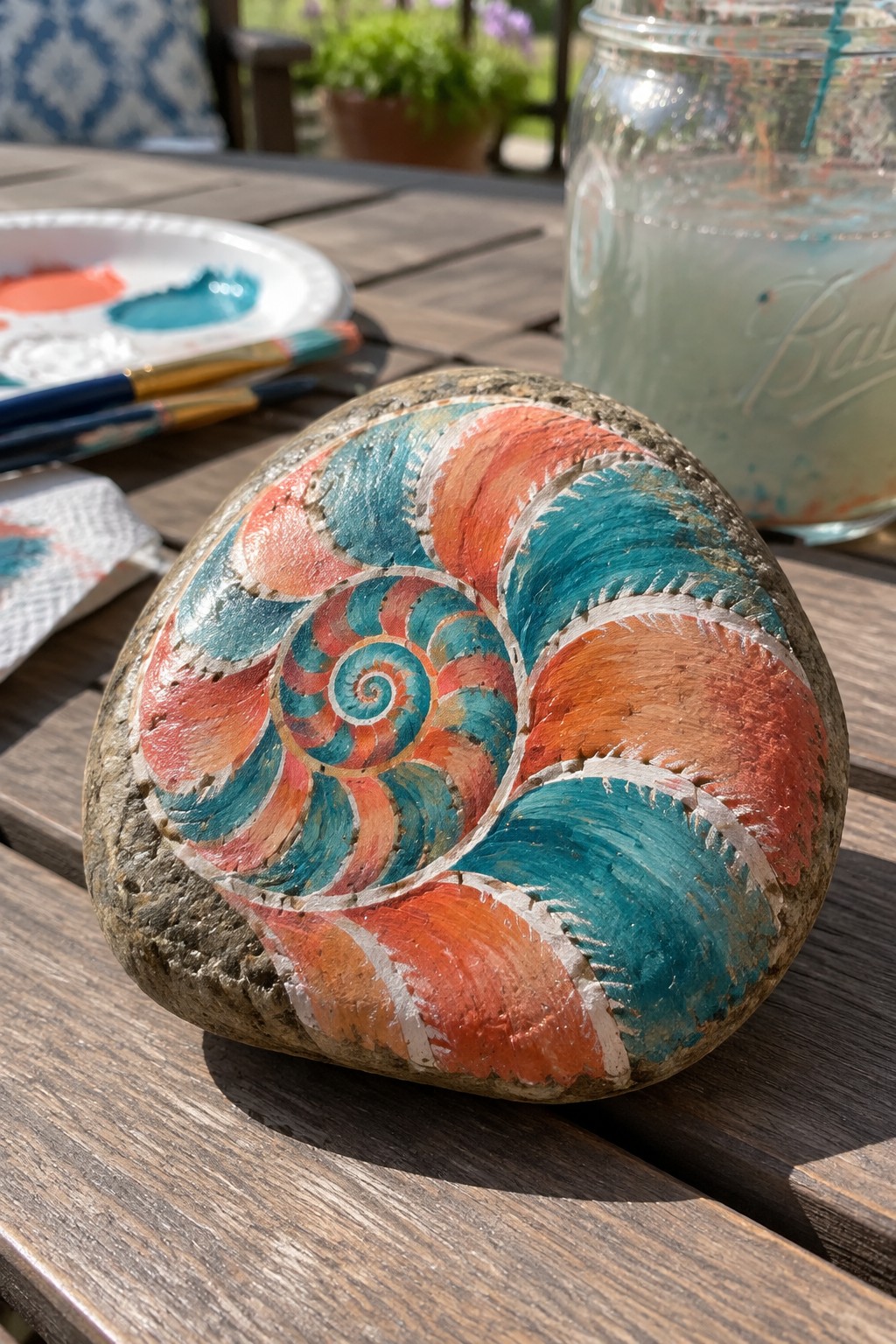
A smooth, rounded stone takes on a nautilus shell design through concentric spiral bands painted in coral orange and teal. White lines trace the chamber edges and follow the rock’s natural curves, creating clear separation between each section without extra outlining tools. The motif stays simple enough to paint freehand while still reading clearly as a seashell from a distance.
What makes this idea useful is how the rounded shape already supplies the basic spiral layout, so you only need to add color blocks and a few dividing lines. The same approach works in a planter, along a garden path, or as a table accent during summer months. You could swap the coral and teal for other bright summer pairings or shrink the design onto smaller pebbles to make a matching set.
Wave and Starfish Summer Rock
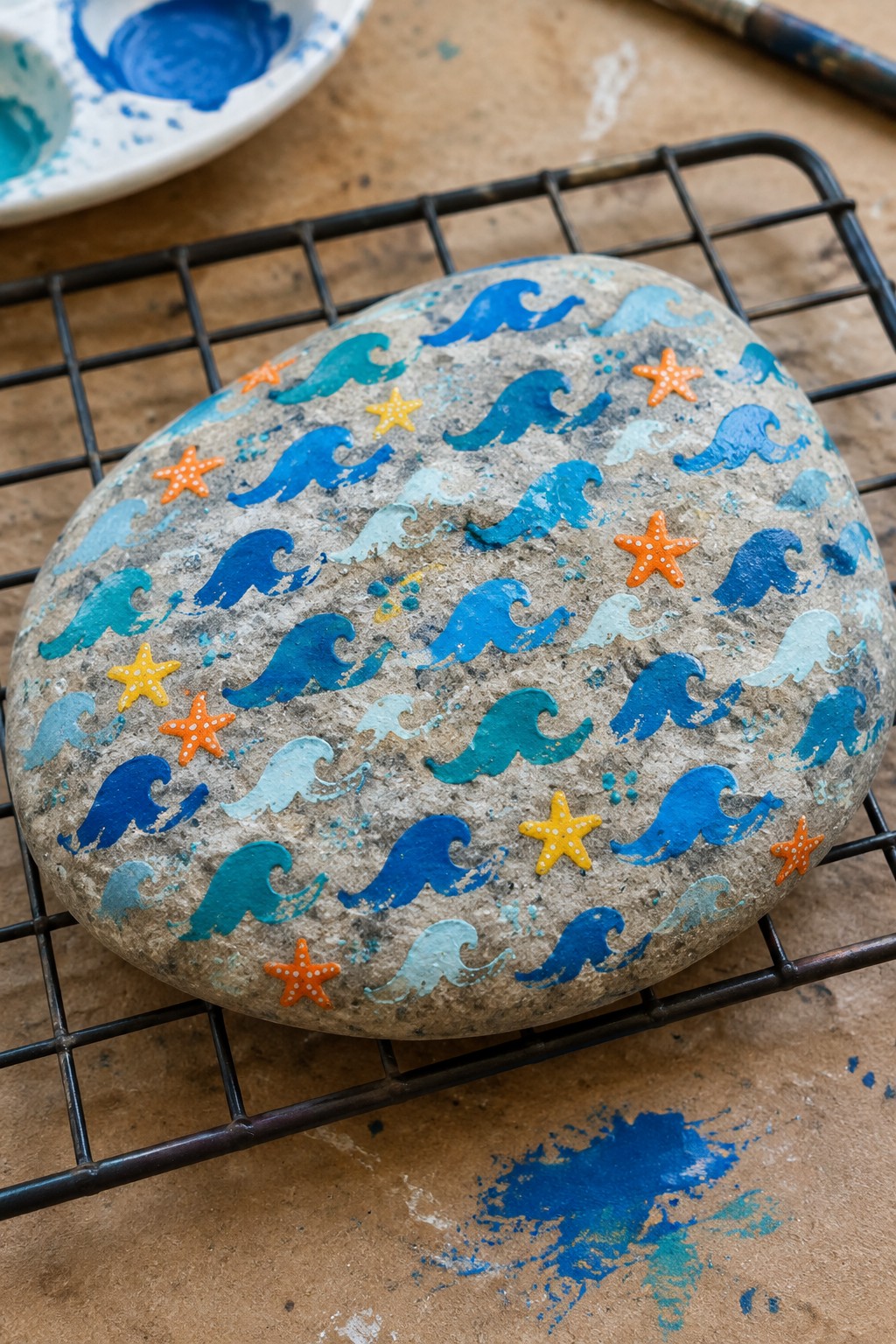
A rounded stone covered in layered waves painted in several shades of blue and teal makes a straightforward summer project. Small starfish in orange and yellow with white dot centers are scattered across the surface to break up the wave pattern. The design follows the rock’s natural curve so the waves wrap around the sides without needing straight lines or precise spacing. This approach works as a decorative stone craft that stays clearly tied to summer beach themes.
What makes this idea useful is how the wave pattern can be scaled up or down depending on the size of the stone you have. A painted rock like this works especially well as a porch accent or tucked into a planter for seasonal outdoor displays. The starfish can be swapped for simple dots or shells if you want to adapt the same layout to a flatter pebble or a larger garden stone. The rounded shape helps the design stay balanced even when the waves are painted freehand.
Layered Wave Rock with Seashell Accent
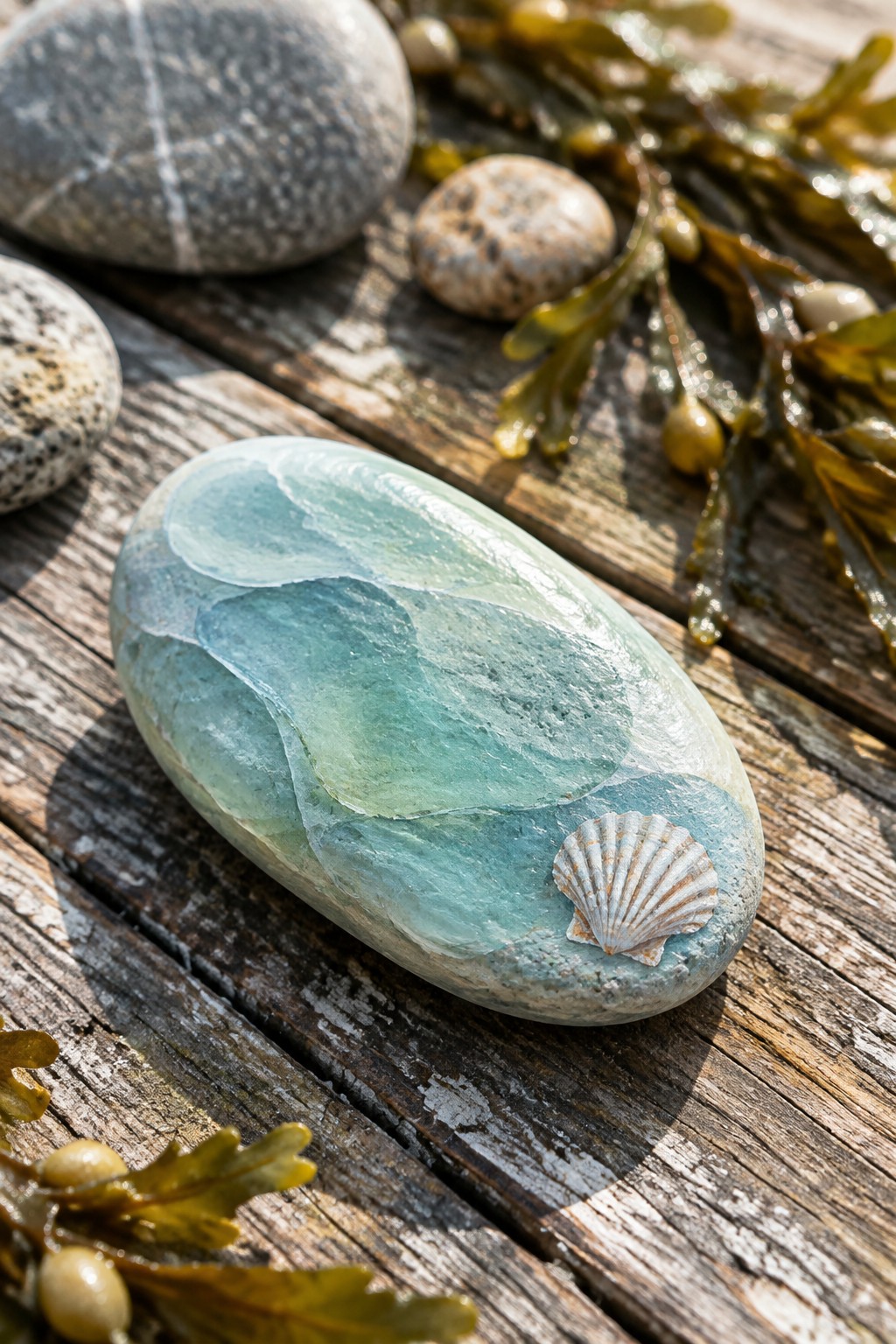
An oval stone receives horizontal bands of blue and teal paint that follow its natural curve to suggest gentle ocean waves. The design relies on soft color transitions and overlapping shapes rather than fine linework, letting the rock’s smooth surface carry the water effect. A small real seashell is added near the lower edge to anchor the summer beach theme. This approach turns a plain river rock into a simple decorative piece for seasonal displays.
The rounded form of the stone already gives the wave layers a sense of movement, so the painting stays easy to adapt on similar oval rocks. This style works especially well as a porch or patio accent where the colors show up against wood or stone surfaces. You can scale the same banded design down to smaller pebbles for a set or swap in different shell sizes without changing the overall layout. The straightforward color blocking also makes the idea quick to repeat for summer table decor or small gift additions.
Stacked Rocks with Wave, Shell, and Sand Dollar Designs

This project stacks three rounded stones into a compact tower. The bottom rock carries blue wave patterns that wrap around its curved surface, the middle rock shows a seashell motif with light color shifts, and the top rock features a simple sand dollar outline. The natural rounded shapes and flat surfaces of the stones help the designs sit cleanly without extra prep. It fits the category of a painted rock collection focused on summer beach themes.
What makes this idea useful is how the stacked format combines several wave and seashell motifs into one display piece. You could swap the sand dollar for a starfish or keep just the wave rock for a simpler version. This type of painted rock works especially well on a shelf, windowsill, or porch table during summer months. The rounded stone shapes make it easy to reuse the same layout with different sizes or additional beach elements you find.
Frequently Asked Questions
What supplies do I need to create wave and seashell rock paintings? Start with smooth river rocks or beach stones that fit comfortably in your hand. Use acrylic paints in shades of blue, turquoise, white, and sandy beige along with fine detail brushes for lines and dots. Add a black fine-tip marker for outlines if desired and gather cotton swabs for blending. For seashell accents pick up metallic gold or pearl paints. These basic items let you try many of the 19 ideas without extra cost.
How do I pick the best rocks for summer wave and seashell designs? Look for flat or slightly curved stones with a smooth surface so paint glides on evenly. Beach rocks often have a natural pale color that works well as a base for ocean scenes. Rinse and dry them fully before painting. If you collect from nature check local rules first and consider buying a bag of craft rocks for consistency across multiple projects from the list of 18 ideas.
What techniques help paint realistic waves on rocks? Begin with a light blue base coat and let it dry. Layer darker blue curved lines for wave shapes then blend in white highlights along the crests using a dry brush. Add small dots or dashes for sea spray. Practice on paper first to match the flowing style seen in several of the 19 summer designs. Work in thin layers so colors stay bright and do not crack.
How can I add seashell details to my painted rocks? Sketch simple shell shapes like spirals or fan outlines with a pencil. Fill them in with soft pink or cream paint then add shading with a darker tone on one side. Use a small brush to create ridges inside the shell. Combine these with wave patterns on the same rock for many of the suggested ideas. Seal the shells last so they stand out against the water background.
How do I protect finished wave and seashell rock paintings for outdoor use? Once the paint is completely dry apply two thin coats of outdoor acrylic sealer or clear resin. Let each coat cure fully between applications. This step keeps colors vibrant through sun and rain. Store rocks in a cool dry spot until ready to display in gardens or along paths as shown in the summer project ideas.
