


I have been painting rocks for a while now and I often go for smaller ones because they are easier to handle.
Lately I have been trying out tiny animal drawings on them.
It started as a way to use up some leftover paints and rocks from the yard.
I put together these 21 ideas after testing a few versions myself.
They are simple enough that I can finish one in an afternoon.
Tiny Yellow Chick on a Rounded Pebble
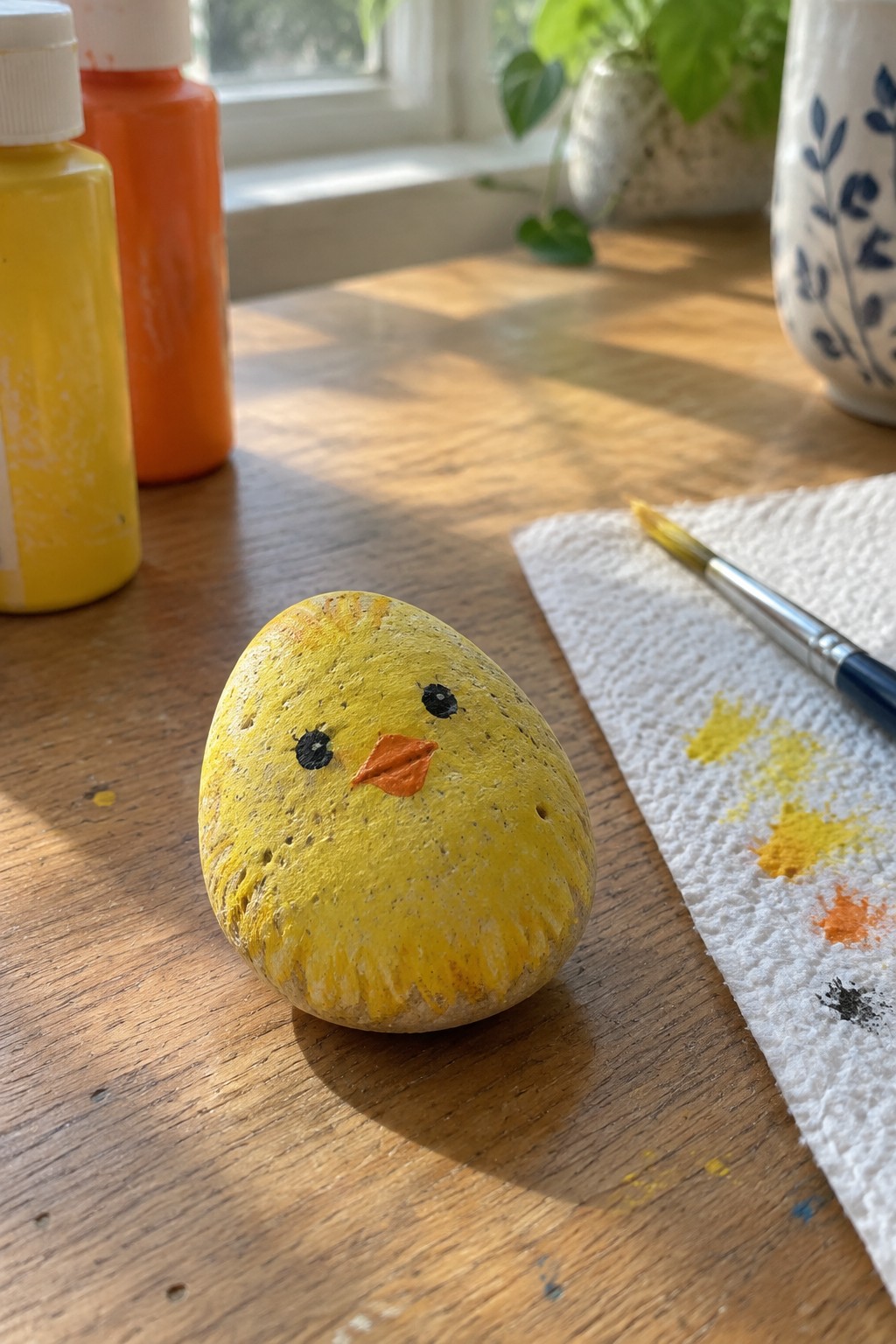
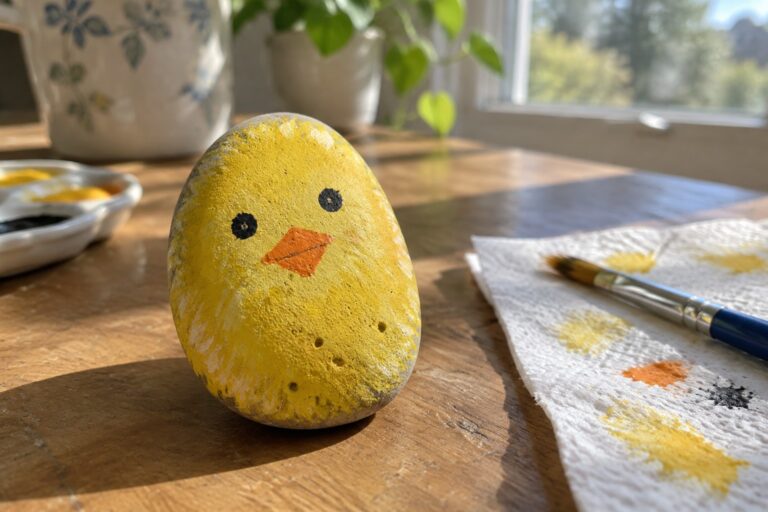
A small rounded pebble painted solid yellow creates a simple base for a tiny chick illustration. The egg-like shape of the stone supports the baby bird theme while two black dots form the eyes and a short orange stroke makes the beak. This animal rock idea works because the design stays minimal and lets the stone’s natural curve suggest the body without extra lines or details.
What makes this idea useful is how easily it fits into a painted pebble collection or a small planter accent. The same rounded shape and basic face layout can be adapted to other baby animals like ducklings or penguins by swapping the beak color. For garden decor this type of painted rock stays visible against soil or mulch while taking up very little space.
Tiny Ladybug Rocks for Garden Accents
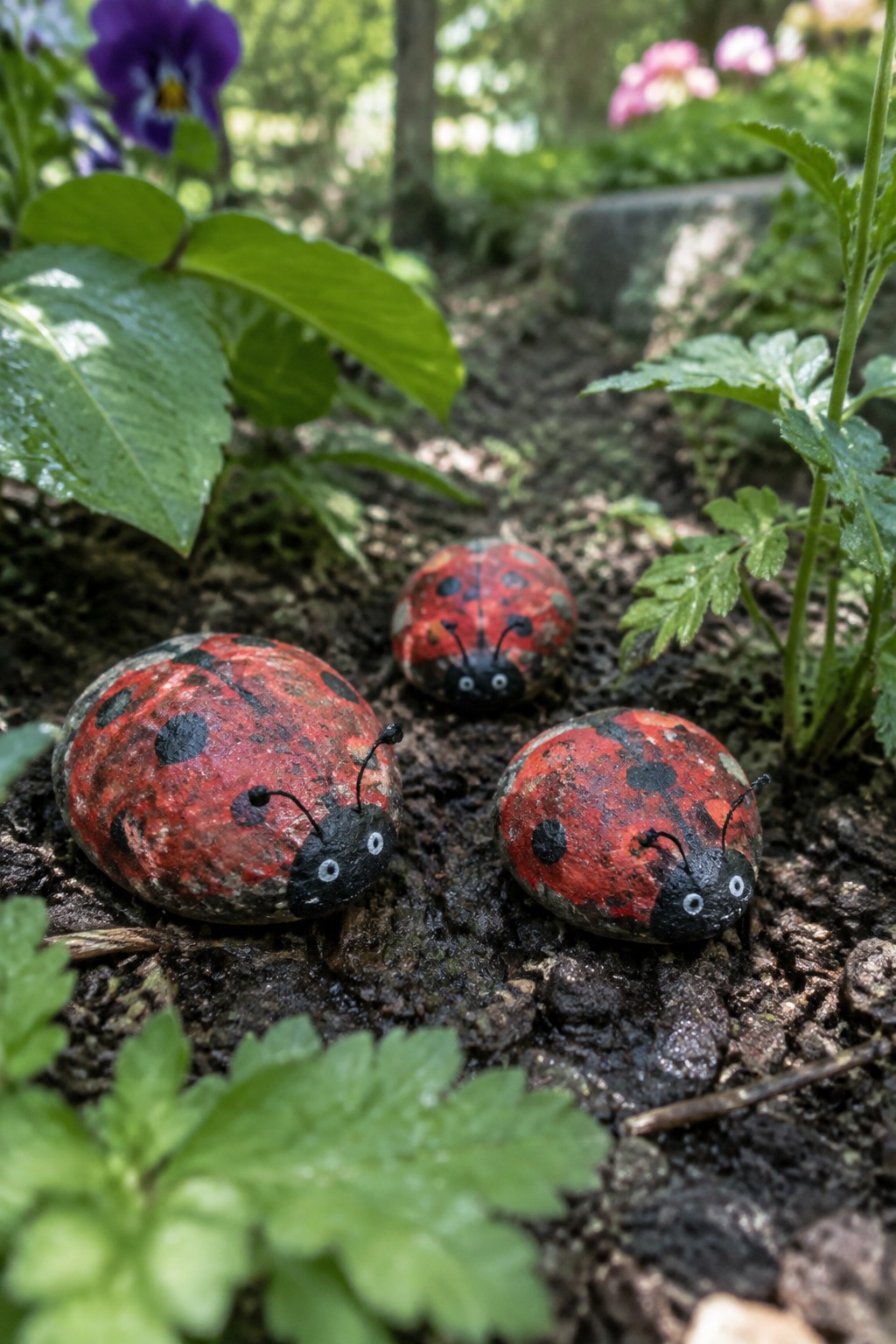
Ladybug designs painted on small rounded stones turn basic rocks into recognizable garden insects. The red base color with scattered black spots and a solid black head section creates the classic ladybug shape even when the stone surface is uneven. Black antennae and simple white eyes add the final details that make the animal illustration read clearly from a short distance. This approach fits the bug rock category and works because the natural stone curve already suggests a rounded insect body.
What makes this idea useful is how the same motif adapts to whatever small stones you have on hand without needing perfect symmetry. You can change the number or size of spots to create variety across a set of rocks for the same planter or path edge. For garden decor these painted stones blend into soil or mulch while still catching attention up close. The compact scale also makes it simple to add a few more animal types like beetles or caterpillars using the same rock size and color blocking style.
Tiny Turtle on an Oval Rock
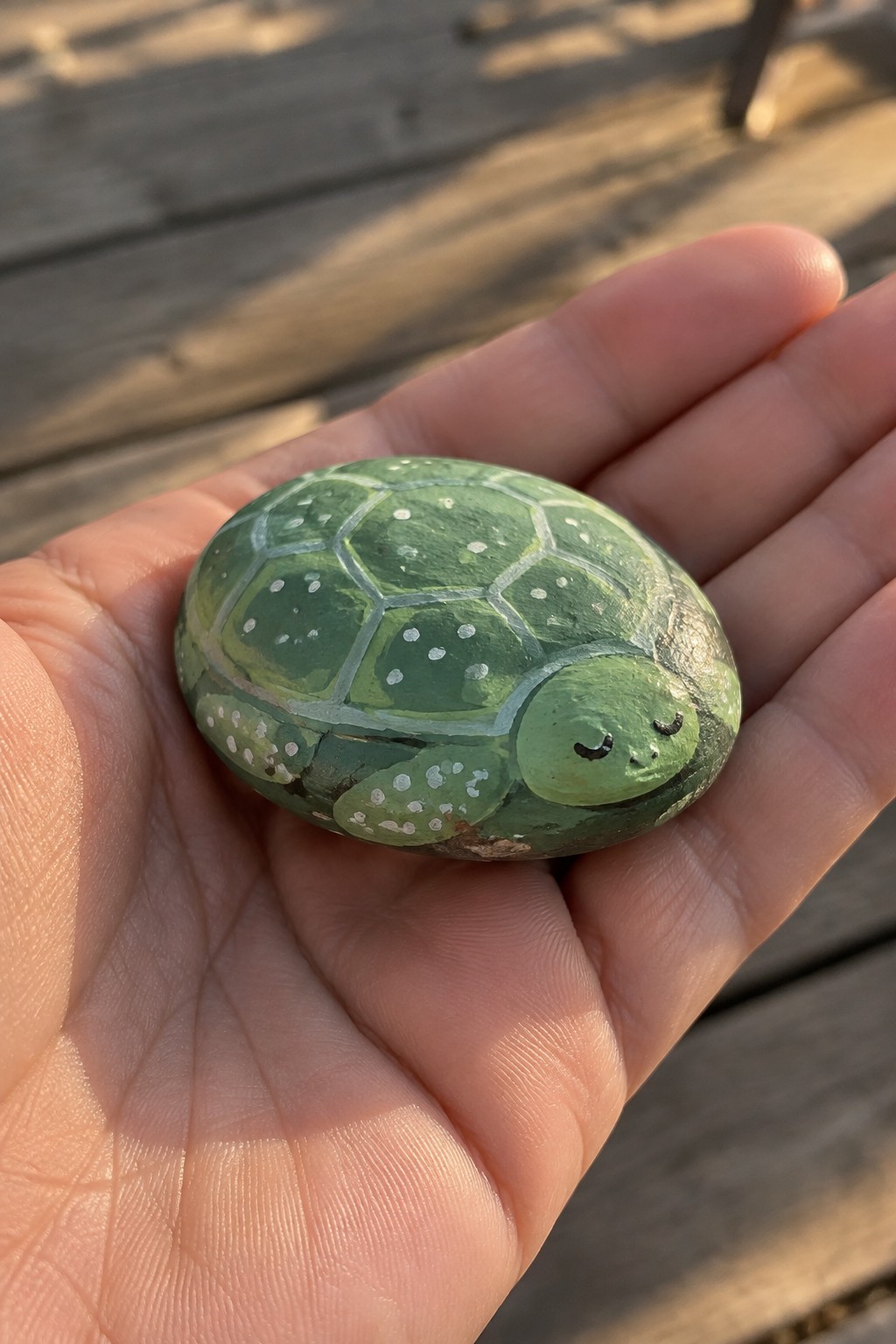
A small oval rock serves as the base for a compact sea turtle illustration because its rounded form follows the natural curve of a shell. The design uses layered green paint with lighter outlines to create shell segments and adds scattered white dots for simple texture across the back and flippers. A basic head shape with short lines for eyes and mouth keeps the entire animal motif small and clear on the stone surface. This approach fits the animal rock category by relying on color blocking and minimal linework rather than fine detail.
The rounded stone shape makes this smart for placing in planters or along garden paths where it can sit naturally among soil or mulch. You could adapt the same layout to a different animal by swapping the shell pattern for stripes or spots to turn it into a different reptile or bug. The small scale means the project uses little paint and works on any similar pebble you find, making it easy to repeat for a set. For Pinterest, the distinct animal silhouette against solid green helps the image show up clearly in searches for animal rock ideas.
Tiny Fox Face on a Rounded Stone
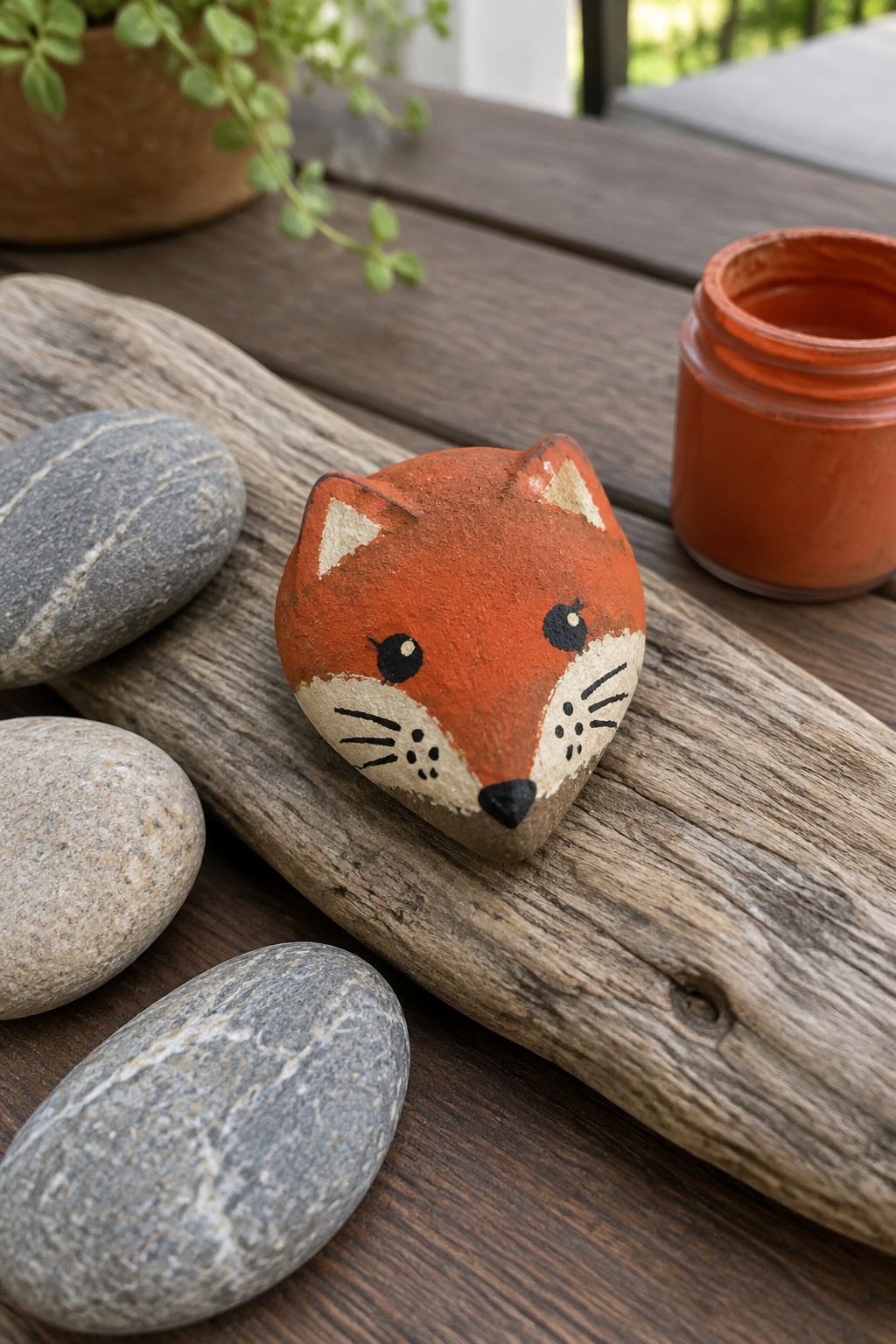
A small rounded stone makes a good base for this fox illustration because its natural curve forms the shape of the animal’s head. The design uses a solid orange base with a lighter muzzle area and simple black details for the eyes, nose, ears, and whiskers. This keeps the painted rock clearly recognizable as a fox while staying compact enough to fit in a hand.
What makes this idea useful is how the small size lets you place the finished rock in a planter, on a shelf, or along a garden path without taking up space. You can adapt the same approach for other animals by swapping the ear shape and main color on a similar rounded stone. The clean color blocking also makes it easy to paint several versions quickly for a small collection.
Oval Stone Painted as a Tiny Penguin
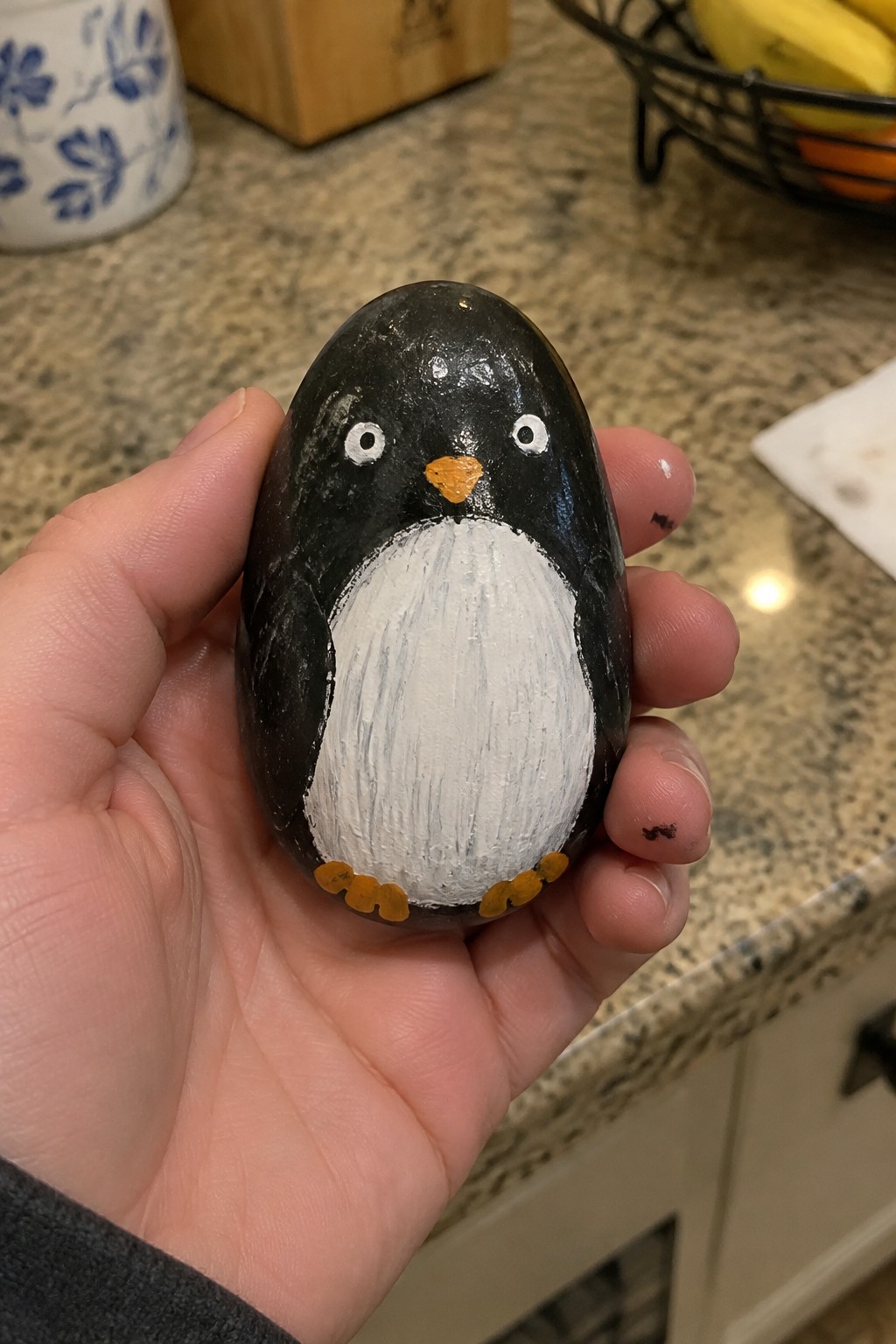
A smooth oval rock painted black on the upper half and white on the lower half forms the body of a compact penguin. Orange paint marks the beak and the three-toed feet along the bottom edge, while two small white circles with black centers serve as eyes. The design stays minimal so the natural curve of the stone defines the animal shape without extra outlines or shading. This approach fits the tiny animal illustration category because it relies on simple color blocks rather than fine detail work.
What makes this idea useful is how the oval rock shape already supplies the basic penguin silhouette. You can repeat the same layout on other rounded stones to create a set of different birds or swap the orange for different accent colors. A painted rock like this works especially well as a small desk accent, inside a planter, or added to a collection of animal figures for a shelf. The straightforward color blocking also makes it easy to scale up or down depending on the size of stone you have on hand.
Hedgehog Rock Painting
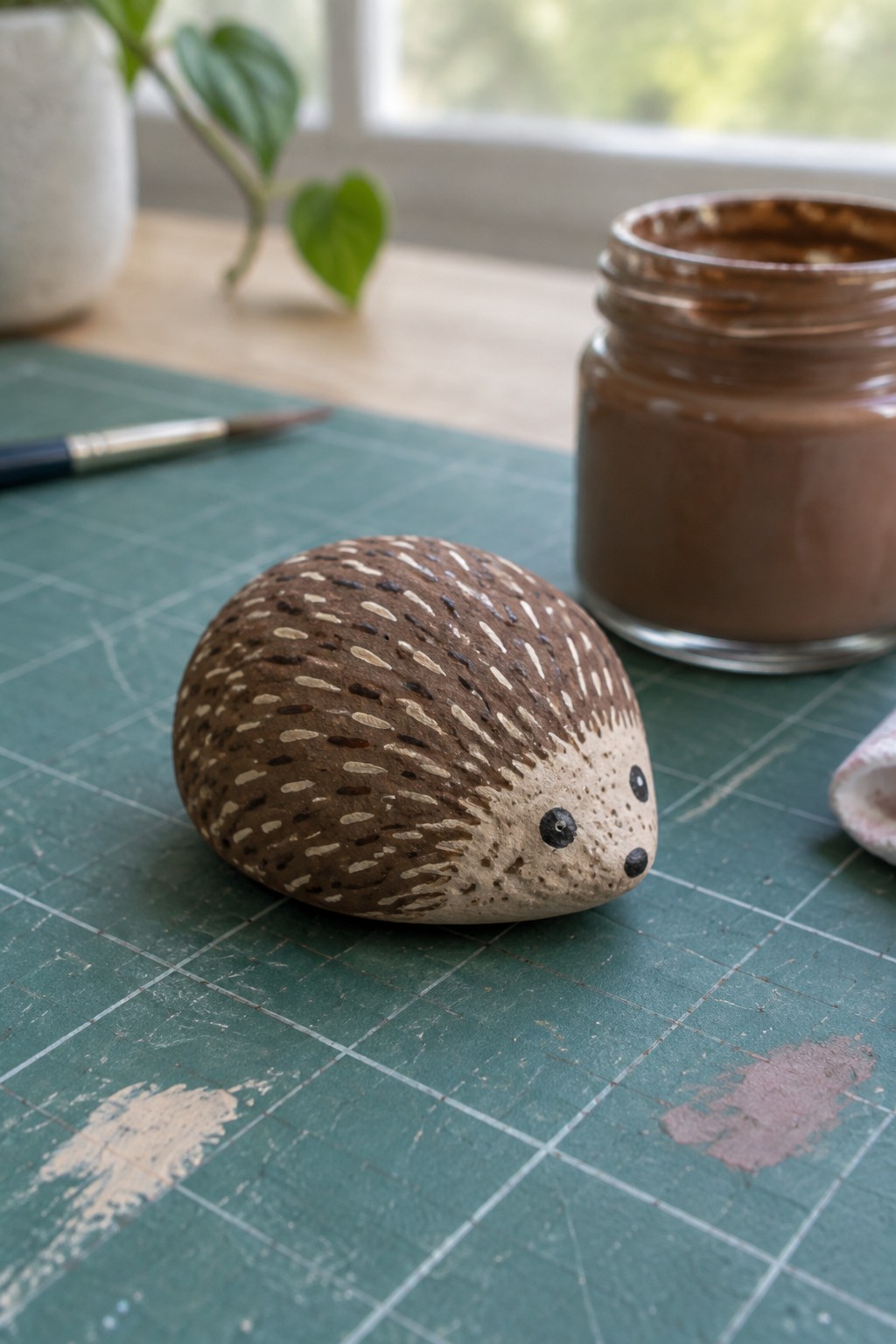
A smooth, rounded stone works well for this hedgehog design because its natural curve already suggests the animal’s compact body shape. The upper portion receives a base of brown paint followed by short white dashes and thin black lines that create the look of quills without needing fine detail work. The lower face stays lighter with only two small black dots for eyes and one for the nose, keeping the illustration simple and readable at a small size. This approach fits the tiny animal illustration category and stays clearly recognizable as a painted physical rock rather than a figurine.
The rock shape does a lot of the work here since the rounded form reduces the need for complex outlining. A painted rock like this works especially well as a small accent in a planter, on a desk, or grouped with other animal designs for a windowsill display. You could adapt the same idea to other animals by changing the quill pattern into fur lines or scales while keeping the minimal face details. The small scale makes this easy to finish in one session and simple to repeat for a set of different creatures.
Tiny Whale Illustration on an Elongated Stone
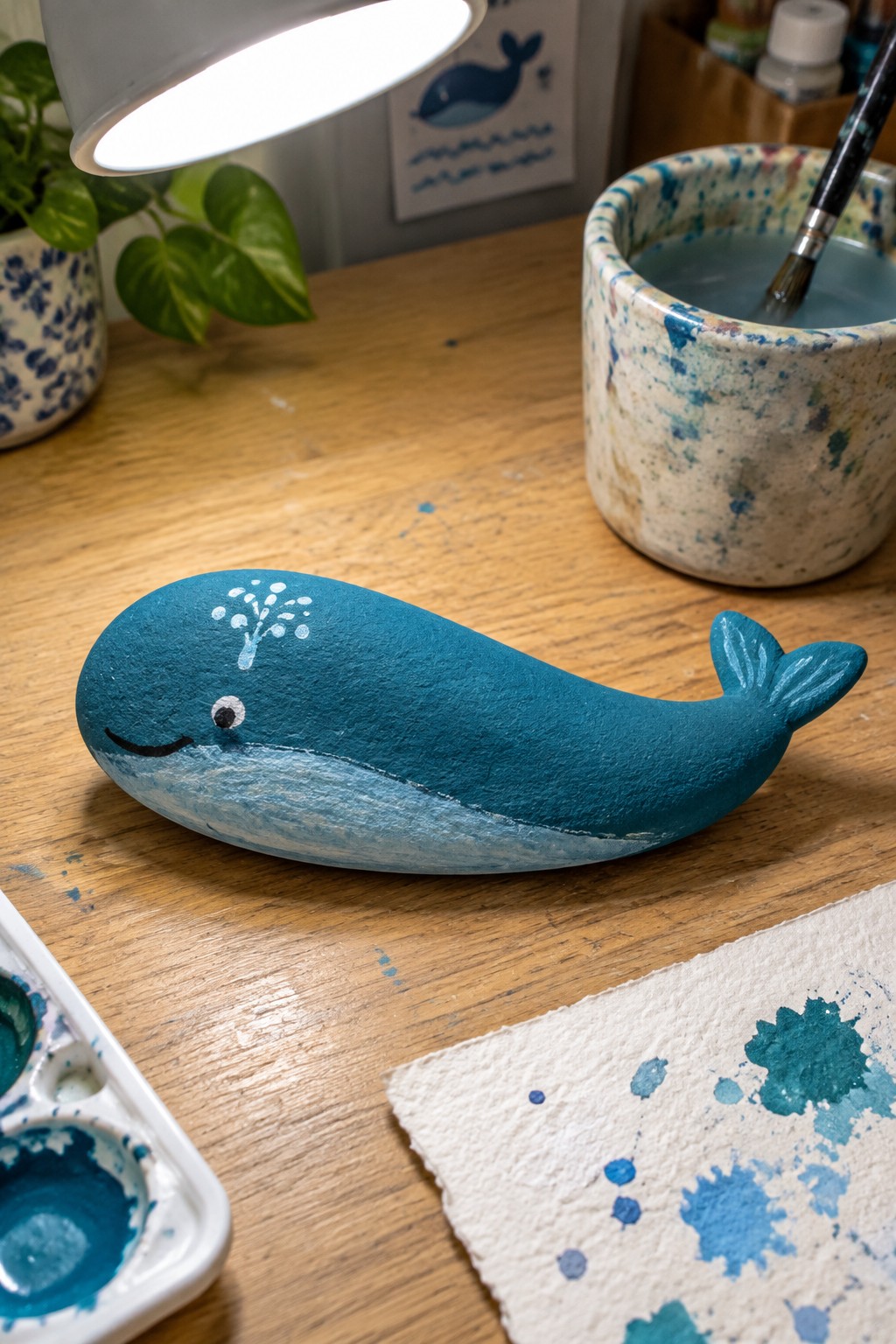
A smooth, elongated stone painted teal works well as a whale rock because its natural shape already suggests the body and tail. The design uses simple color blocking with a lighter shade on the underside and a line of white dots to show the spout. A small eye and curved line give the face without adding extra detail. This approach fits the tiny animal illustration category since the motif stays compact and graphic on the stone surface.
What makes this idea useful is how the rock’s length handles the whale proportions with almost no extra shaping needed. You could swap the spout dots for a different sea animal by changing the fin style and color placement. A painted rock like this works especially well as a desk accent or placed among potted plants. The same layout scales easily to smaller stones by keeping the eye and spout as the only focal points.
Bumblebee Painted Pebbles for Planters
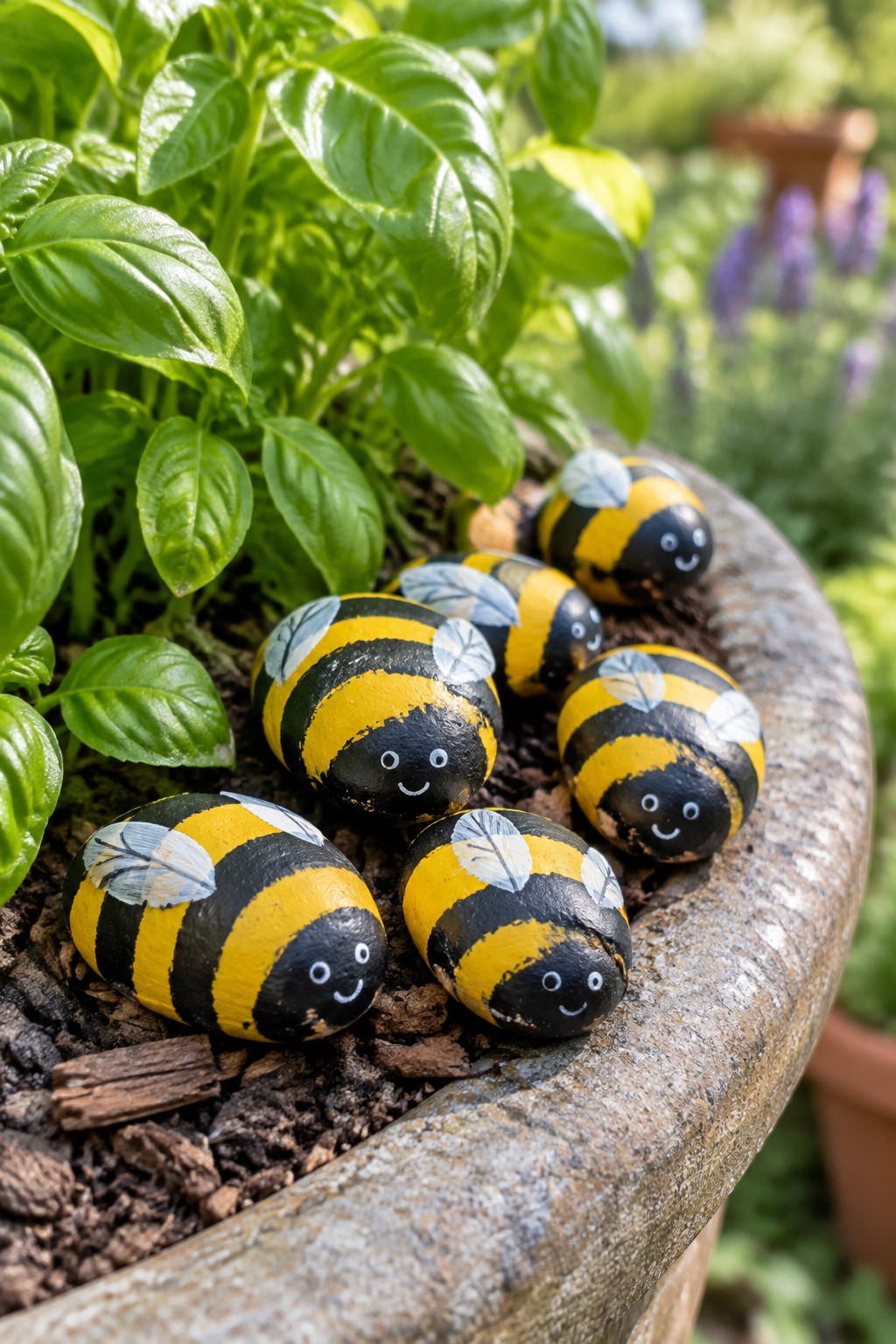
Small rounded pebbles make a natural fit for bumblebee designs because their compact shape already suggests a bee body. Cover each stone with wide yellow and black stripes, then add two small white wings near the top and a simple face using dots for eyes and a short curve for the mouth. The strong color contrast keeps the stripes readable even when the rocks sit among soil and leaves. This creates a bug rock project suited to garden settings.
The small scale makes this easy to adapt for different pot sizes or to produce a whole group at once. Tuck the finished stones directly into the dirt of herb planters or flower beds so they read as part of the scene rather than separate decor. You could change the wing shape or drop the faces entirely if you want a less cartooned version. The same stripe pattern also translates to slightly larger or flatter stones without needing new colors or tools.
Sleeping Cat Pebble
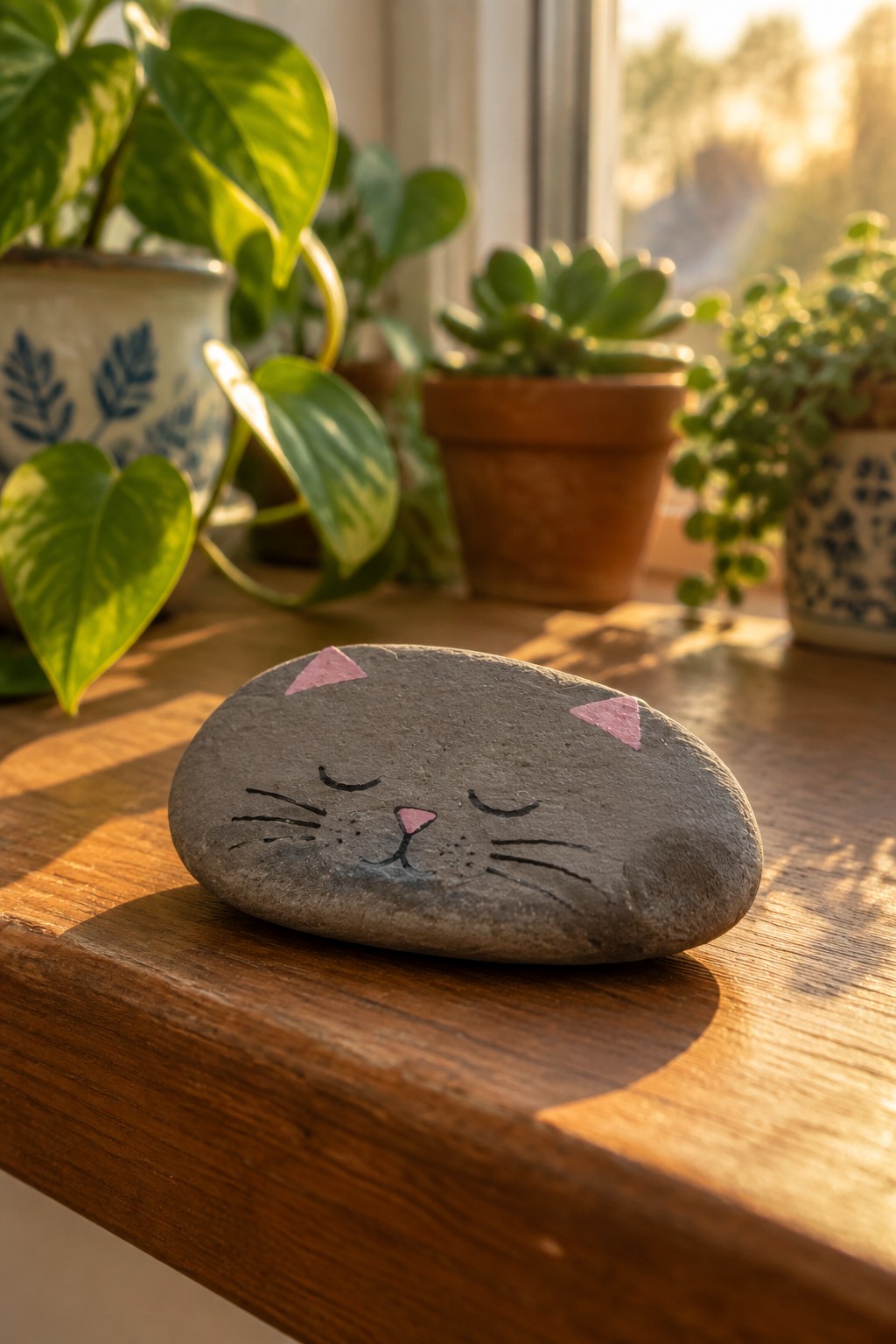
A smooth oval gray stone makes a good base for a small cat face because its rounded form already suggests a head shape. Pink triangle ears sit at the top edge while black lines form closed eyes, whiskers, and a simple nose on the flatter center area. The design stays compact so the natural stone color shows through around the painted features.
This painted rock works well on a shelf or windowsill with plants since the neutral gray blends into many spots without standing out too much. The same face can be adjusted by making the ears rounder for a different animal or by using a narrower stone for a stretched look. For garden use, the same idea scales up on a larger rock placed near pots or paths where the simple lines remain visible from a short distance.
Tiny Dog Face on an Oval Pebble
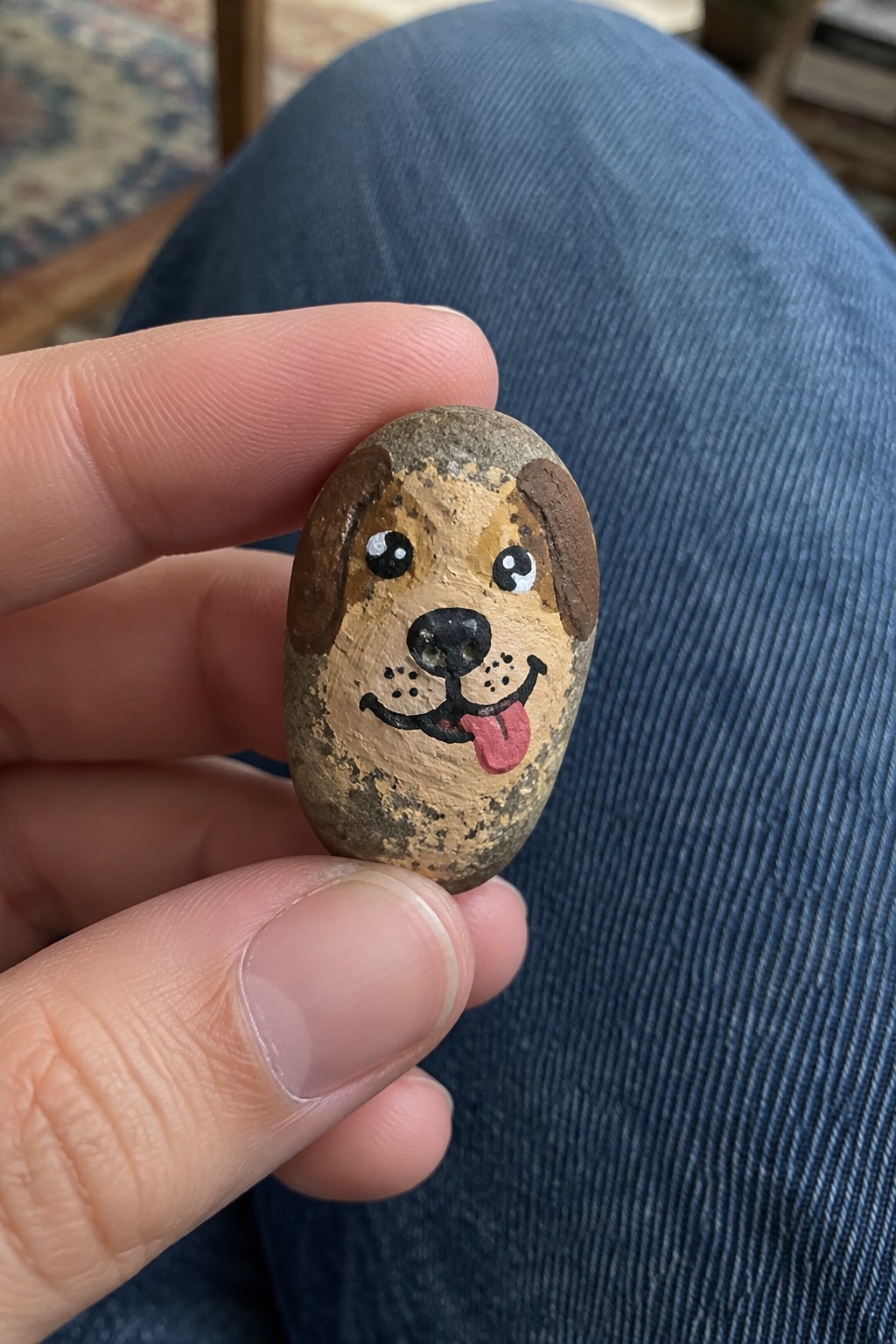
A small oval rock serves as the base for this dog face design, with its natural rounded form helping the painted head shape sit evenly. Brown patches mark the ears on each side while a lighter base covers the face area, and black outlines define the eyes, nose, and curved smile that includes a small pink tongue. Dots along the muzzle add simple detail without crowding the surface. This approach keeps the focus on a compact animal illustration that uses the stone’s existing shape rather than fighting it.
What makes this idea useful is how the oval form reduces the need for complex background work, letting the face take up most of the visible area. It adapts easily to other small stones by shifting the ear placement or eye spacing, and the same color blocking works for similar animal faces like a cat or rabbit. A painted rock like this fits well in a desk tray, tucked near a plant pot, or added to a collection of tiny animal stones for a windowsill display. The straightforward features also photograph cleanly for sharing, which helps it stand out in searches for small animal rock projects.
Owl Rock with Overlapping Scale Pattern
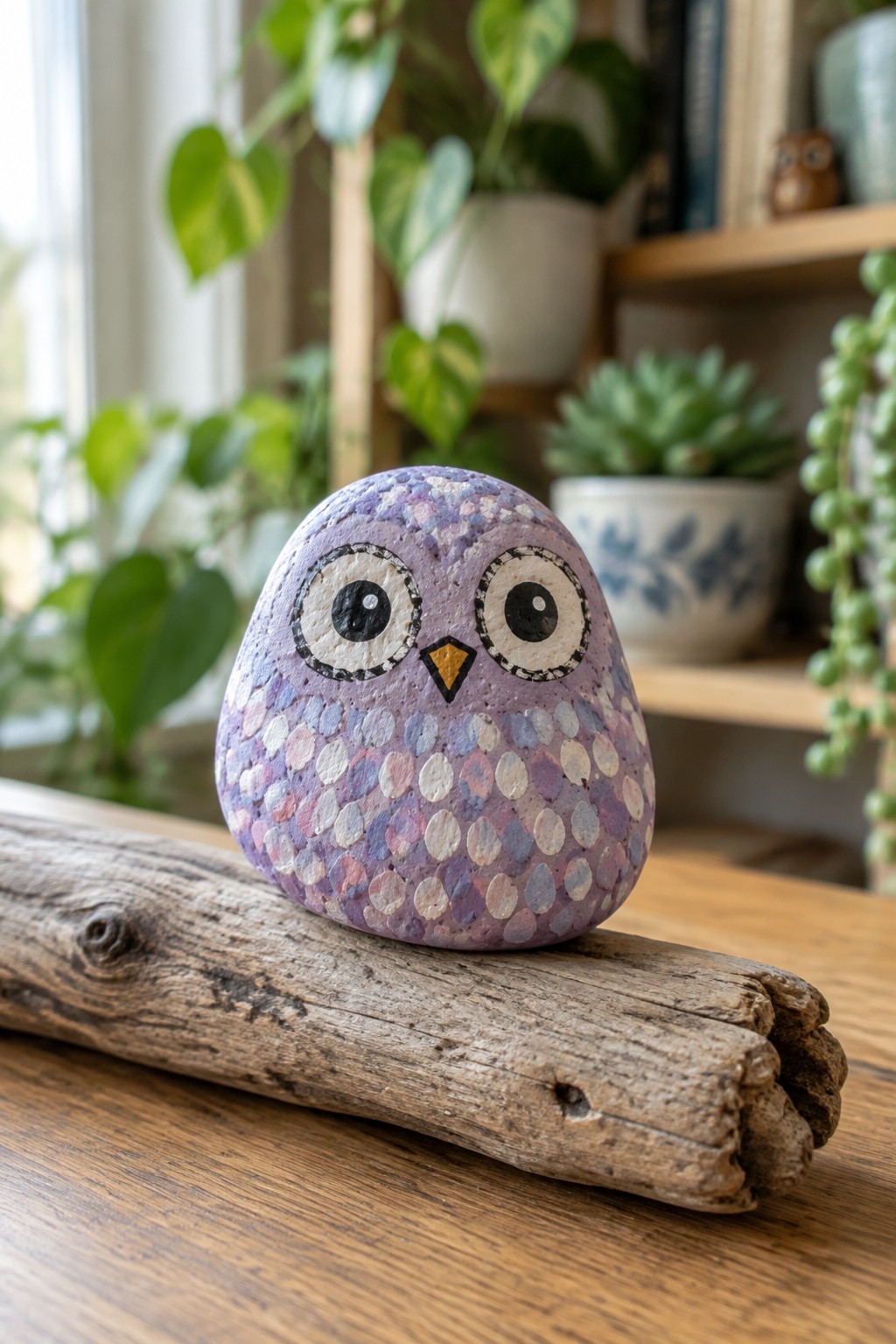
A smooth rounded pebble serves as the base for this tiny owl illustration, with its natural oval form providing the bird’s body shape. The upper section stays a solid soft purple while the lower two-thirds are filled with layered oval shapes in muted pinks, blues, and whites to suggest feathers. Large eyes with white rings and black centers plus a small yellow beak complete the face, all outlined in black for clear definition. This approach belongs in the tiny animal illustration category as a compact painted stone craft.
The rounded stone shape does a lot of the work here by giving the owl its compact silhouette without extra carving. You could adapt the pattern by changing the body colors to match other birds or by simplifying the ovals into basic dots on a smaller pebble. This type of painted rock works especially well as shelf styling or tucked into a houseplant arrangement. The small scale makes it simple to repeat the same layout on any smooth stone you collect.
Bunny Rabbit on a Small Rounded Pebble
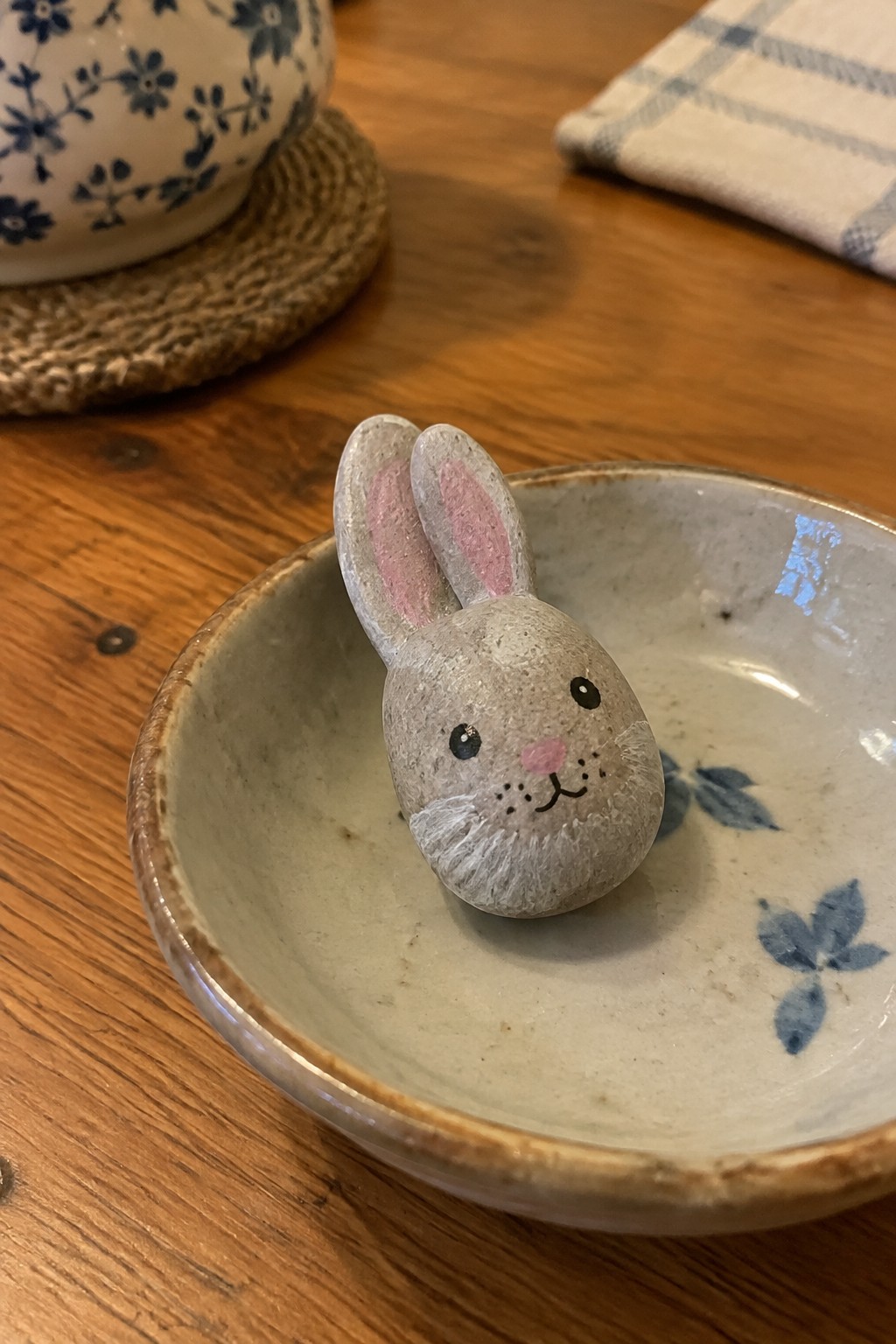
A small rounded pebble with two slight peaks at the top lends itself naturally to a tiny bunny illustration. The design uses the stone’s existing shape for the ears, adding pink color only on the inner sections while keeping the rest of the rock its natural gray tone. Simple black dots for eyes, a pink nose, and a few whisker lines complete the face without covering the stone’s texture.
The small scale makes this easy to adapt by matching ear placement to whatever bumps already exist on your pebble. A painted rock like this works especially well as part of a group of animal stones in a shallow dish or scattered along a windowsill. You can rework the same approach on other rounded stones by changing the ear angle or swapping the pink accents for a different color.
Green Frog on a Rounded Pebble
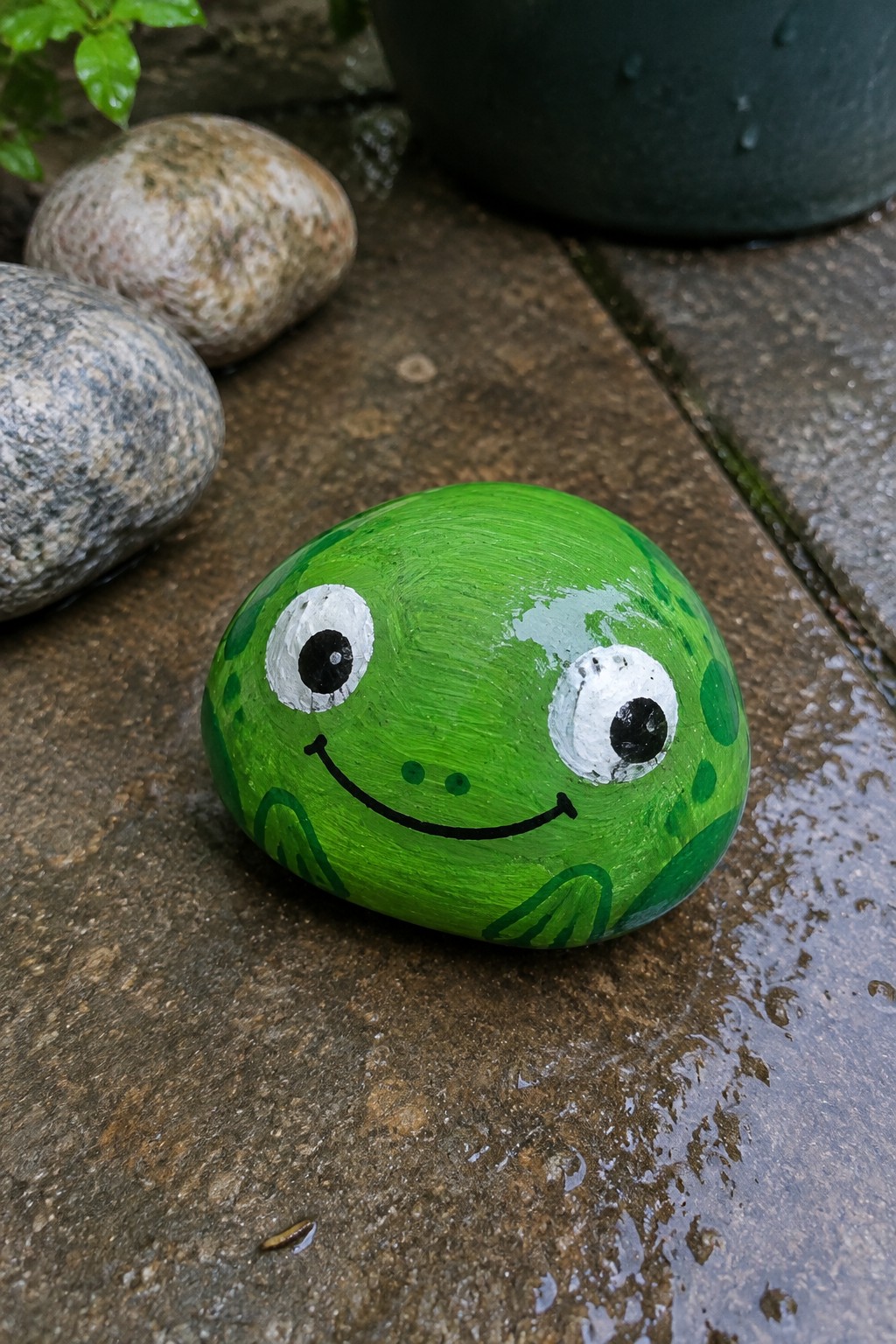
A small rounded stone painted solid green works as the base for a simple frog illustration. Large white circles with black centers form the eyes, while a thin curved black line creates the mouth and a few green dots add minimal facial detail. Curved green shapes along the lower edges suggest legs without needing complex outlines. This approach fits the tiny animal rock category because the natural stone shape already supplies the rounded body form.
What makes this idea useful is how the solid color and basic face can be repeated on any small smooth pebble without special tools. It sits well in a planter, along a garden border, or near a patio pot where the green tone blends with actual plants. The same layout could shift to a turtle or ladybug by swapping the eye size and adding shell lines or spots. The small scale keeps the whole project quick to finish and easy to photograph for sharing.
Oval Stone Mouse Illustration
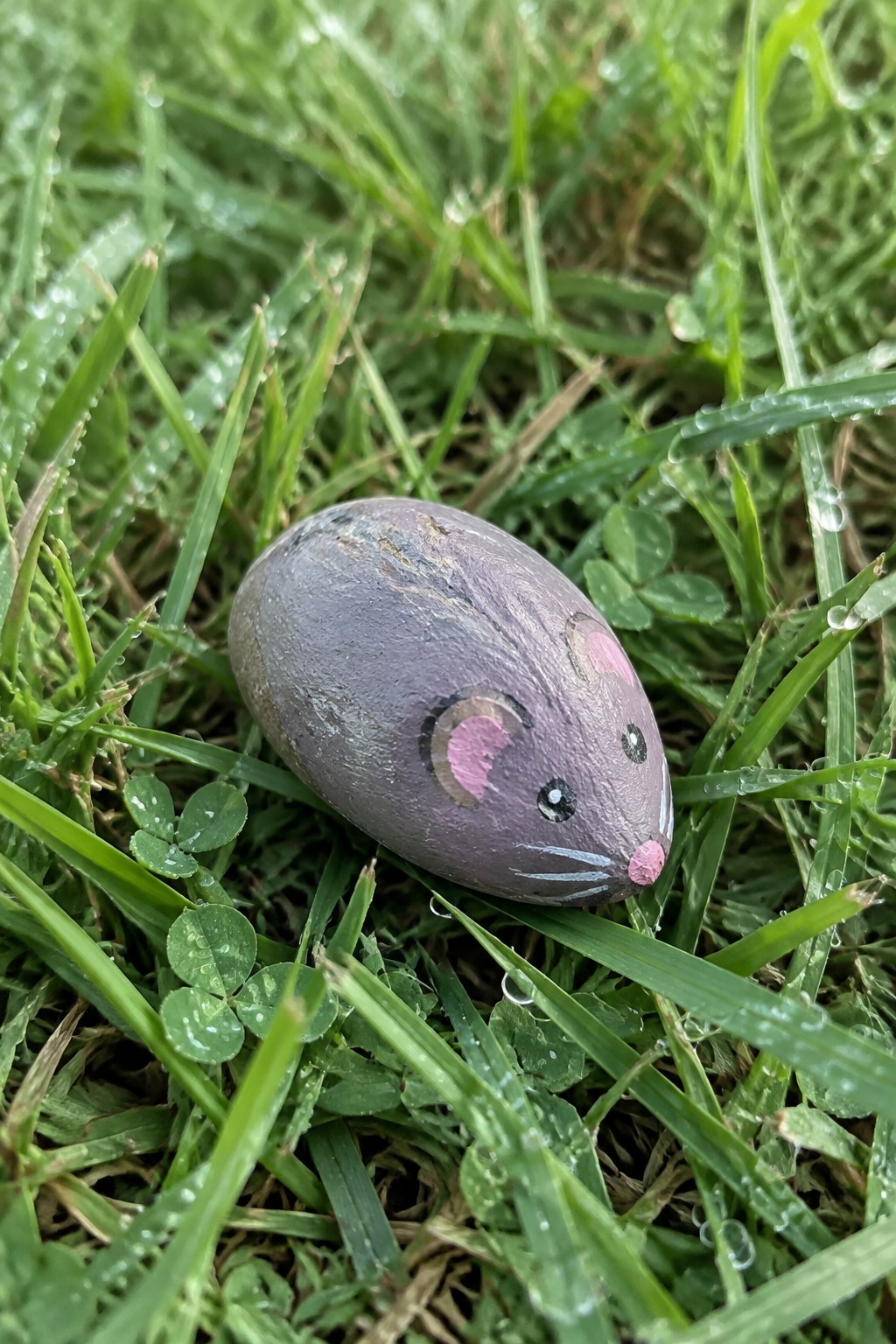
A small oval rock painted with a simple mouse face uses a muted purple base to cover the stone surface, adding pink inner ears and a matching nose, black dot eyes, and fine whisker lines. The rounded shape of the stone lets the face sit naturally without needing extra details for the body. This approach belongs to the tiny animal illustration category where the rock itself becomes the animal form through minimal color blocking and linework.
What makes this idea useful is how the oval pebble shape already suggests a small creature body, so only the face needs painting to complete the effect. The same design adapts easily to other rounded stones by swapping the ear color or whisker style for different rodents. A painted rock like this works especially well tucked into a planter, lined up with other animal pebbles on a shelf, or added to a set for a child’s room. The basic outlines and limited palette make it simple to repeat on any smooth stone you find or buy.
Squirrel Illustration Painted on a Rounded Stone
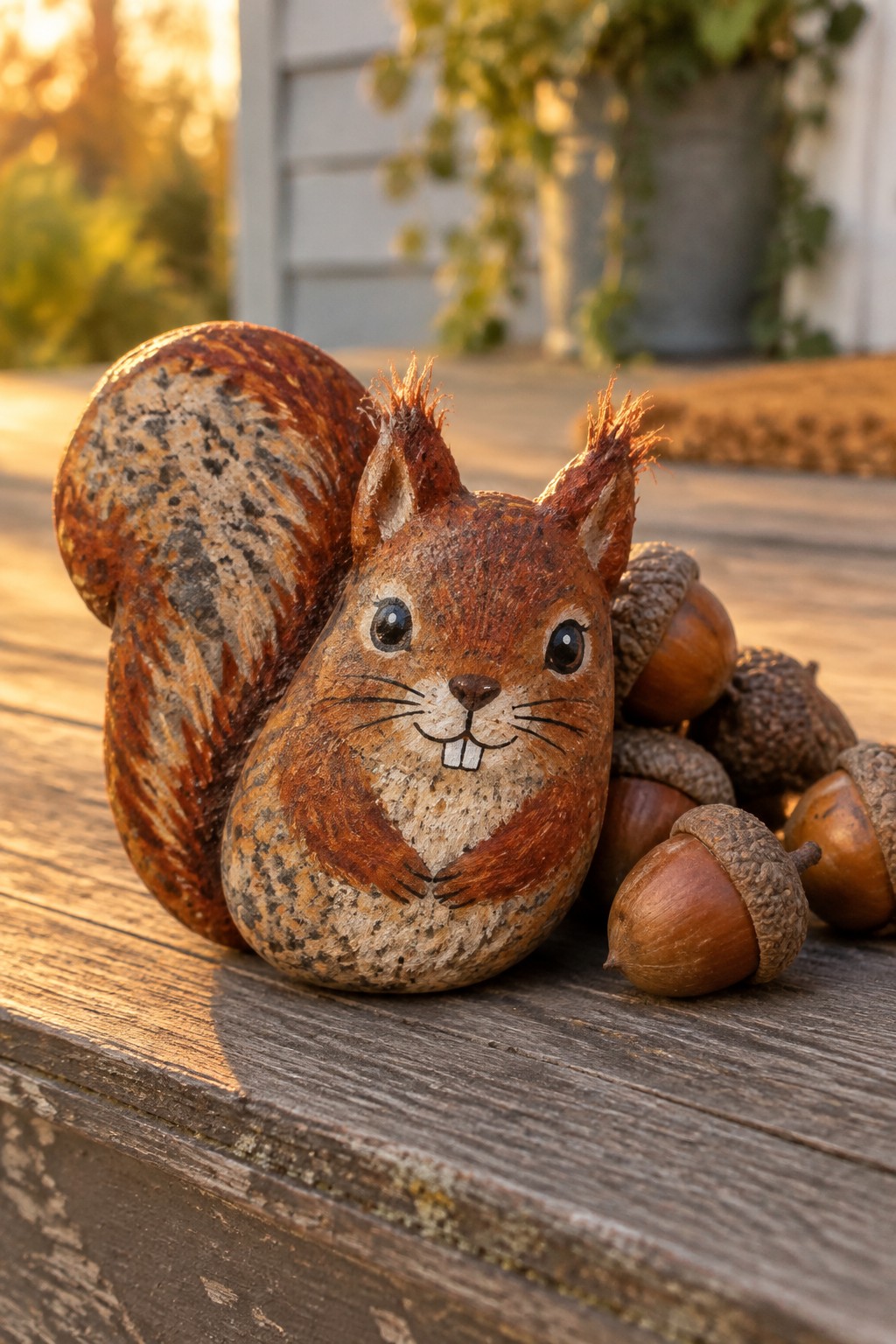
This rock painting idea turns a small rounded stone into a squirrel by using its natural shape for the body and painting a large bushy tail along one side. Brown and rust tones block in the fur areas while lighter paint creates the chest and face, with simple black lines adding eyes, whiskers, and paws. The design fits the animal rock category and works because the curved surface helps the tail and body read as one connected form without extra layers.
The rock shape does a lot of the work here since the rounded form already suggests a squirrel’s hunched posture. A painted rock like this works especially well as a garden accent or shelf display next to real acorns or pinecones. The same idea could be simplified by shortening the tail or changed to a chipmunk or mouse on a similar stone size. The small scale and clear color areas make it easy to photograph for Pinterest while keeping the focus on the animal motif itself.
Raccoon Face on a Rounded Stone
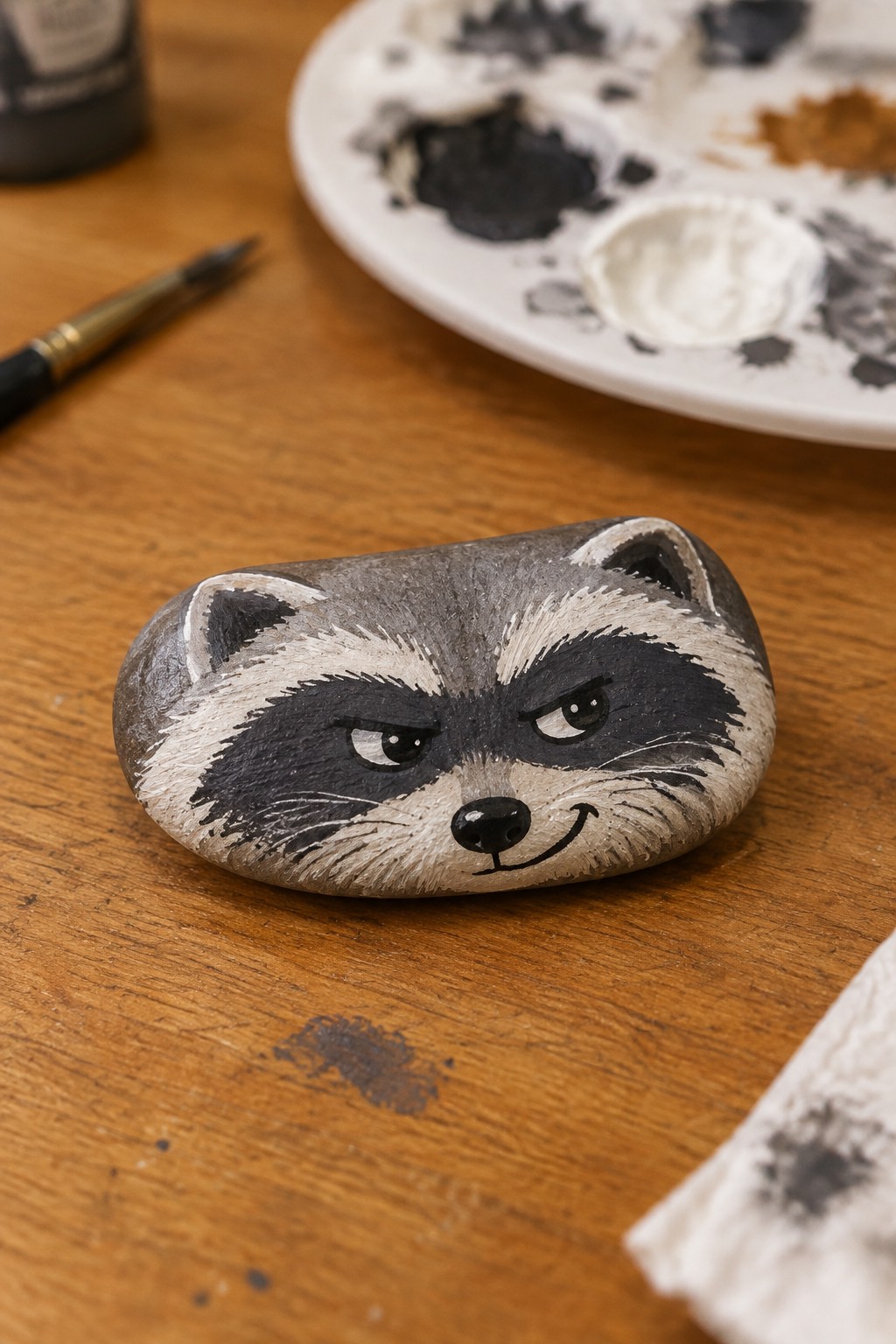
A small oval stone painted as a raccoon face creates a compact animal illustration that uses the rock’s natural shape. Black paint forms the mask around the eyes and the inner ears, while white and gray tones build the muzzle and fur texture. Thin lines add whiskers and a slight curved mouth, keeping the design tight to the surface without extra background elements. This approach suits tiny animal rock projects where the motif fits the stone’s size and curve.
The rock shape does a lot of the work here by giving the face a ready-made oval. A painted rock like this works especially well as a desk accent, tucked into a small planter, or added to a windowsill collection. You could adapt the same color blocking and simple line details for other small animals such as foxes or cats by swapping the ear shape or eye angle. The compact size also makes it simple to paint several versions for a grouped display.
Rainbow Spiral Snail Rock
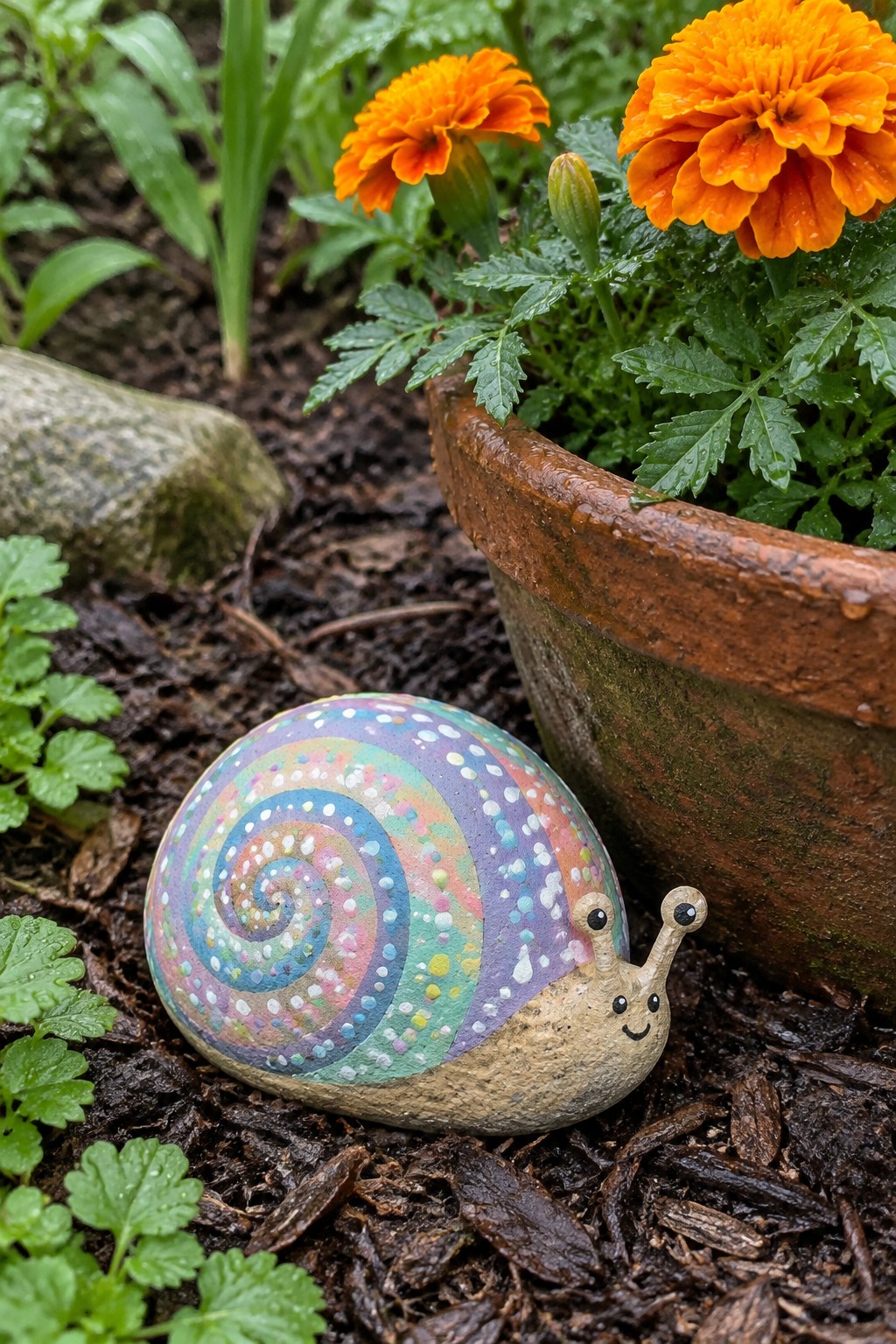
A smooth, rounded stone works well for this snail because its natural oval form already suggests the body and shell shape. The shell is painted with wide concentric bands in blue, purple, pink, and orange, then dotted with small white spots that add texture and keep the pattern from looking flat. The body stays close to the stone’s original beige tone and carries a simple face with black eyes on short stalks and a small curved mouth. This approach lands squarely in the tiny animal illustration category for garden or planter use.
What makes this idea useful is how the rock shape does most of the work, so the painting stays focused on color bands and dots rather than complex outlines. It sits nicely in mulch, a flower bed, or a pot where the bright shell can catch the eye without needing extra props. You could reduce the number of colors or replace the dots with short dashes if you want a faster version on a similar stone. The compact size also makes it simple to tuck into different spots or give as a small accent piece.
Tiny Pig Painted Rock
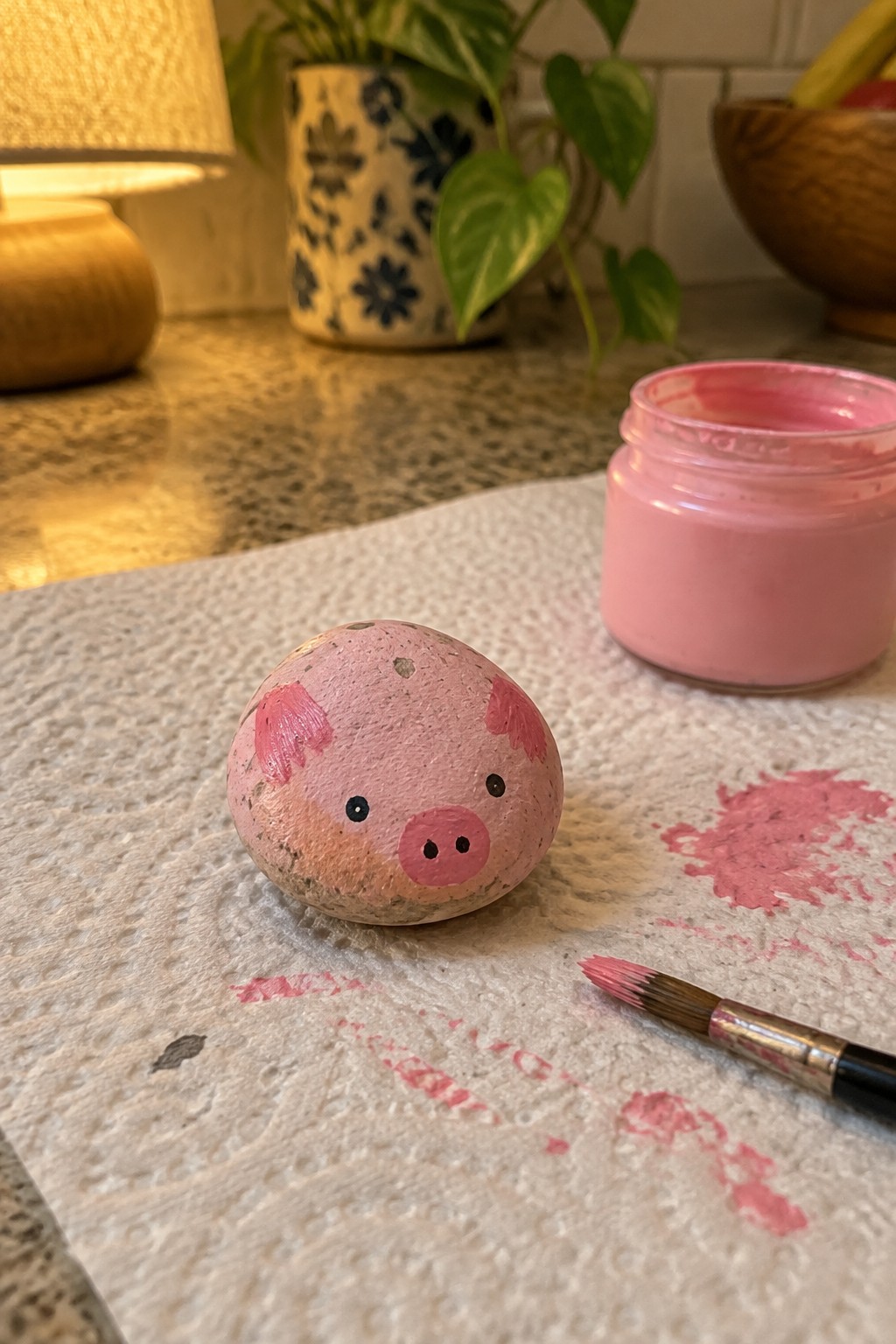
A small rounded stone painted soft pink forms the base for a simple pig face. Darker pink brush strokes create the ears and snout area while black dots mark the nostrils and eyes. This animal rock idea uses the stone’s natural curve to shape the face with minimal added lines.
What makes this idea useful is how the compact size fits in planters or along garden paths. The basic color blocking and dot details can be adjusted for other animals like a cat or bunny by changing the ear shape and snout. For a gift, something like this painted rock slips easily into a small box or jar with other animal stones.
Spotted Cow Pebble
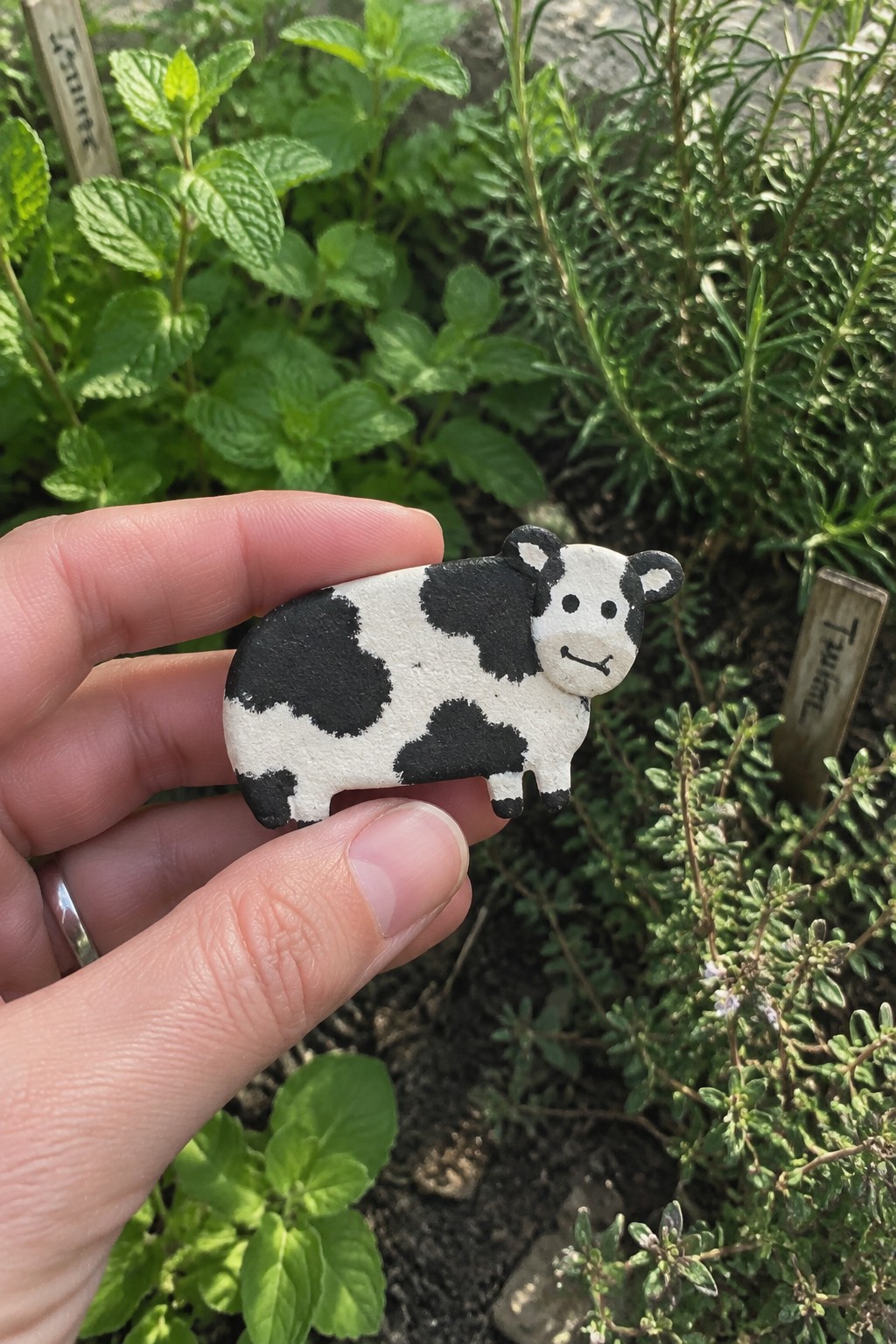
A small rounded stone painted white with bold black patches creates a compact cow rock. The body uses simple color blocking for the spots while the head area gets two black dots for eyes and a short line for the mouth, with the ears and hooves left in black for contrast. The natural curve of the stone supports the body shape so the design stays readable even at a small size. This approach fits the tiny animal illustration category by turning an ordinary pebble into a farm animal accent.
What makes this idea useful is how the small scale lets it tuck into planters, along garden paths, or inside a windowsill tray without crowding other items. The same black and white blocking can be swapped onto a different pebble shape to make a sheep or pig by adjusting the head outline and spot pattern. For a gift, something like this fits in a small bag or pocket and needs no wrapping. The rounded stone shape makes this smart for outdoor use where finer details might wear off over time.
Mini Flamingo Rock
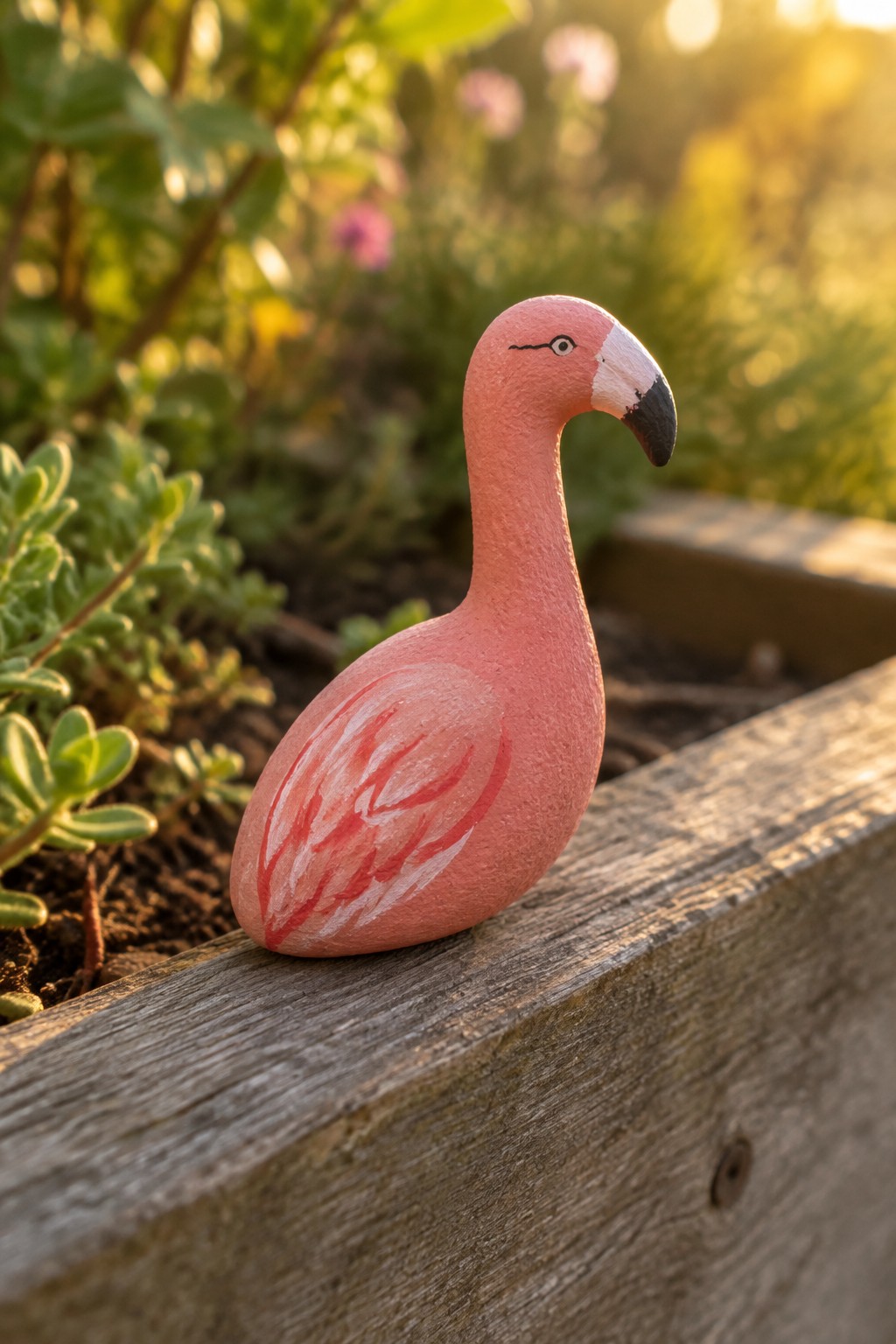
A small oval rock works as the base for this flamingo by letting the natural curve form the body and long neck. Pink paint covers most of the surface with white accents on the head and wing, while black outlines define the eye and beak tip. The simple color blocking and curved brush strokes for the wing feathers keep the animal shape clear even on a tiny stone. This fits the animal rock category and shows how a rounded pebble can carry a recognizable bird without extra details.
The compact size makes this easy to place in a planter, on a windowsill, or along a garden path. You could repeat the same shape on other smooth stones to build a small flock or swap the pink for different bird colors. The strong silhouette stands out in photos, which helps when sharing finished rocks online. For a gift or set, paint several on matching pebbles and group them together.
Tiny Seahorse on a Curved Stone
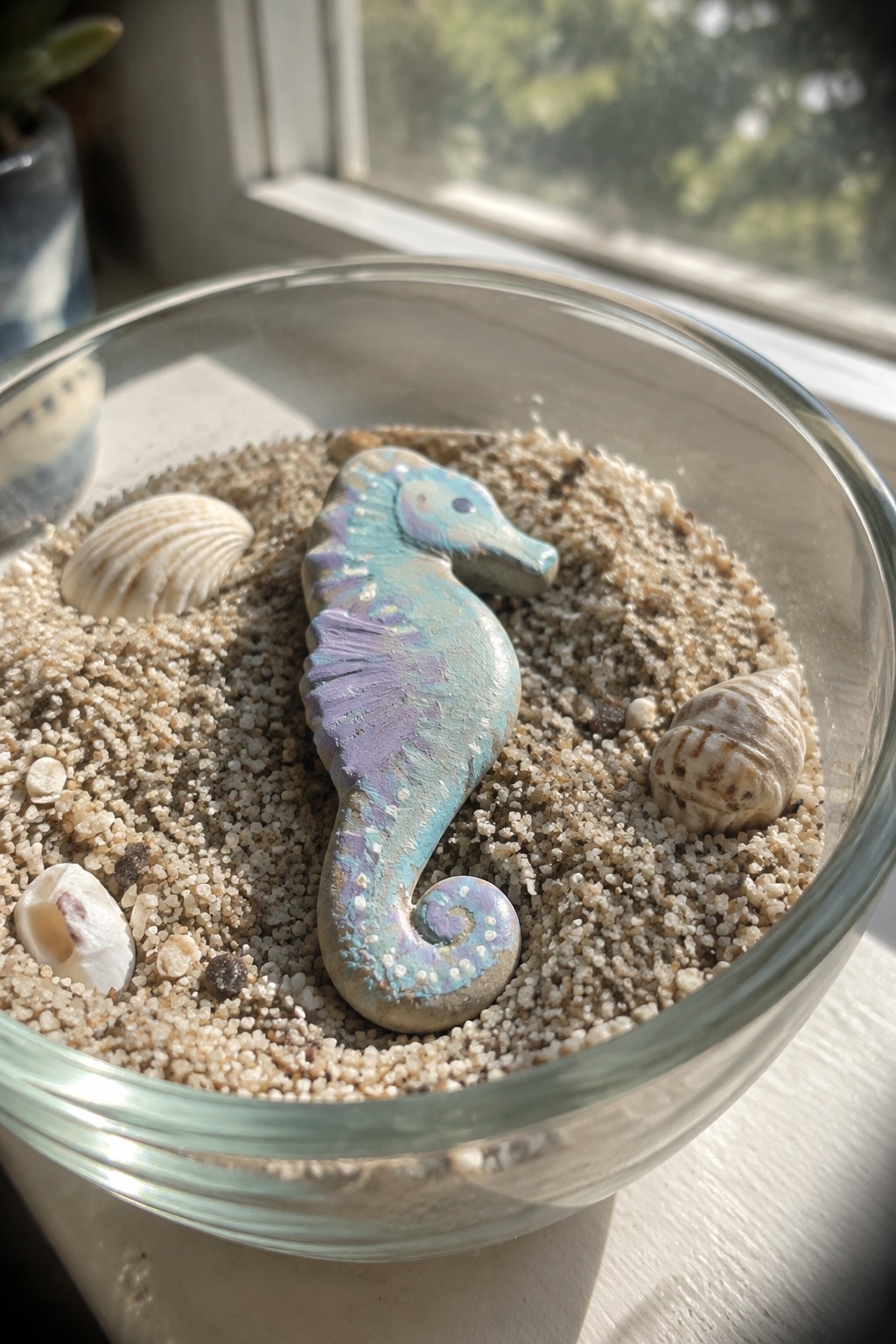
A seahorse rock painting uses an elongated stone with one naturally curved end to form the body and tail. The painter followed that shape with smooth color blocks in aqua and purple, then added scattered dots and simple line details to suggest texture and fins. This approach fits the small animal illustration category because the rock itself supplies the main outline.
The rock shape does a lot of the work here, so the same idea can be copied onto any narrow stone without needing perfect freehand drawing. You could swap the colors for different ocean tones or scale the dots down on a smaller pebble for a whole set. A painted rock like this works especially well as a shelf accent, in a glass bowl display, or tucked into a planter with sand.
Frequently Asked Questions
1. What kinds of rocks work best for painting tiny animal illustrations? Smooth, flat stones around 2 to 4 inches wide are ideal because they provide a stable surface for small details. River rocks or beach pebbles often have the right shape and texture. Wash and dry them thoroughly before starting to help the paint adhere better.
2. Which paints and tools help create fine animal features on small rocks? Acrylic paints in a variety of colors work well, along with fine detail brushes sized 000 or 00. A white gel pen or fine liner can add highlights like eyes or whiskers. Start with a base coat, let it dry completely, then layer on details to avoid smudging.
3. How do I seal painted rocks so the animal illustrations last longer? Apply a clear acrylic sealer in thin layers after the paint dries fully. Choose a matte or gloss finish based on the look you want. This protects against fading from sunlight and moisture, especially if the rocks will sit outdoors.
4. What are some beginner tips for painting tiny animals without mistakes? Practice the animal shapes on paper first to get comfortable with proportions. Use a pencil to lightly sketch the design on the rock before painting. Work in good lighting and take breaks to avoid hand fatigue, which helps keep lines steady.
5. How can I display or use these painted rocks in creative ways? Place them in a small dish as desk decor, arrange them in a garden path, or tuck them into potted plants. They also make thoughtful gifts when wrapped in tissue paper. For added fun, hide them in parks for others to find as part of a rock painting exchange.
