


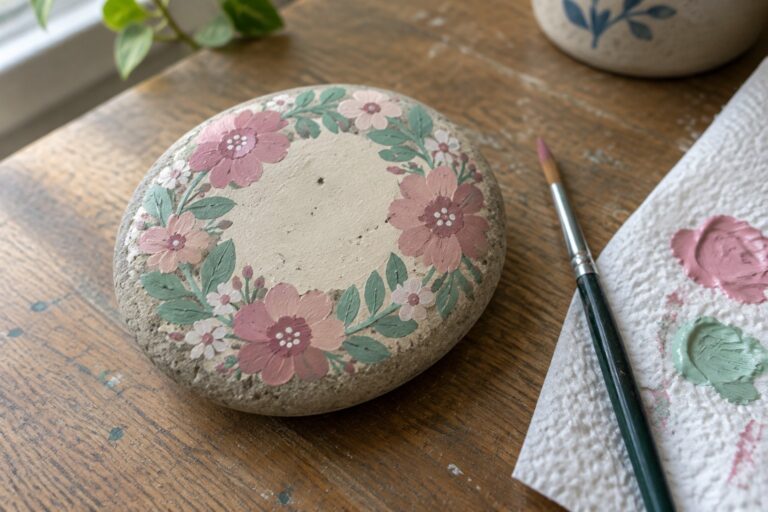
I started painting folk art flowers on rocks a couple of years ago when I was looking for a quiet project to fill some evenings.
The patterns I use are based on basic shapes and repeats that do not require a lot of precision.
In this post I have gathered seventeen designs that worked out nicely on the rocks I had at home.
They suit different rock shapes and sizes so you can pick what matches what you find.
A few of them have become my regular go to when I want something straightforward to paint.
Folk-Art Flower Wreath on an Oval Stone
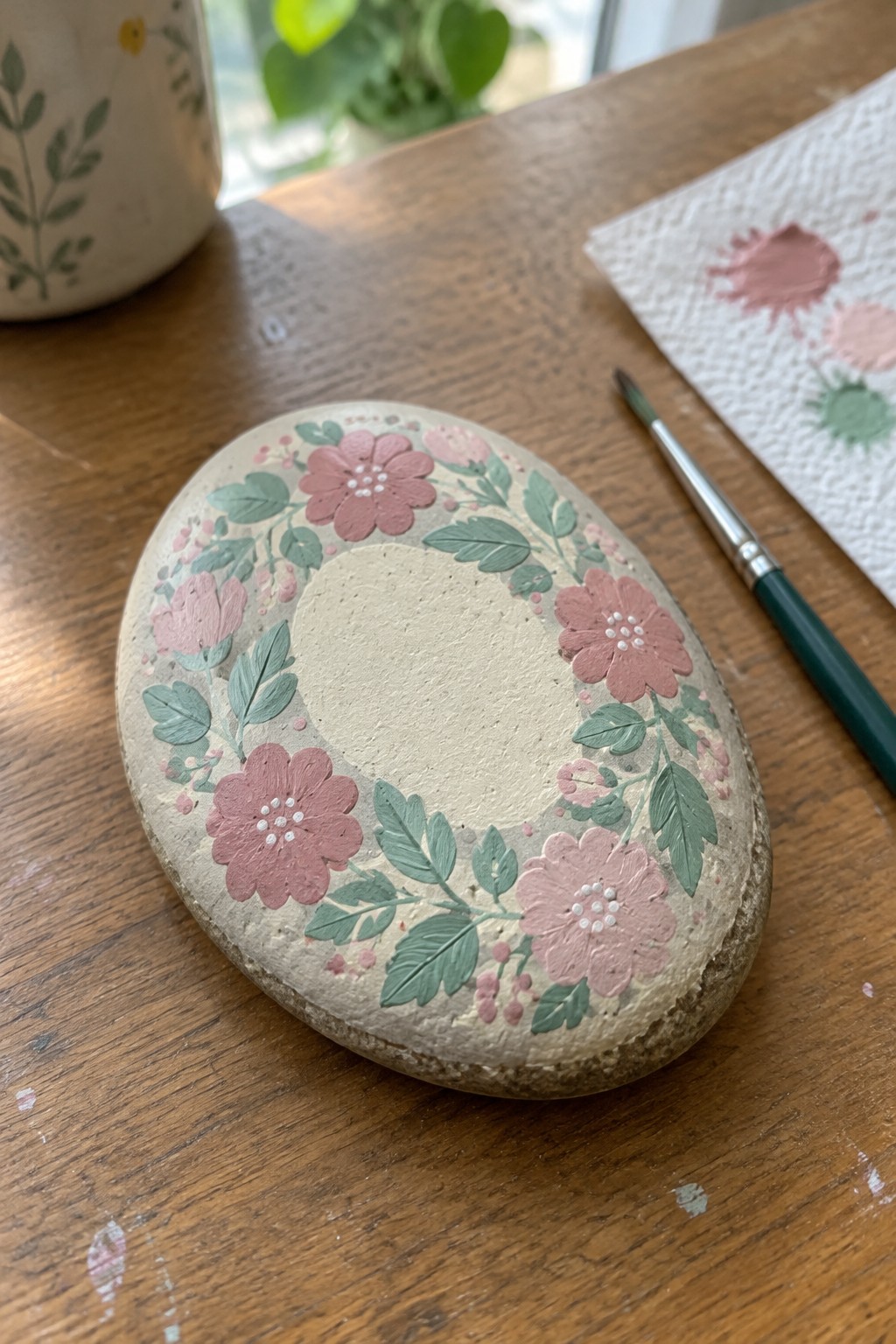
A smooth oval rock makes a strong base for a folk-art flower wreath that wraps around the curved surface and leaves the center bare. Pink five-petal flowers with white dot centers sit between layered green leaves and scattered pink berry dots, forming a loose ring that follows the stone’s shape. The design uses flat color areas and simple dot accents that keep the natural stone texture visible in the middle and along the edges.
The open center lets the rock’s own color become part of the pattern, so the same idea works on stones of different sizes without needing to cover every inch. This wreath style fits garden planters or porch displays where the flowers add color while the unpainted middle keeps the piece from looking too busy. You could change the pink to another shade or reduce the leaf layers to make it faster on smaller pebbles for a set.
Yellow Daisy Folk Flowers on Rounded Stones
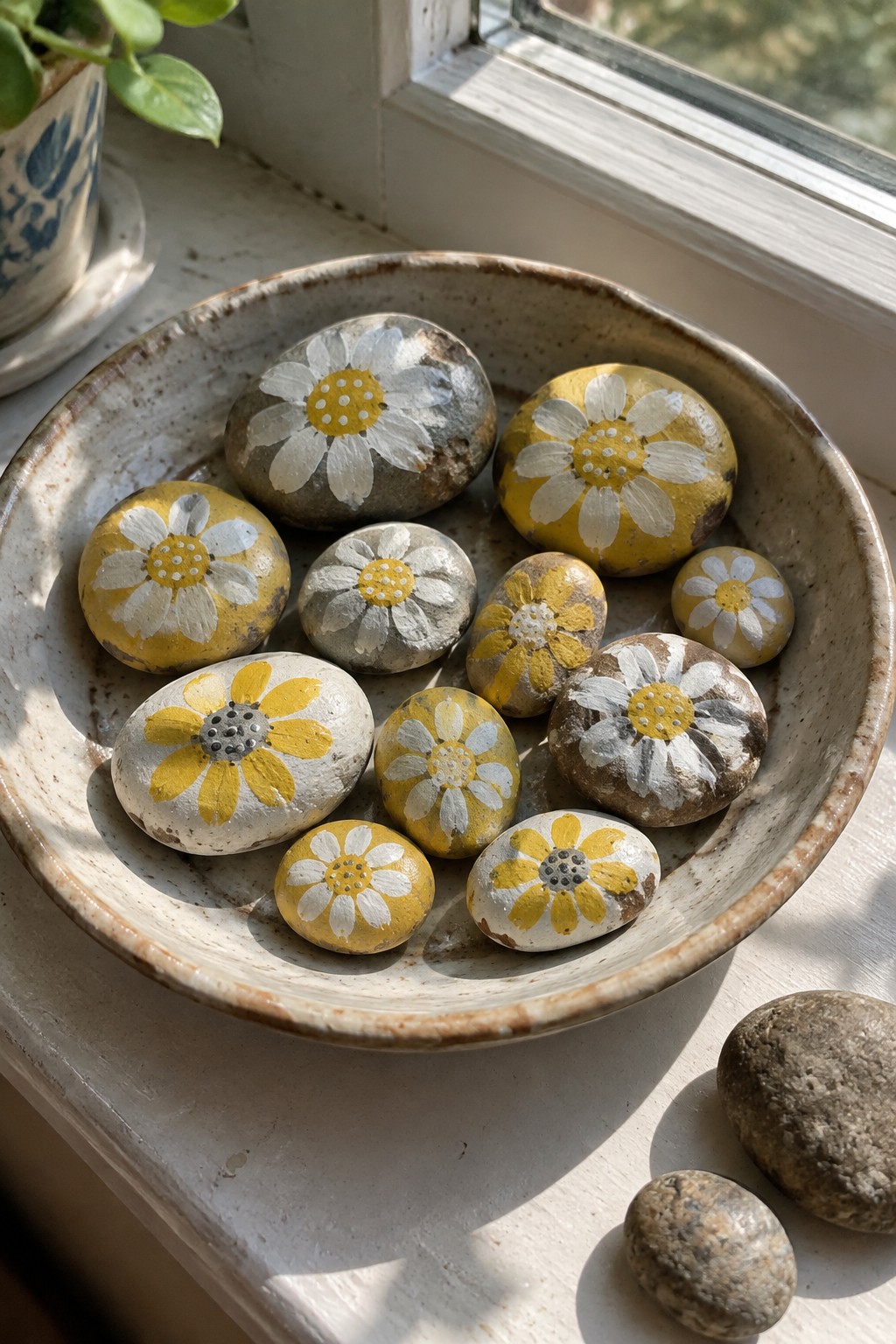
Painted river stones featuring daisy motifs offer a straightforward flower rock project that works across multiple sizes. The rounded stones allow the yellow petals to follow the natural curve, while white outer layers and dotted centers stand out clearly against either the raw stone or a yellow base coat. This style fits a painted pebble collection or garden accent craft, where the same motif repeats across a group of stones for cohesive display.
The small scale makes these easy to tuck into planters, along porch steps, or inside a windowsill bowl without crowding the space. You could simplify the design to basic yellow petals on larger flat stones or swap the center dots for a single solid color to match existing garden decor. The repeating daisy shape stays legible even when the rock surface is uneven, which helps the finished pieces look intentional in photos.
Clustered Sunflower Folk Pattern on a Rounded Stone
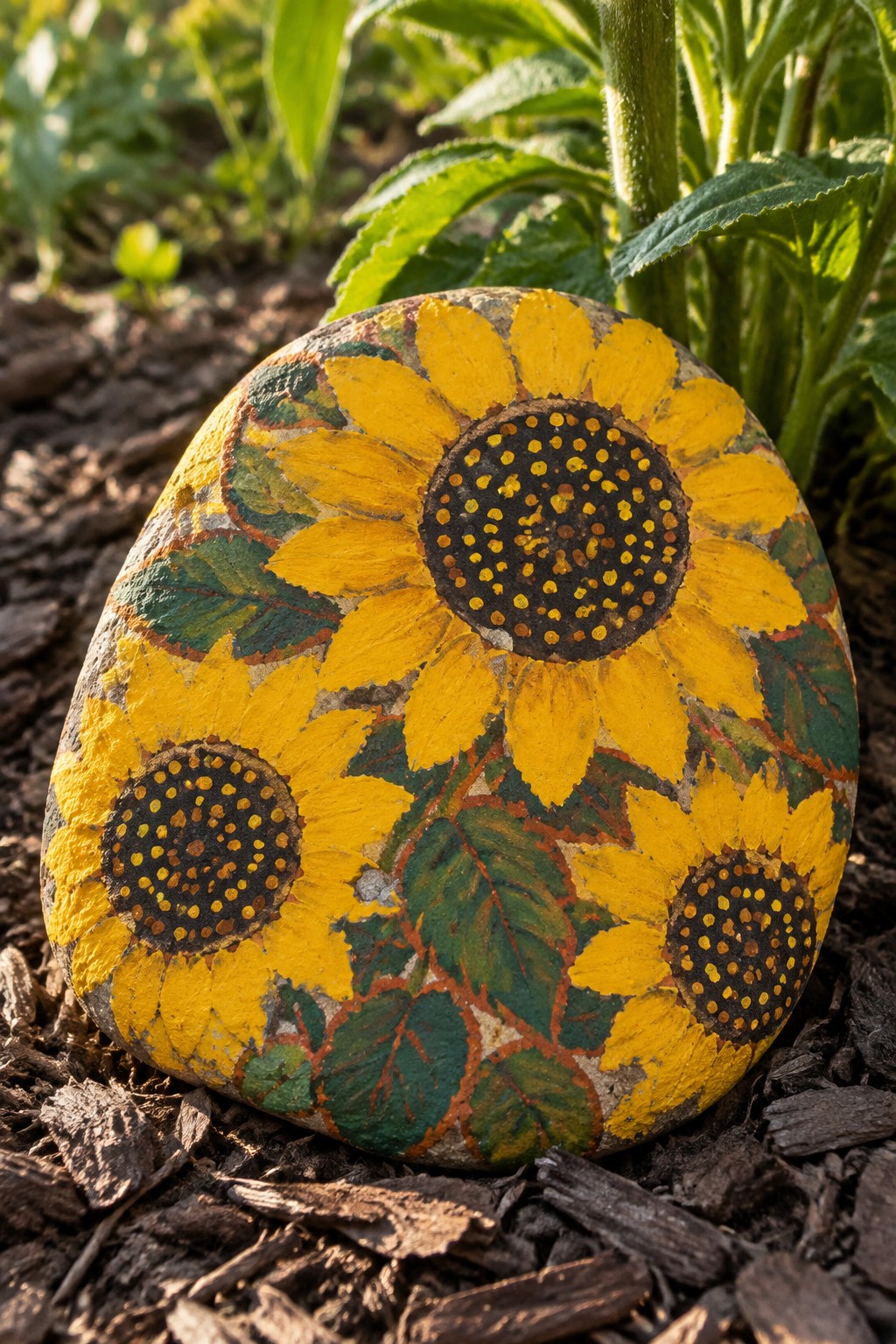
A rounded stone serves as the base for this folk-art flower project where multiple yellow sunflowers with dotted dark centers cover most of the surface and green leaves fill the remaining spaces. The design uses simple petal shapes and repeated circular centers that follow the curve of the rock without distortion. This approach fits the flower rock category because the motif stays graphic and readable even when the stone sits among soil and plants.
What makes this idea useful is how the rounded form lets the sunflowers wrap naturally around the sides so the rock looks finished from every angle. For garden decor this type of painted stone works well tucked into flower beds or mulch near the base of taller plants. The same layout could be reduced to two flowers on a smaller pebble or expanded with extra leaves on a flatter stone while keeping the dotted centers and color blocking intact. The strong yellow against green also helps the design show up clearly in photos for sharing.
Folk Art Rose on a Rounded Stone
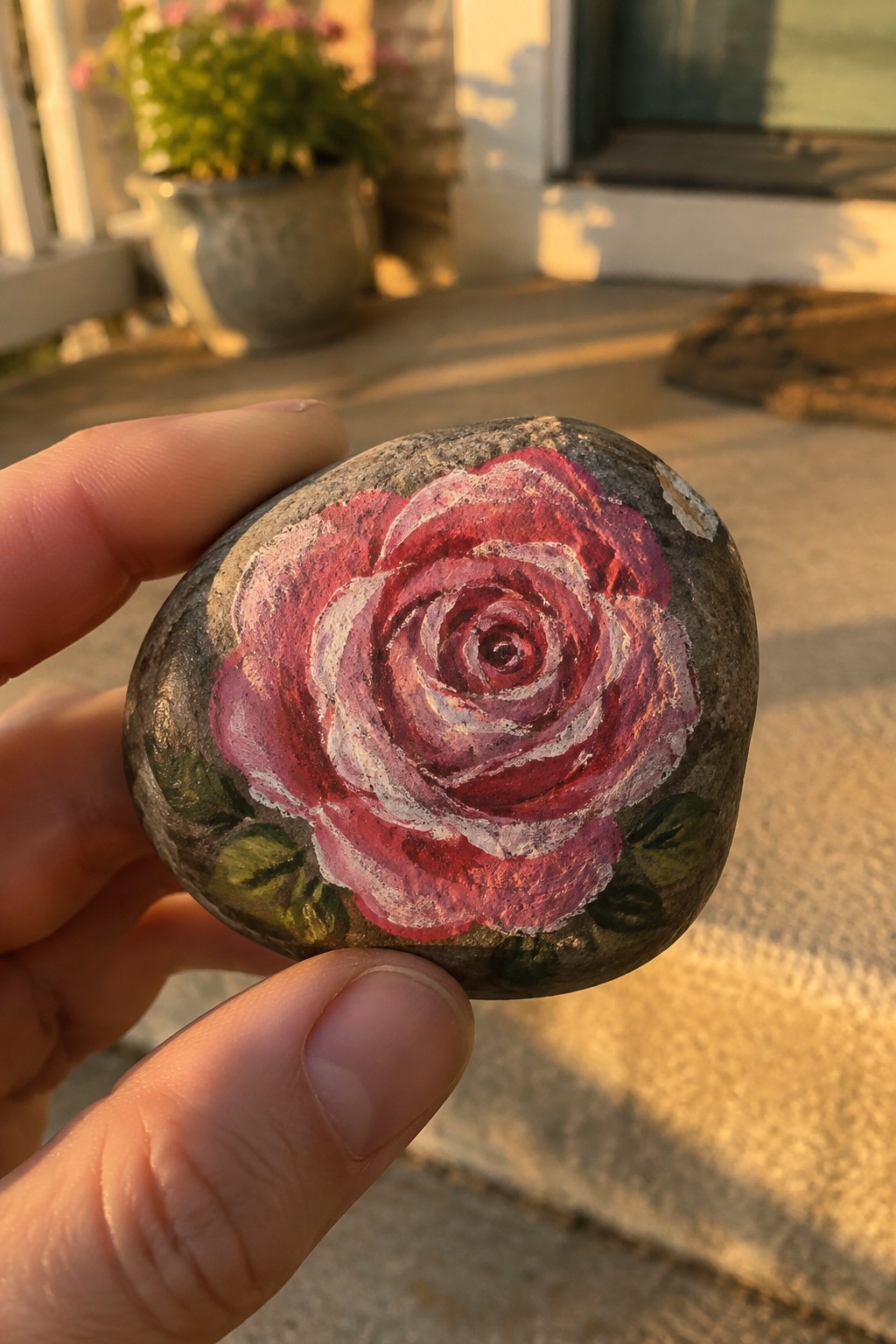
A rounded stone with a slightly textured surface makes a strong base for a folk-art rose because the curve lets the spiral petals build outward in natural layers. The design uses overlapping shades of pink and magenta with white edge highlights to give the bloom dimension, while a few green leaves sit at the bottom to anchor the motif. This approach keeps the focus on the flower itself rather than trying to cover the entire rock.
What makes this idea useful is how the rose pattern follows the stone’s oval shape without needing extra borders or background color. For garden decor, this type of painted rock sits well in planters, along porch steps, or mixed into mulch where the pink tones contrast with greenery. The motif could easily be changed into other folk-art flowers by shifting the petal count and color layers while keeping the same centered layout.
Folk-Art Flowers on Rounded River Rocks
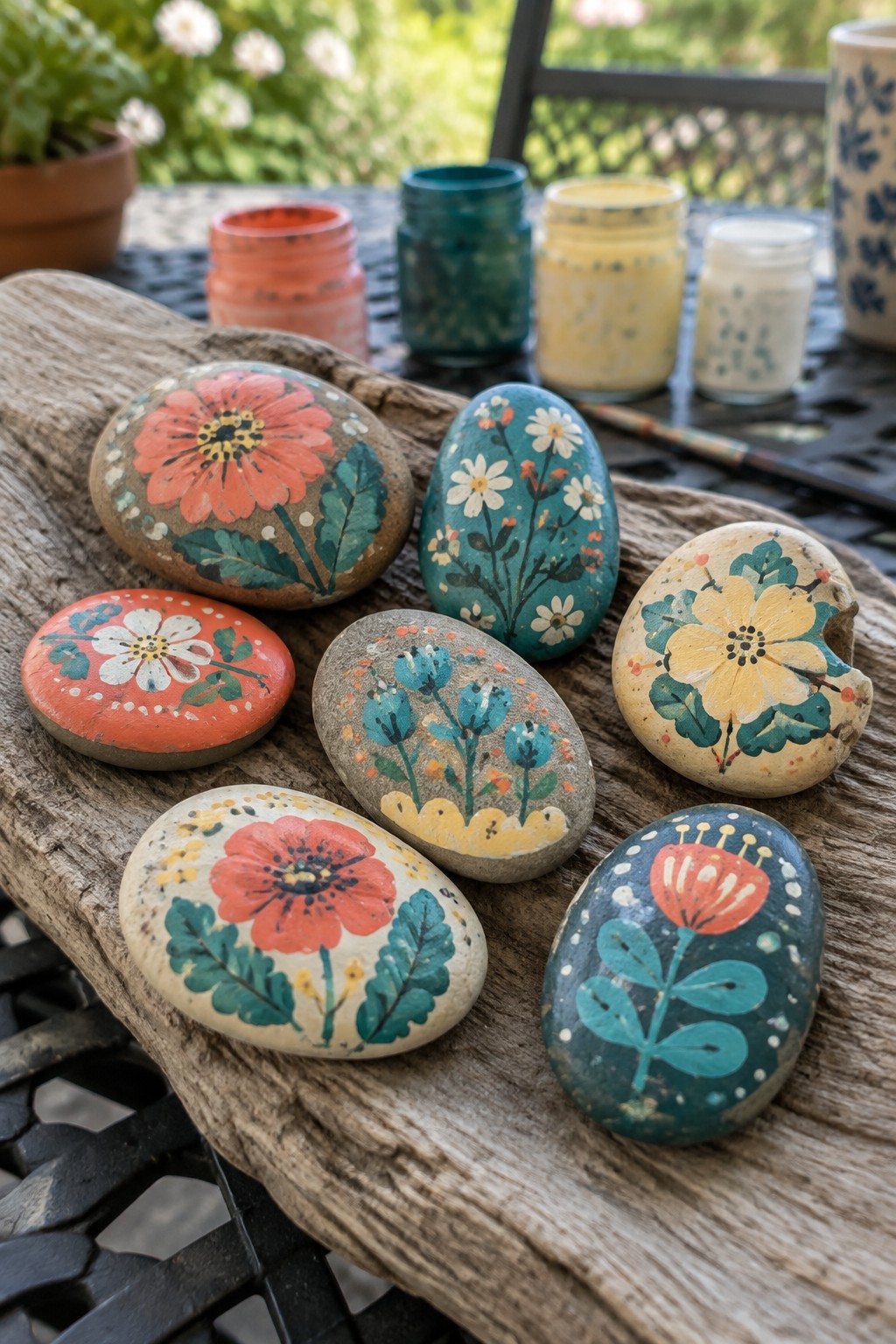
Paint folk-art style flowers onto smooth, rounded river rocks using bold color blocks in coral, teal, yellow, and white. The designs rely on simple petal shapes, central dots, and leaf details that follow the natural curves of each stone without requiring precise symmetry. This works as a decorative stone craft because the irregular rock surfaces add texture that makes the flat painted areas stand out.
What makes this idea useful is how the same flower layouts adapt to different stone sizes for use in planters or along garden paths. You can change the color scheme to match existing outdoor decor or simplify the motifs to larger shapes on flatter stones for quicker painting sessions. The small scale also makes these easy to produce in batches for table displays or as portable accents.
Folk Art Tulips with Scalloped Border
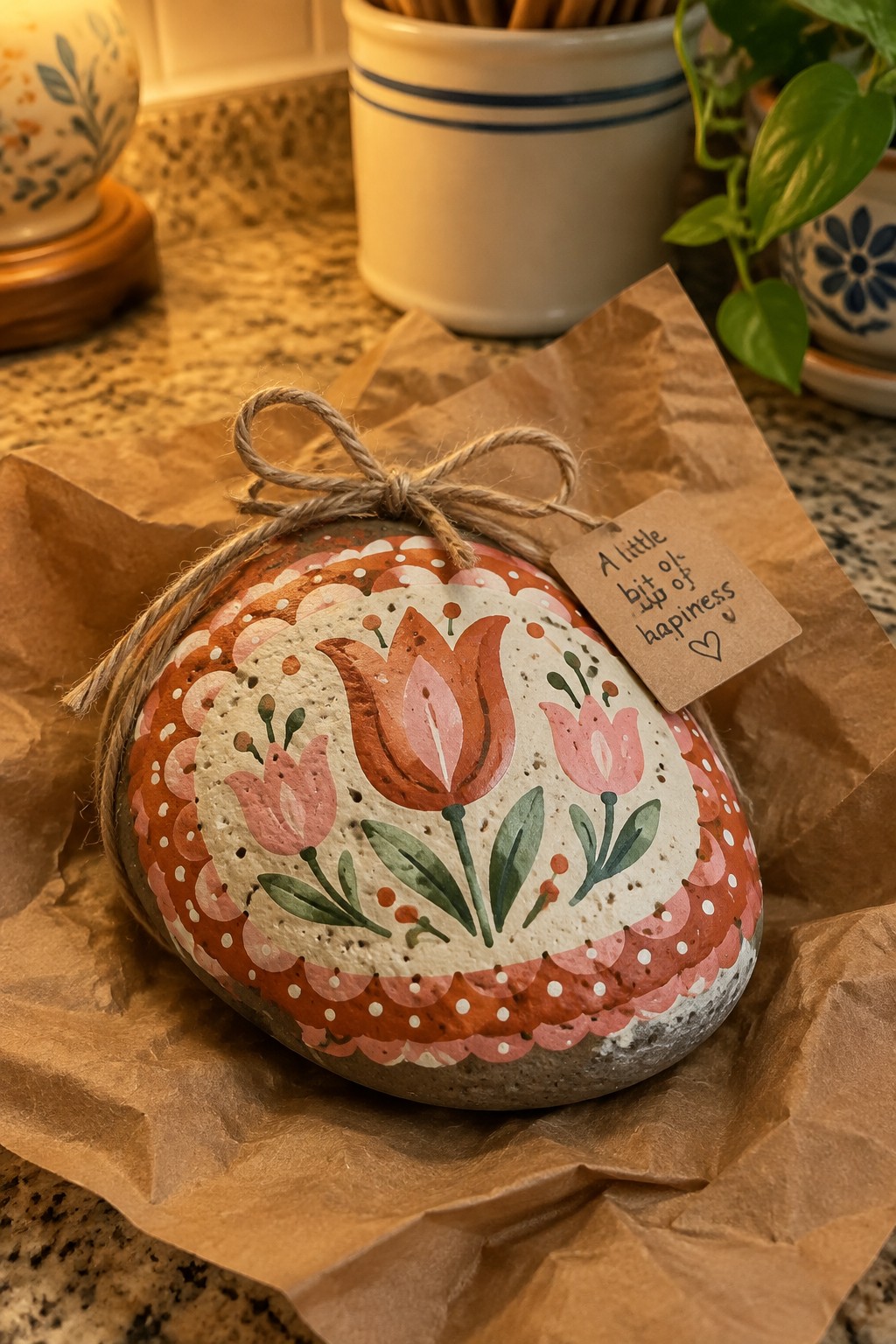
A rounded river rock gives this folk art flower pattern a natural curved surface to work with. The design centers on a large tulip with two smaller blooms and simple leaves, all framed by a wide scalloped border in warm orange and pink. Dots and thin stems fill the remaining space without crowding the stone. The motif stays clearly visible even on the uneven texture of the rock.
This painted rock works especially well as garden decor or a shelf accent because the earth tones sit comfortably among plants and pottery. The scalloped border can be adapted to other flower shapes like daisies or poppies while keeping the same layout. Its compact size makes it simple to repeat in a set for a windowsill or to add to a gift basket. The clear color blocking helps the pattern stand out without needing fine detail work.
Folk-Art Flower on an Oval Stone
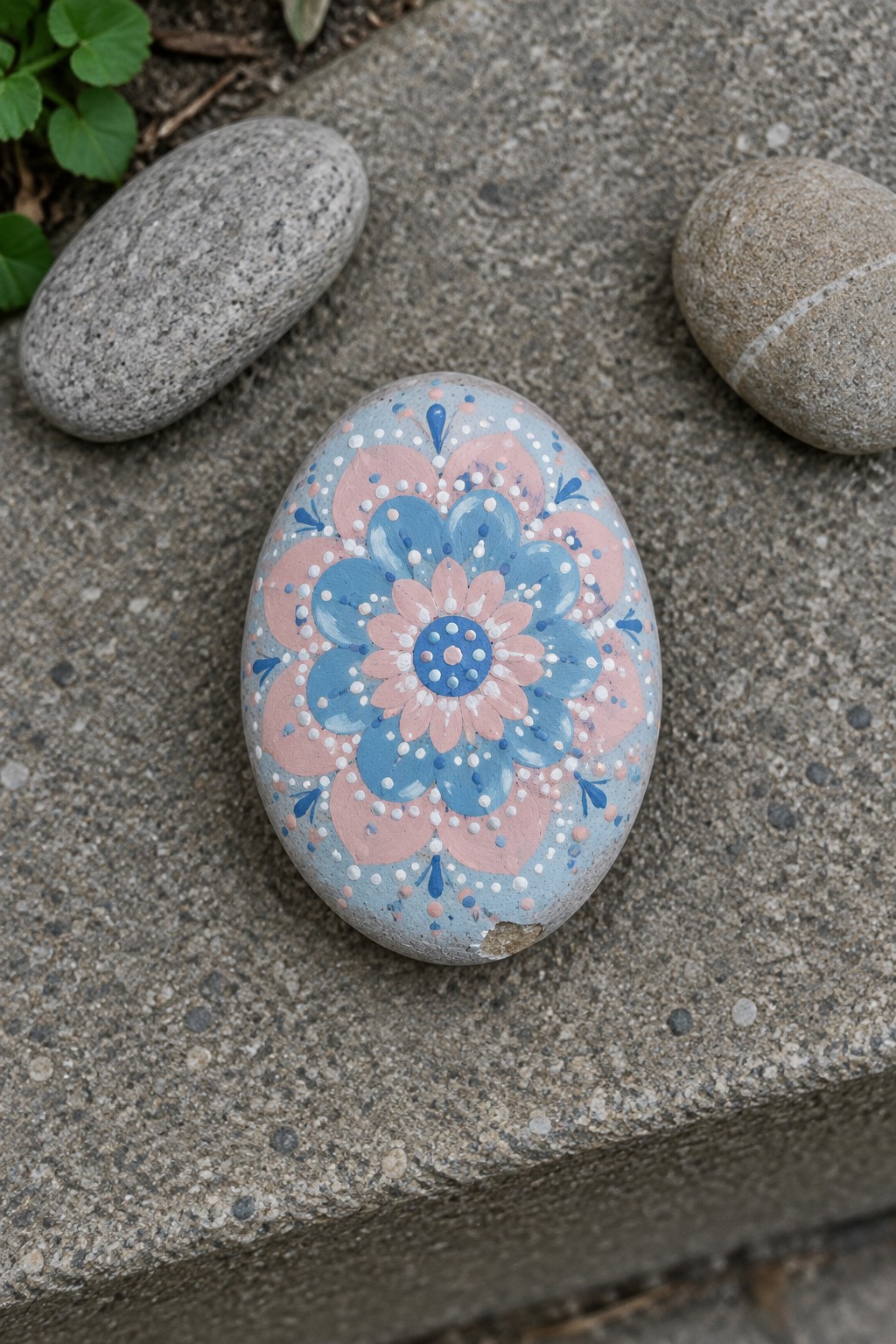
A smooth oval stone works well for this project because its rounded shape supports a centered flower design without awkward edges. The pattern uses layered blue and pink petals around a dotted center, with smaller accent marks and dots filling the light blue background to create a balanced mandala-style layout. This approach keeps the focus on the flower motif while letting the natural stone texture show through in spots where paint is thinner. It fits the flower rock category and translates easily to other smooth stones found in gardens or along paths.
The rock shape does a lot of the work here since the oval form lets the petals radiate evenly without needing extra border lines. A painted rock like this works especially well as a garden accent tucked into mulch or placed near potted plants where the colors stand out against green foliage. The same layered petal idea could be simplified by using fewer colors or scaled down for smaller pebbles to make a matching set. The motif could easily be changed into different flower varieties by swapping petal shapes while keeping the dot accents and color blocking intact.
Folk Art Flower Cluster on a Yellow Ground Stone
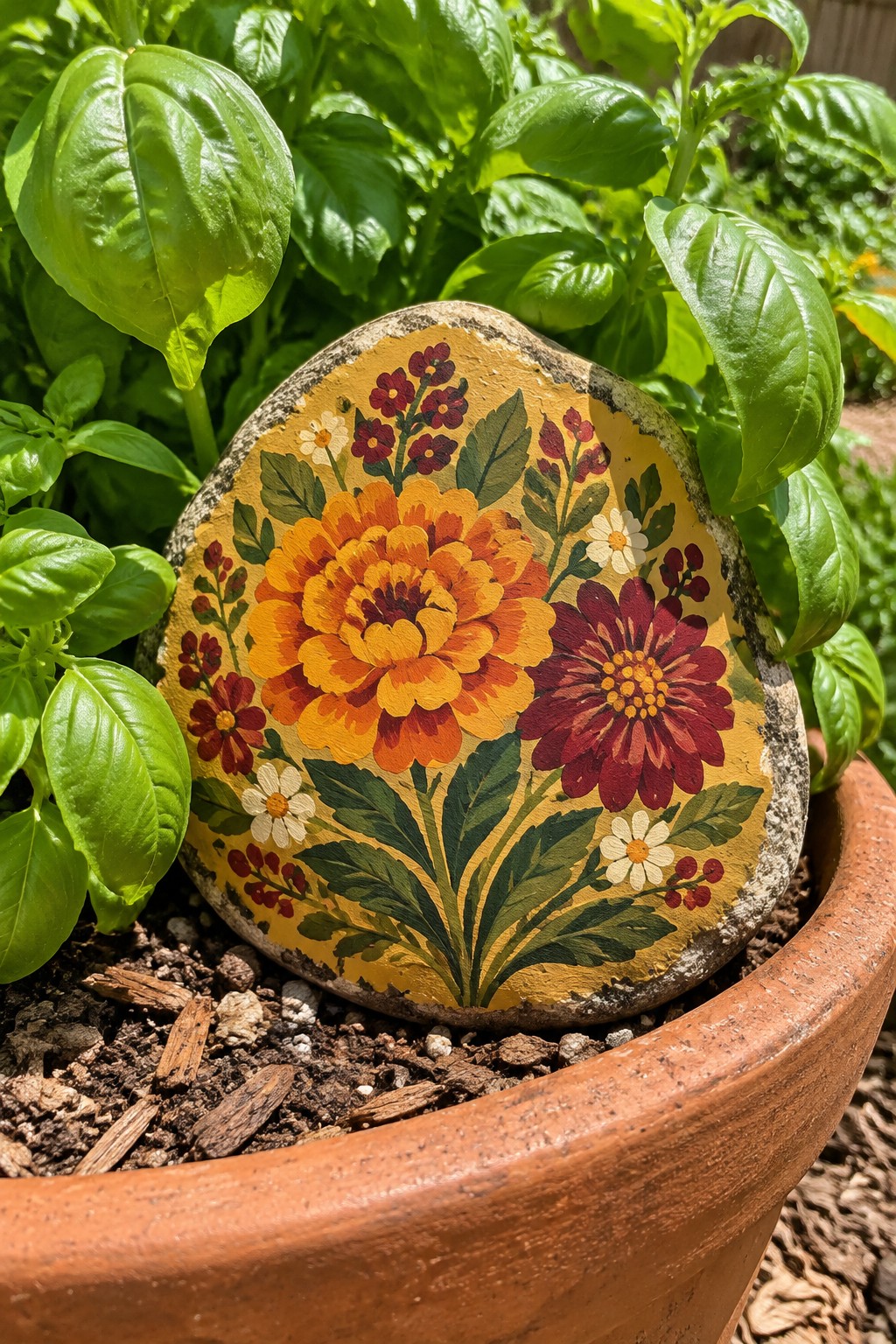
A rounded garden stone painted with a folk art floral arrangement creates a durable outdoor accent that blends into planters or flower beds. The design centers on a large orange bloom with a smaller deep red flower beside it, all set against a warm yellow background and framed by green leaves and smaller white and red accents. The natural stone shape lets the painted stems and petals follow the curved surface without needing perfect symmetry. This approach turns an ordinary rock into a decorative garden piece that stays visible among real plants.
What makes this idea useful is how the compact size slips into terracotta pots or mulch beds without taking up much room. The folk art layout can be scaled down to fewer flowers on a smaller pebble or expanded with extra leaves on a larger flat stone. For garden decor this kind of painted rock holds up through sun and rain once sealed and gives a consistent color accent that does not fade like fabric or plastic ornaments. The same color blocking and leaf shapes could be reworked onto river rocks for a windowsill collection or used as the base for other flower varieties in a matching set.
Folk Art Floral Bird on a Rounded Stone
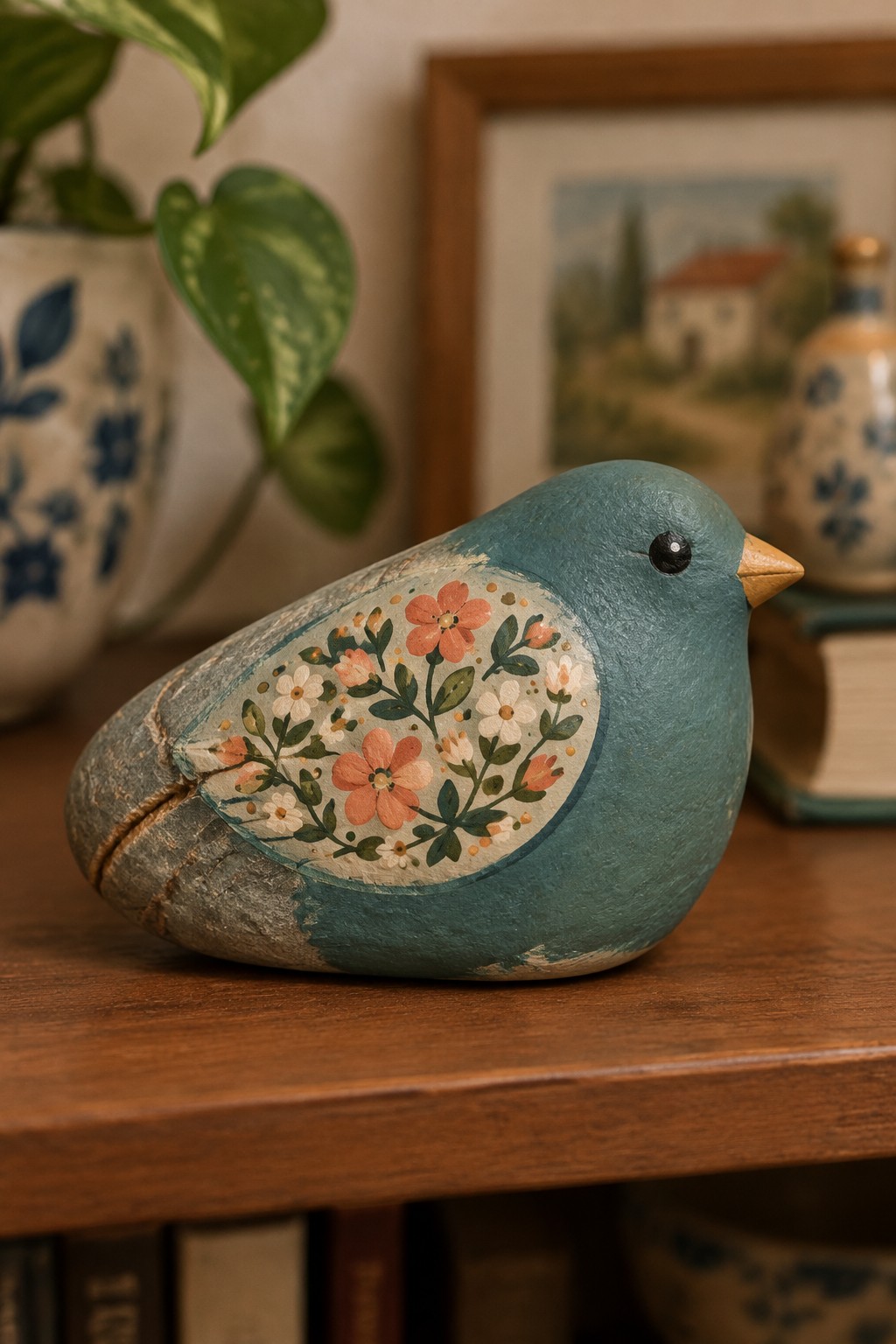
A smooth, rounded stone is painted teal to create the body of a bird, with the natural gray surface left exposed at one end to mark the tail and wing area. An oval section on the side holds a folk art flower pattern made of coral, white, and green blooms with simple leaf details and a thin border. The design uses the rock’s curved shape to suggest a plump bird form while keeping the floral motif as the main focal point.
What makes this idea useful is how the oval floral patch can be copied onto other rock shapes or resized to match whatever stone you have on hand. A painted rock like this works especially well tucked into a planter, placed on a windowsill, or added to a collection of garden accents. The clear color blocking and contained flower motif make it simple to adapt by swapping in different folk art color combinations or skipping the bird shape entirely and painting the oval design on a flat stone instead.
Folk-Art Flowers on a Rounded Garden Stone
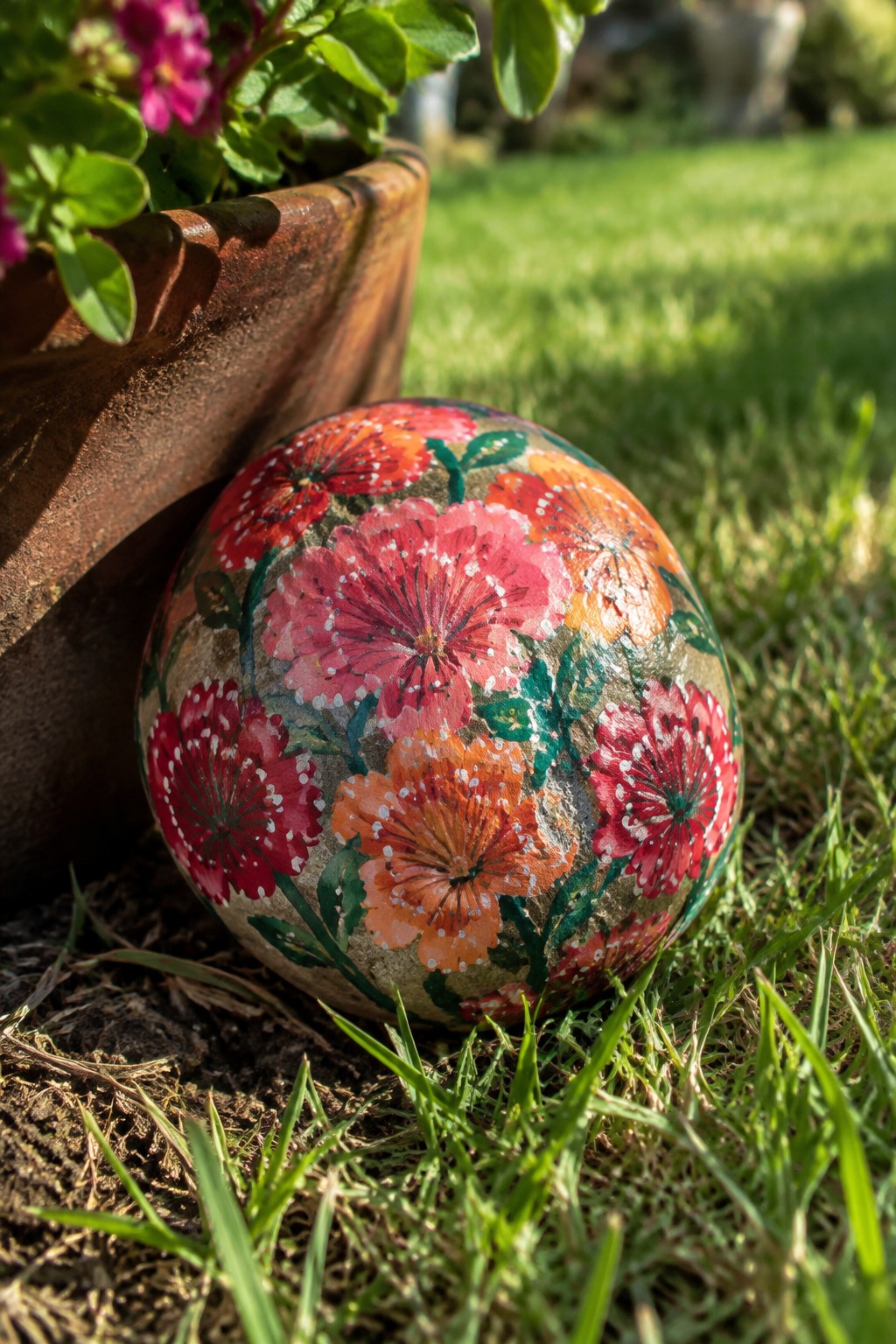
A smooth, rounded stone painted with clusters of folk-art flowers in red, pink, and orange creates a simple garden accent. Green stems and leaves connect the blooms across the surface, while small white dots highlight the petal edges and keep the pattern from looking flat. The neutral stone background lets the colors stand out without needing extra borders or frames. This style fits the flower rock category and works as a decorative piece for planters or flower beds.
What makes this idea useful is how the repeating flower clusters can be scaled up or down depending on the size of the rock you have. The same layout looks good in a large terracotta pot or tucked into mulch along a path. You could swap the color palette for softer tones or reduce the number of flowers to finish the project faster. The rounded shape helps the design wrap naturally, so the finished rock sits well on a porch step or shelf without tipping.
Folk-Art Tulip Pebbles
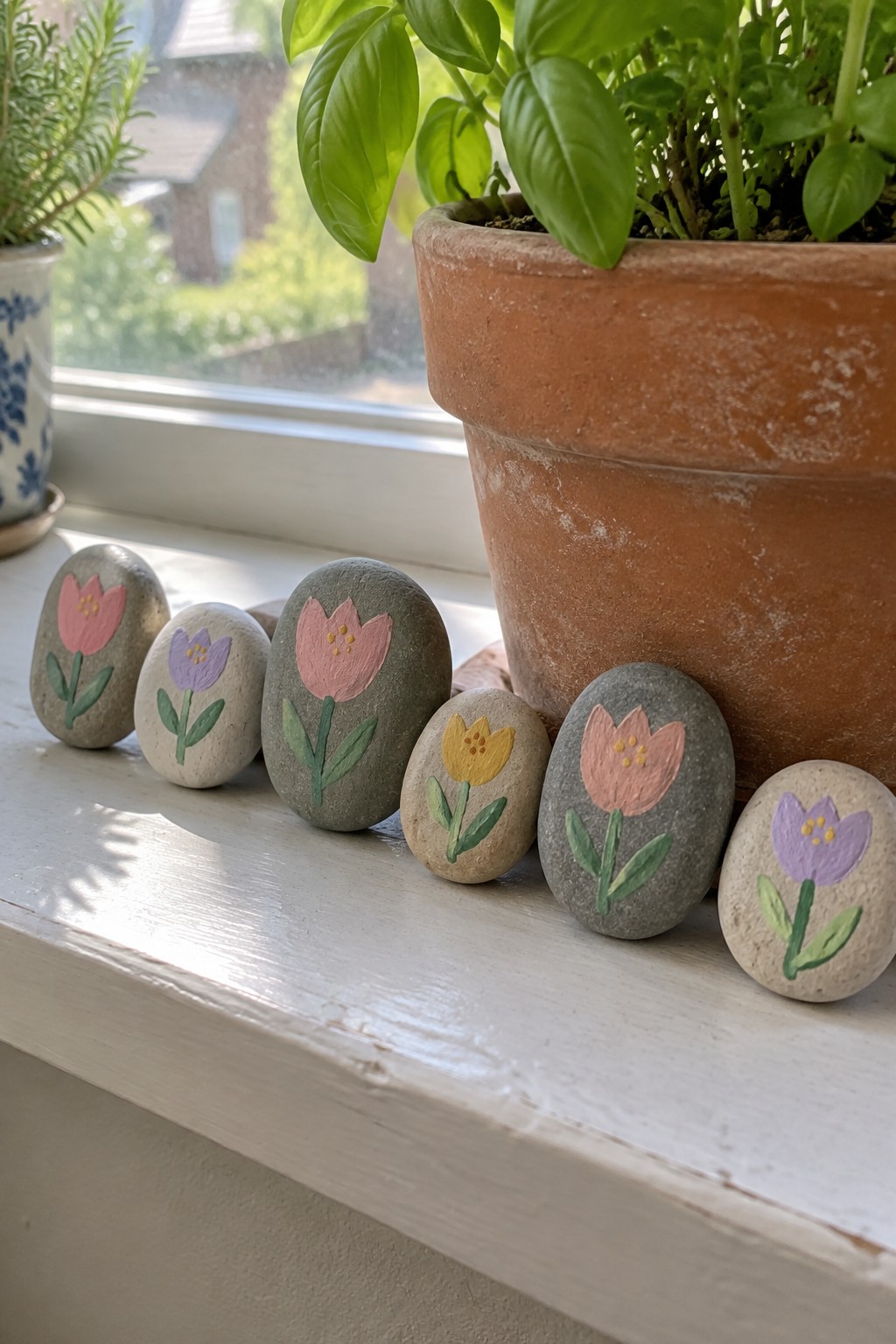
These are smooth, rounded pebbles painted with simple folk-art flowers in pink, purple, and yellow. Each stone shows one bloom with a stem and leaves, using flat color areas and small dots for the centers. The natural curve of the pebble lets the flower shape follow the surface without extra framing or background work. This approach fits the painted pebble set or garden decor rock category.
What makes this idea useful is how the small size lets you group several together on a windowsill, near plant pots, or along a shelf edge. The rounded stone shape does most of the work by giving the flower a natural base, so you can change the bloom color or swap tulips for other basic flower outlines without redrawing the whole layout. For garden decor, this type of painted rock slips easily into mulch or sits inside larger planters without looking out of place. The same motif scales down to smaller stones or stretches across a longer pebble if you want a slightly different arrangement.
Folk Art Flowers Painted on Assorted Natural Stones
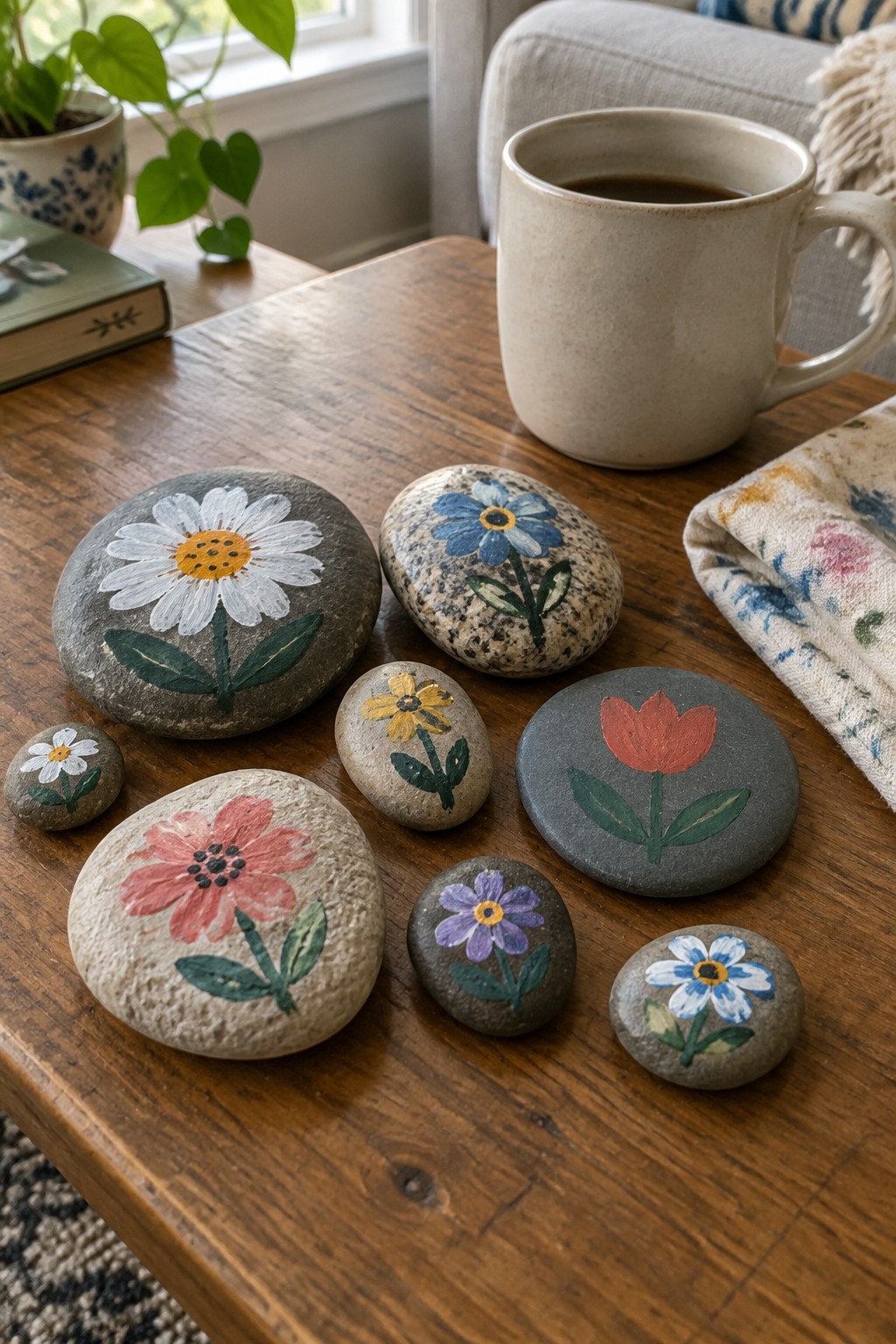
This rock painting idea uses a collection of rounded river stones and pebbles, each painted with a different folk-art style flower. The designs rely on simple color blocking for petals, dark centers dotted with yellow or black, and basic green stems and leaves that follow the curve of each stone. The variety of stone sizes lets the same motif style work on both large flat surfaces and small rounded pebbles without crowding the design. The result is a set of decorative garden or tabletop accents that read clearly as painted physical rocks.
What makes this idea useful is how the natural stone shapes support the loose flower outlines without needing perfect symmetry. A painted rock like this works especially well as scattered accents in planters, along a windowsill, or in a shallow dish on a table. The small scale makes it easy to adapt by swapping in different flower types or using only the tiniest pebbles for a tighter arrangement. For garden decor, this kind of painted rock adds color that holds up outdoors when sealed and can be rearranged seasonally.
Folk-Art Daisies on a Rounded Stone
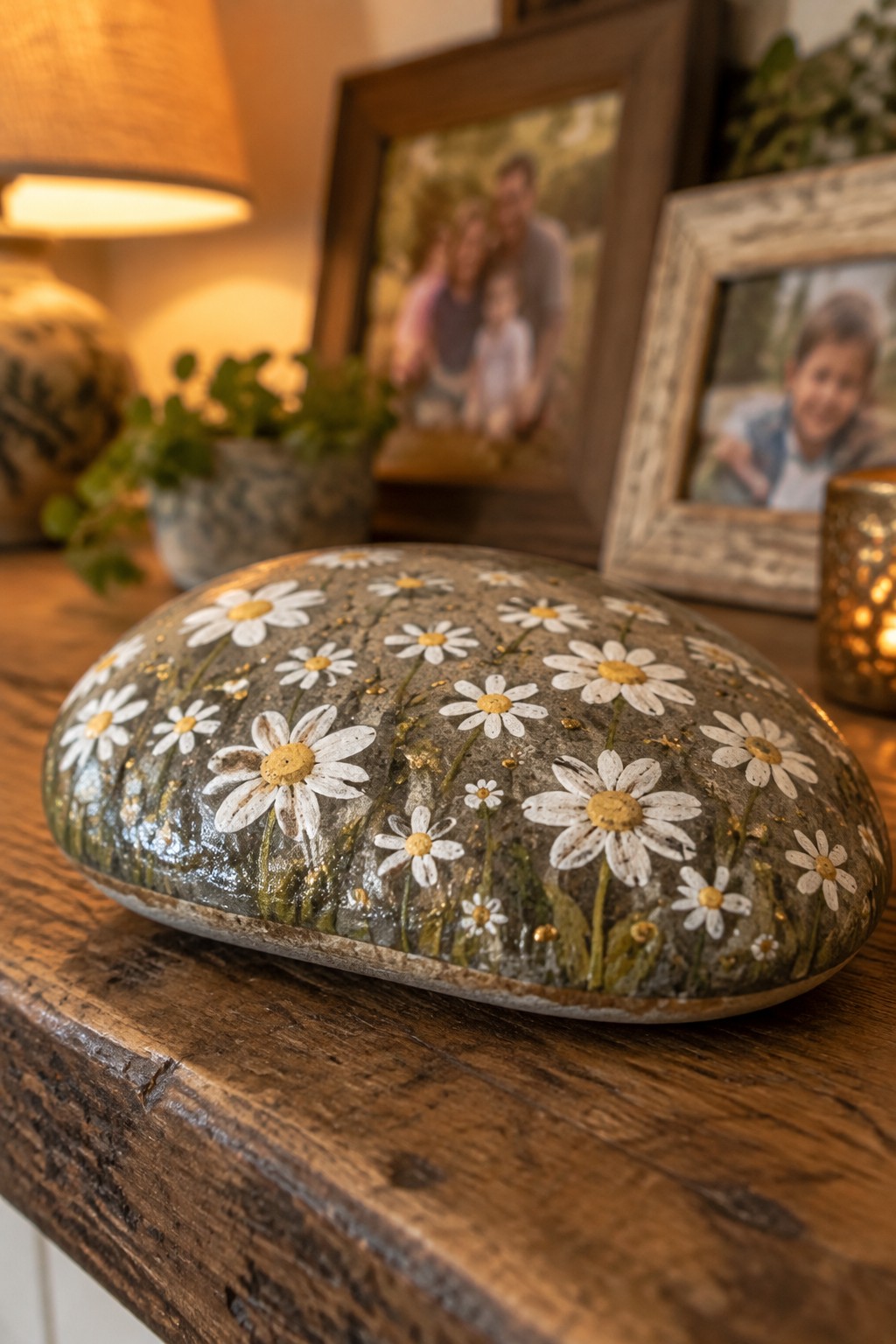
A rounded stone forms the base for this folk-art flower project, with its curved surface allowing the daisy cluster to wrap around the sides rather than sit flat. The design uses repeated white petals, yellow centers, green stems, and scattered gold dots to create a meadow pattern that follows the rock’s natural shape. This keeps the finished piece clearly a painted physical rock meant for display instead of a flat surface craft.
What makes this idea useful is how the gold dots catch light and give the design extra detail without extra colors. The same daisy layout could be reduced to three or four flowers on a smaller pebble or stretched with more stems on a wider flat stone. For garden decor this type of painted rock sits well in planters or along porch steps, and the simple repeating motif makes it easy to recreate on stones of different sizes.
Split Folk-Art Flower Rock
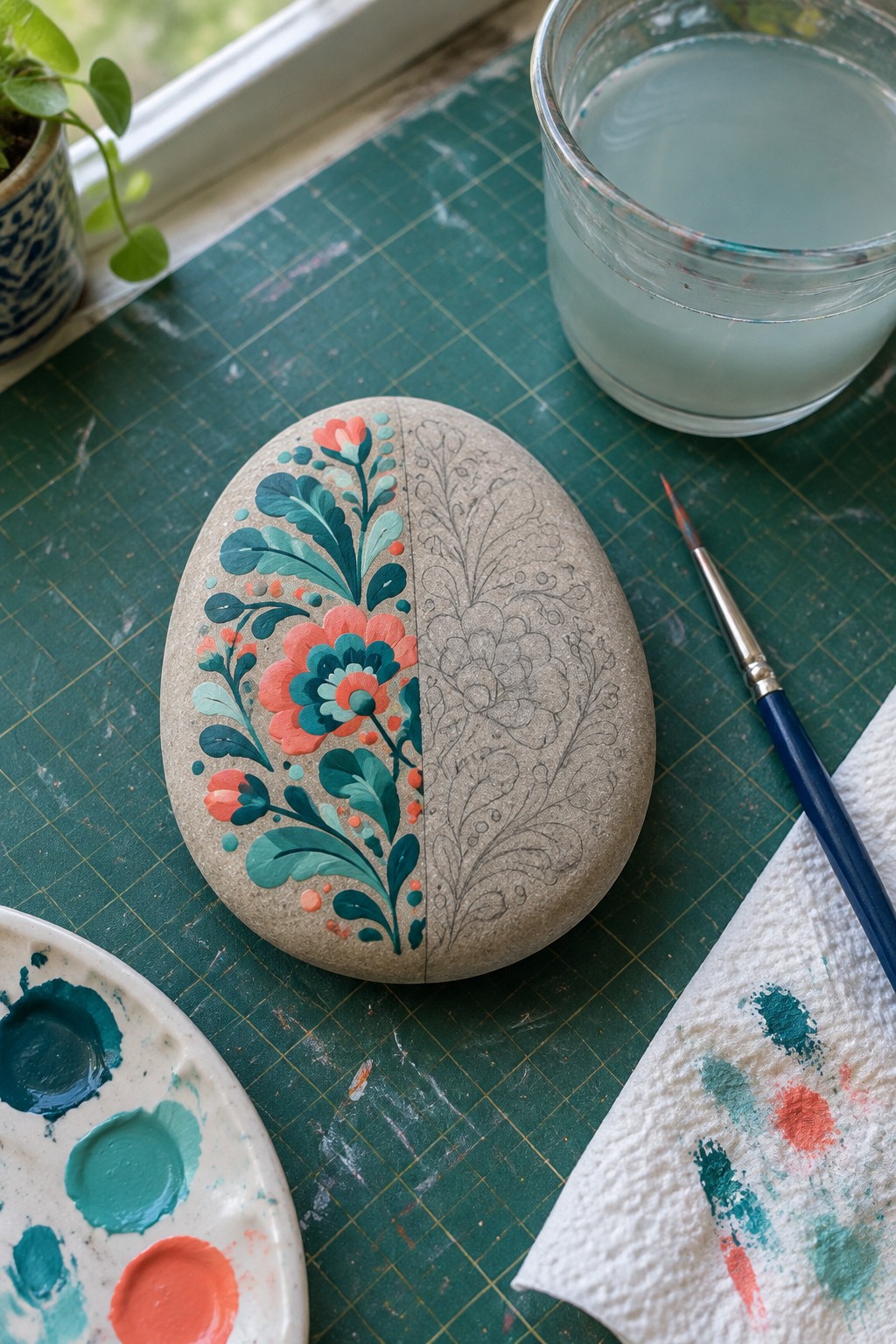
This rock painting project uses a smooth oval stone to show a folk-art flower design split down the middle. One half carries finished coral and teal blooms with layered leaves and dots, while the other half holds the matching pattern sketched in pencil. The natural curve of the stone lets the flowers follow the surface instead of sitting flat. It works as a decorative flower rock that turns a simple garden stone into a clear example of folk-art patterning.
What makes this idea useful is the split layout, which shows how the full design looks in color before you paint the rest. You could finish the sketched side on this same rock or use the outline as a template to repeat the pattern on other stones. For garden decor, this type of painted rock sits well in a planter or along a path where the bright flowers stand out against soil and leaves. The same motif could be scaled down for smaller pebbles or expanded to cover a larger flat stone with more blooms.
Folk-Art Peony Cluster on a Rounded Stone

A smooth, rounded garden stone serves as the base for this folk-art flower project with several overlapping peonies painted in soft pink, lavender, and cream tones. The design uses layered petals and varied bloom sizes to cover most of the visible surface while green leaves and small white filler flowers fill the gaps between the main motifs. The curved shape of the stone helps the flowers wrap naturally without looking flat. This fits the decorative stone craft category and works as a single focal piece rather than part of a matching set.
What makes this idea useful is how the rounded form supports a clustered bouquet look that would be harder to achieve on a flat surface. You could adapt the same arrangement by using fewer blooms on a smaller rock or by swapping the peony shapes for other folk-art flowers like poppies or zinnias. A painted rock like this works especially well tucked into a flower bed, placed on a porch step, or added to a planter grouping where the colors read from a short distance. The motif could easily be reworked with a different color palette to match seasonal garden displays.
Folk-Art Flower Wreath on a Garden Stone
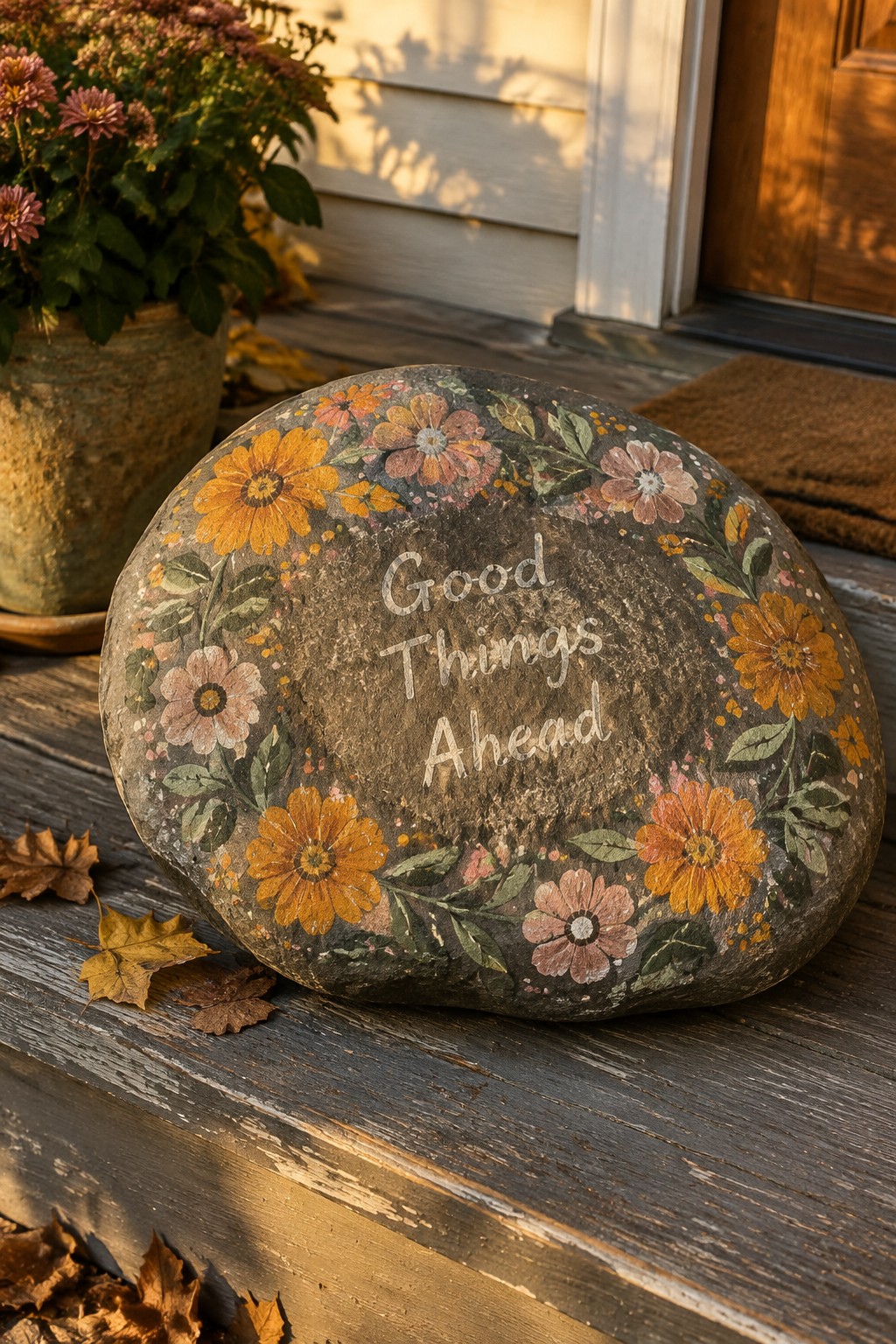
A large rounded stone with a naturally flat top surface makes a good base for a folk-art flower wreath. The design uses a ring of stylized daisies in yellow, orange, and soft pink along with green leaves and small dots to create a continuous border. The center area stays open for lettering while the flowers follow the curve of the stone without covering every inch. This approach falls into the garden decor rock category because the motif and scale suit outdoor placement.
The rock shape does a lot of the work here by giving the wreath a natural frame without extra outlining. A painted rock like this works especially well as a porch accent or tucked into a planter where the colors contrast with soil and wood. You could rework the same circle layout on a smaller stone by reducing the number of flowers or changing the color mix to match different seasons. The simple repeating motif also makes the idea easy to repeat across a few stones for a grouped display.
Folk Art Pink Bloom on a Rounded Stone
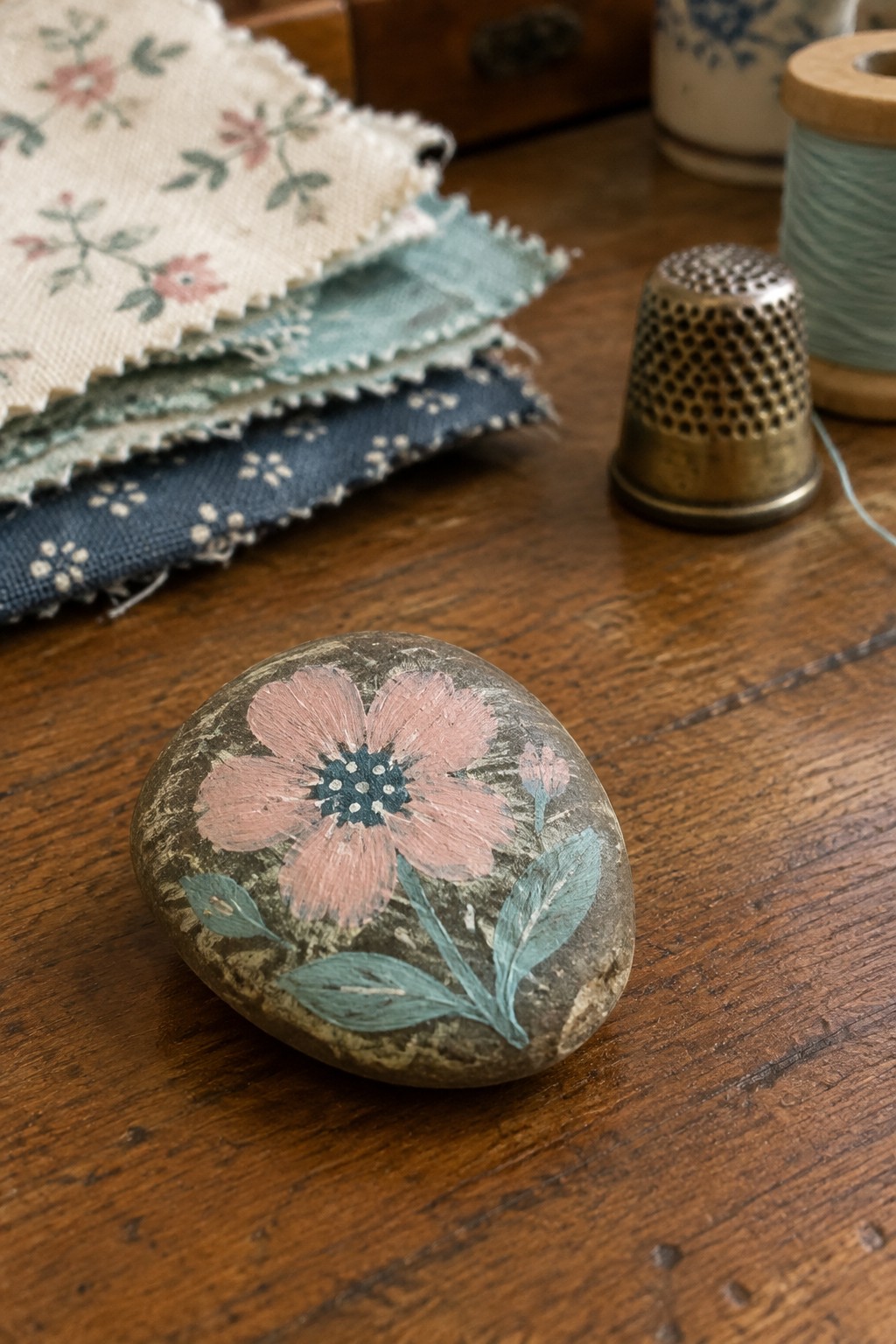
A smooth, rounded stone makes an ideal base for this folk-art flower because its curved surface lets the petals and leaves follow the natural form without needing extra outlines. The large pink bloom with a dark center dotted in white, plus simple teal leaves and a small bud, creates clear visual contrast against the stone’s mottled texture. This style of flower rock fits the decorative stone craft category and works as a standalone accent rather than part of a set.
What makes this idea useful is how the single bloom design adapts to different stone sizes and placements. The same motif could shift to a flatter stone for a windowsill or scale down for a group of smaller rocks in a planter. The limited color palette and bold central flower help it read clearly from a distance, which makes it effective for garden paths, porch steps, or shelf styling. For Pinterest, the folk-art flower on a natural stone shape photographs well and invites easy color swaps.
Frequently Asked Questions
What supplies do I need to begin painting folk art flowers on rocks?
Start with smooth river rocks or stones that fit comfortably in your hand. Gather acrylic paints in folk art colors like bright reds, blues, yellows, and greens along with fine detail brushes, a base coat primer, and a clear acrylic sealer. A pencil for sketching and paper towels for blending will help too. These basic items let you follow the 17 patterns without extra cost.
How do I transfer the flower patterns if freehand drawing feels difficult?
Place tracing paper over the pattern and outline the main shapes with a soft pencil. Rub the back of the paper with graphite to create a transfer sheet then position it on your rock and trace again to leave faint lines. This method keeps the folk art details accurate while allowing slight adjustments for the rock’s curves.
What painting techniques create the layered folk art flower look?
Begin with a base color for each petal and let it dry fully. Add highlights and shadows using lighter and darker shades of the same hue with short brush strokes. Finish by adding small dots or lines for centers and stems in contrasting colors. Layering in this order gives the patterns their traditional depth and charm.
How can I make the painted rocks last outdoors in different weather?
Apply two thin coats of outdoor rated acrylic sealer after the paint dries completely waiting 24 hours between coats. Place the rocks in a sheltered spot like a garden border rather than direct sun or heavy rain exposure. Reapply sealer once a year to maintain the colors.
How do I adjust the patterns for rocks of varying shapes and sizes?
Scale the flower elements by eye to fit the rock surface keeping the main bloom centered and stems flowing along natural contours. For smaller rocks simplify by reducing petal count while larger flat rocks allow extra leaves or borders. Test the layout with a pencil sketch first to ensure balance.
