


I’ve been painting rocks with ocean themes for a few years now whenever I have some free time in the evenings.
Sea creatures like turtles and fish seem to fit the shape of a rock pretty well.
I usually pick out a few acrylic paints in different shades of blue and green to bring them to life.
Some of these turn out better than others but they all make decent little decorations for a shelf or garden.
I put together twenty ideas that might give you a starting point if you want to try something similar.
Clownfish Rock Painting

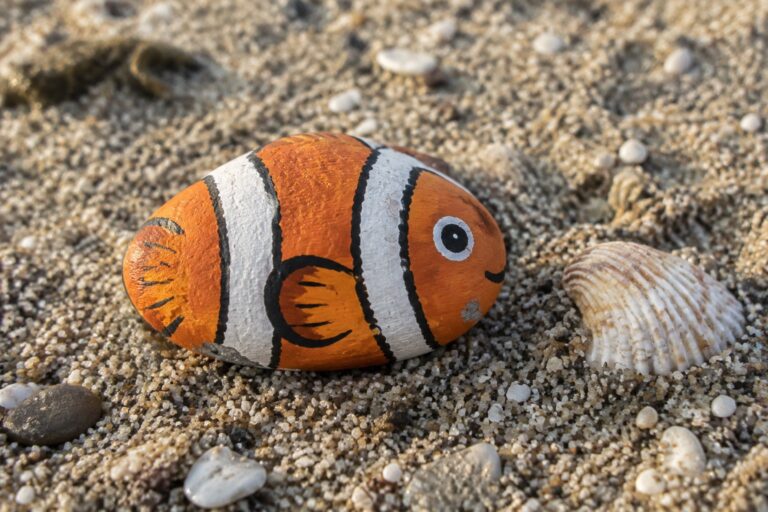
An oval beach stone painted orange with three thick white stripes and black outlines creates a straightforward clownfish design. The natural curve of the rock forms the body while the tapered end becomes the tail, and black lines added for fins and an eye keep the motif recognizable. This approach fits the animal rock category and works especially well for ocean-themed collections because the color blocking follows the stone shape without extra layers.
The rock shape does a lot of the work here by already suggesting a fish silhouette, so the stripes and eye become the main focus. A painted rock like this works especially well as part of a small set for a windowsill or tucked into a succulent planter. You could repeat the same stripe pattern on a flatter stone for a different angle or change the stripe count to represent another reef fish. The simple color blocking makes this easy to reuse as a starting point for other sea creature rocks.
Spiraled Seahorse on an Elongated Rock

A seahorse painted on an elongated physical rock uses the stone’s natural curve to shape the tail into a spiral without added carving. The design applies mint green across most of the body, peach on the belly section, and scattered dots in lighter green and white, with gold trim along the back fin and edges. This fits the animal rock category because the rock’s length and bend already suggest the creature’s form, letting color blocking and simple dot patterns finish the look.
What makes this idea useful is how the rock shape does most of the silhouette work, so you can focus paint on the body sections and dots. The same approach adapts easily to smaller beach stones for a set of ocean creatures or to other curved rocks for different fish. For garden decor, this painted rock sits well in a coastal planter or along a patio border with similar sea-themed stones.
Red Crab Painted Rock for Ocean Themes

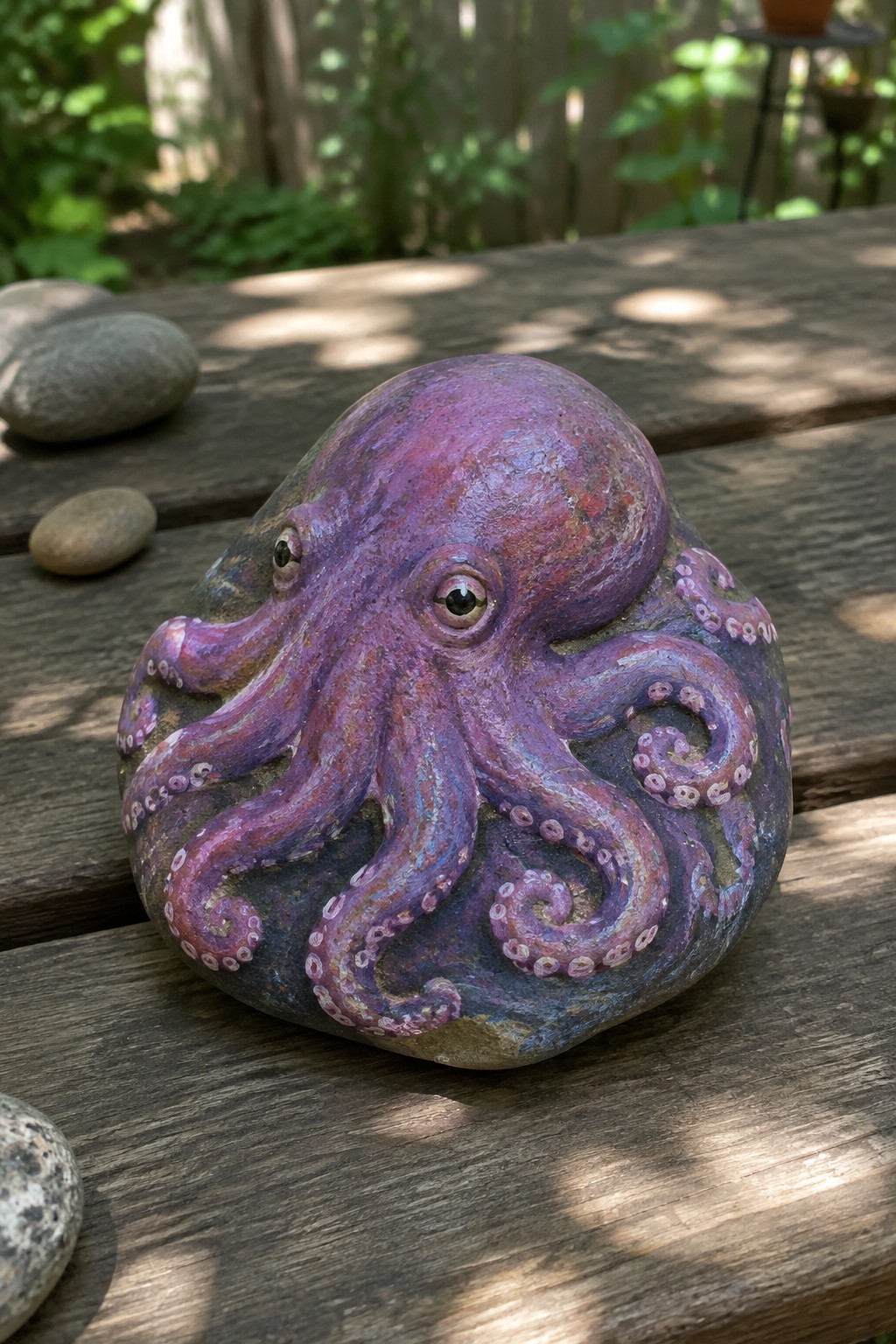
A smooth, rounded stone works well as the base for this crab design because its oval shape naturally matches the creature’s body. Thick red paint covers the central area and extends into the claws and legs, with the brush strokes following the stone’s curves to keep everything connected. Black eyes with small white highlights and a short curved line for the mouth add the face using just a few quick marks. This approach turns an ordinary beach or garden stone into a clear sea creature accent without needing extra layers or details.
The rock shape does a lot of the work here by giving the crab its rounded form right away. A painted rock like this works especially well as a porch step marker, tucked into a succulent planter, or added to a collection of other ocean-themed stones on a shelf. You could change the red to teal or orange and keep the same layout to make a full set of different sea creatures. The simple color areas and outlines make it easy to scale up or down depending on the stones you have available.
Starfish on Rounded Pebbles
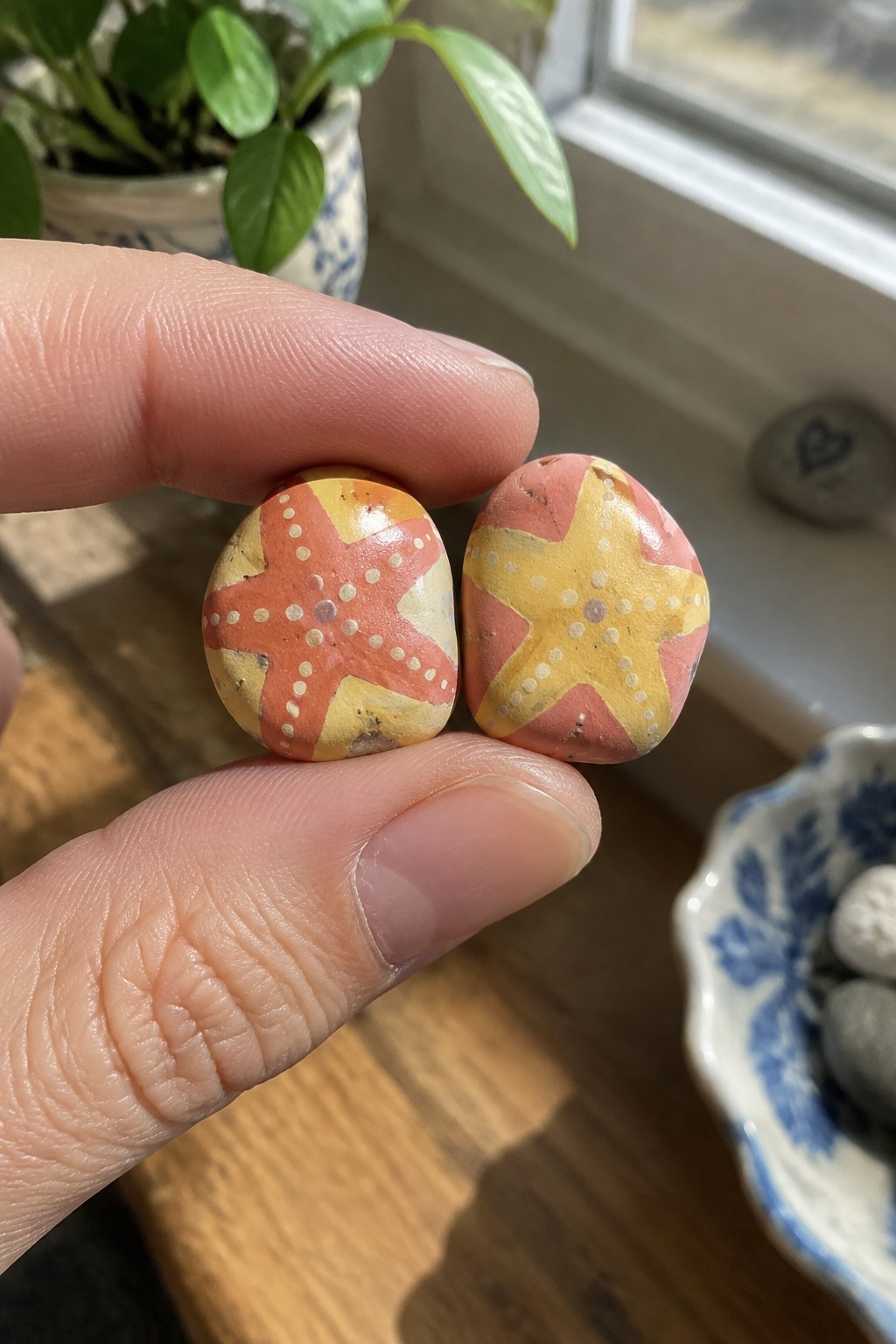
Paint small rounded stones with starfish by blocking out five arms in two contrasting colors like coral and yellow, then add rows of white dots down each arm. The natural curve of the pebble lets the arms follow the edges without extra outlining, and the color split creates instant contrast even on a tiny surface. This fits the sea creature category of ocean rock projects and works best on smooth, compact stones that fit easily in a hand.
The rounded stone shape does a lot of the work here because the starfish design can sit off-center and still look balanced. You can reuse the same color blocking on other pebbles to build a whole set of different sea creatures for a windowsill or planter. For garden decor this type of painted rock holds up well in pots or along path edges since the bold sections stay visible from a few feet away.
Sea Turtle Painted on a Rounded Stone

A sea turtle rock painting places the full creature across a smooth, oval stone so the natural curve supports the shell and body shape. Greens and browns build the segmented shell with white dots marking the pattern, while the head and flippers use darker spots and lighter edges for contrast. This fits the animal rock category within ocean themes and works because the stone’s rounded form already suggests a turtle’s profile without added outlines.
What makes this idea useful is how the stone shape does most of the work, letting the painter focus on color blocks and simple dot details rather than complex drawing. You can change the shell colors to blues or teals for different sea turtle species or drop the white dots if you want a faster version on smaller pebbles. For garden decor, this type of painted rock sits well in mulch beds or near succulents where the green tones match the plants. The same design scales easily to larger stones for a porch display or to a set of smaller ones for a windowsill collection.
Jellyfish on Smooth Oval Stones

Painted rocks featuring jellyfish work as a direct ocean creature idea because the motif sits cleanly on smooth, oval stones that already echo the rounded bell shape. The design uses blended blue and purple tones with thin trailing lines for the tentacles, letting the dark stone show through to create contrast without heavy outlines. This approach fits the animal rock category and keeps the sea creature recognizable even when the rocks are viewed from a short distance. The flat, rounded surfaces give the tentacles space to flow naturally down each stone.
What makes this idea useful is how the stone shape itself guides the placement of the bell and tentacles, so you do not need to fight awkward angles. These painted rocks would suit a bathroom shelf, a windowsill grouping, or tucked into a coastal planter where the colors pick up surrounding blues. The same motif scales down easily to smaller pebbles for a set or expands to larger stones if you want a single focal piece. The flowing lines and limited color range help the design read clearly in a Pinterest grid without extra background elements.
Whale Tail on Layered Blue Waves

A smooth oval rock painted with a dark blue whale tail rising from teal and turquoise waves creates a compact sea creature design. The tail includes a simple curved smile and scattered white splash dots that break up the water layers. Thick wave lines follow the stone’s rounded surface and help the motif read clearly from a distance. This approach fits the animal rock category and works especially well on beach stones or river rocks with gentle curves.
What makes this idea useful is how the single central motif leaves room on either side for extra wave lines or bubbles if you want to fill a larger stone. The color blocking of deep blue against lighter water tones hides uneven edges and works on rocks with natural texture. You could easily change the tail shape into a dolphin or orca using the same wave layout and placement for garden beds or porch planters. The small scale also makes it simple to repeat as a set for table centerpieces or kindness rocks.
Two Dolphins on a Blue Oval Stone

A smooth oval rock painted in deep blue forms the base for two dolphins shown in lighter blue shades with white accents on their undersides. The larger dolphin sits above the smaller one, both angled as if moving through water, with small white dots added around them to suggest bubbles. This sea creature rock uses the stone’s rounded form and flat surface to keep the ocean motif simple and contained without extra borders or frames.
What makes this idea useful is the straightforward color blocking between the dark background and the dolphins, which transfers easily to any similar oval stone. The design works especially well as a shelf accent or bathroom decor because the blue tones stay consistent and do not require bright highlights. You could simplify it to one dolphin or expand it with smaller fish by keeping the same water background on a slightly larger rock. The ocean theme also shows up clearly in searches for sea creature rock ideas.
Spiky Pufferfish Painted Rock

A rounded stone painted solid yellow serves as the base for this pufferfish design. Short black spikes are added across the entire surface, with two white eye circles and a simple black mouth line placed on the front to form the face. The idea works because the rock’s natural roundness already suggests the fish’s inflated body, letting the spikes and face details follow the existing curves without needing extra shaping.
What makes this idea useful is how the round form does most of the work, so the spikes can be made with quick brush marks or even small dots if a finer brush feels tricky. A painted rock like this works especially well tucked into a beach-themed planter or grouped with other sea creature stones on a shelf. The same approach could be reworked on a flatter stone by using fewer spikes or switched to a different sea creature by changing the face and color.
Manta Ray on a Dark Flat Stone

A manta ray rock painting uses the natural dark color of a flat oval stone as the body of the sea creature. Turquoise paint outlines the wide fins and tail with curved strokes that follow the rock’s shape, leaving the center dark to create contrast. This style fits the animal rock category and works because the stone’s smooth surface and rounded edges already suggest the manta ray’s form without extra background work.
The rock shape does a lot of the work here since the oval silhouette matches the creature’s wingspan. This idea adapts well to other flat stones placed in planters or along garden paths for an ocean accent. You could switch the turquoise to a brighter blue or simplify the lines further on a smaller pebble while keeping the same basic outline.
Reef Scene Rock with Clownfish and Tropical Fish

A large irregular garden stone makes a strong base for this full underwater reef painting. The design layers pink and orange corals, orange tube sponges, and multiple fish species including clownfish and striped varieties across the curved surface against a blended blue-green background. This approach packs several sea creatures into one piece while following the rock’s natural contours. It works as a decorative ocean rock that suits outdoor placement in mulch or plant beds.
What makes this idea useful is how the rock’s size and shape support a crowded reef layout without extra framing. The same concept scales down easily to smaller stones by keeping just a few fish and one coral group. For garden decor this style of painted rock adds a sea creature accent to flower beds or patio edges where the colors stand out against soil and greenery. You could swap fish types or shift the coral colors to match other garden pieces while keeping the layered reef structure.
Hermit Crab Rock with Spiral Shell Pattern
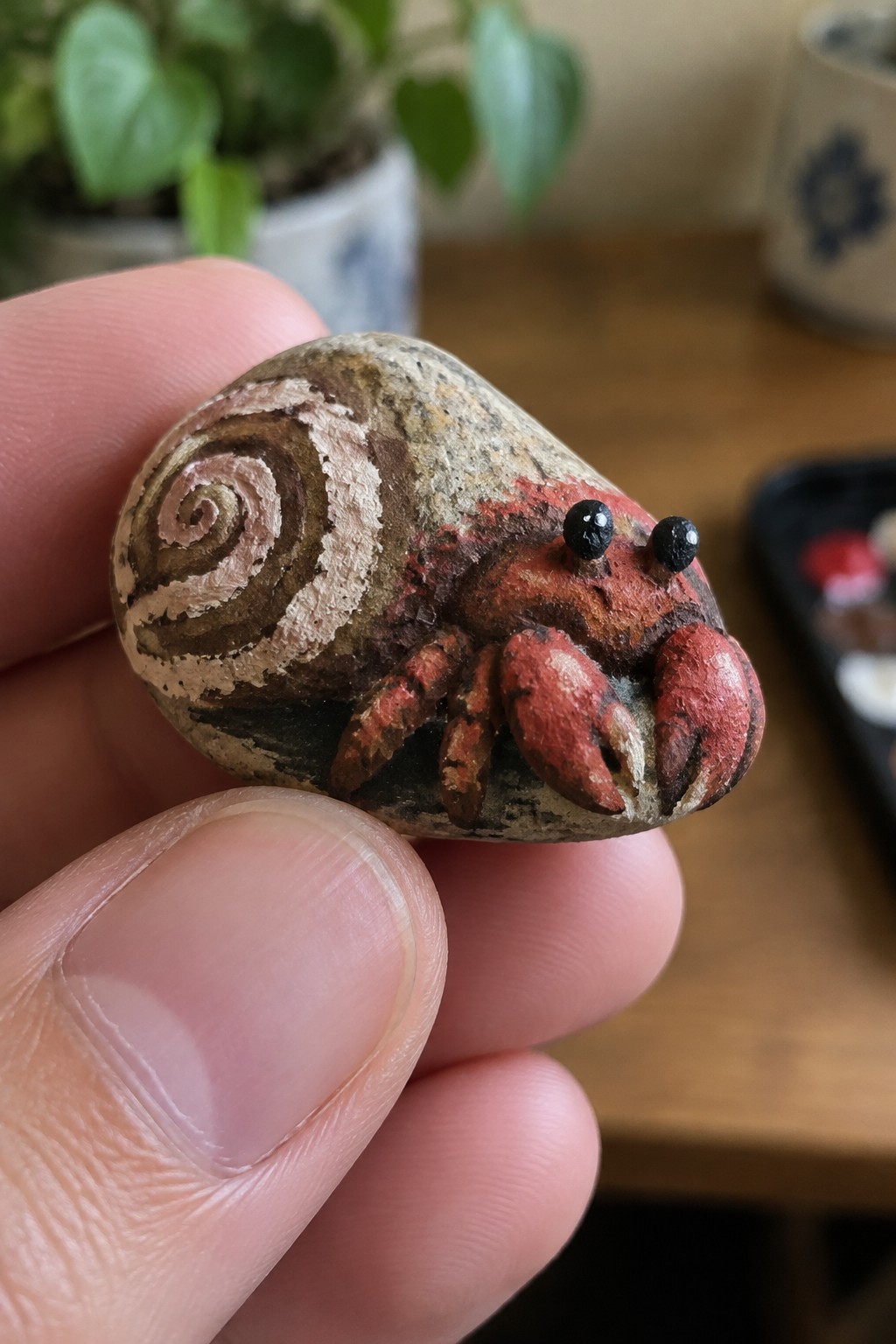
A hermit crab rock painting uses an oval stone whose rounded back naturally suggests a shell shape. The design places a brown and cream spiral across the upper portion to mimic a snail shell, then paints the lower front section red to form the body, claws, and legs. Black dots positioned near the front edge serve as eyes, keeping the face area compact. This keeps the finished piece clearly recognizable as a painted physical rock rather than a figurine.
The rock shape does a lot of the work here because the tapered end already reads as the crab’s head and claws once the red paint is added. It works especially well as a small accent inside a bathroom planter, on a coastal windowsill, or mixed into a collection of other ocean creature rocks. The same idea could be simplified by using fewer shell colors or swapped onto a flatter stone to make a different crab species. The bright red against the natural stone texture helps the design photograph clearly for sharing.
Sea Urchin Painted Rock
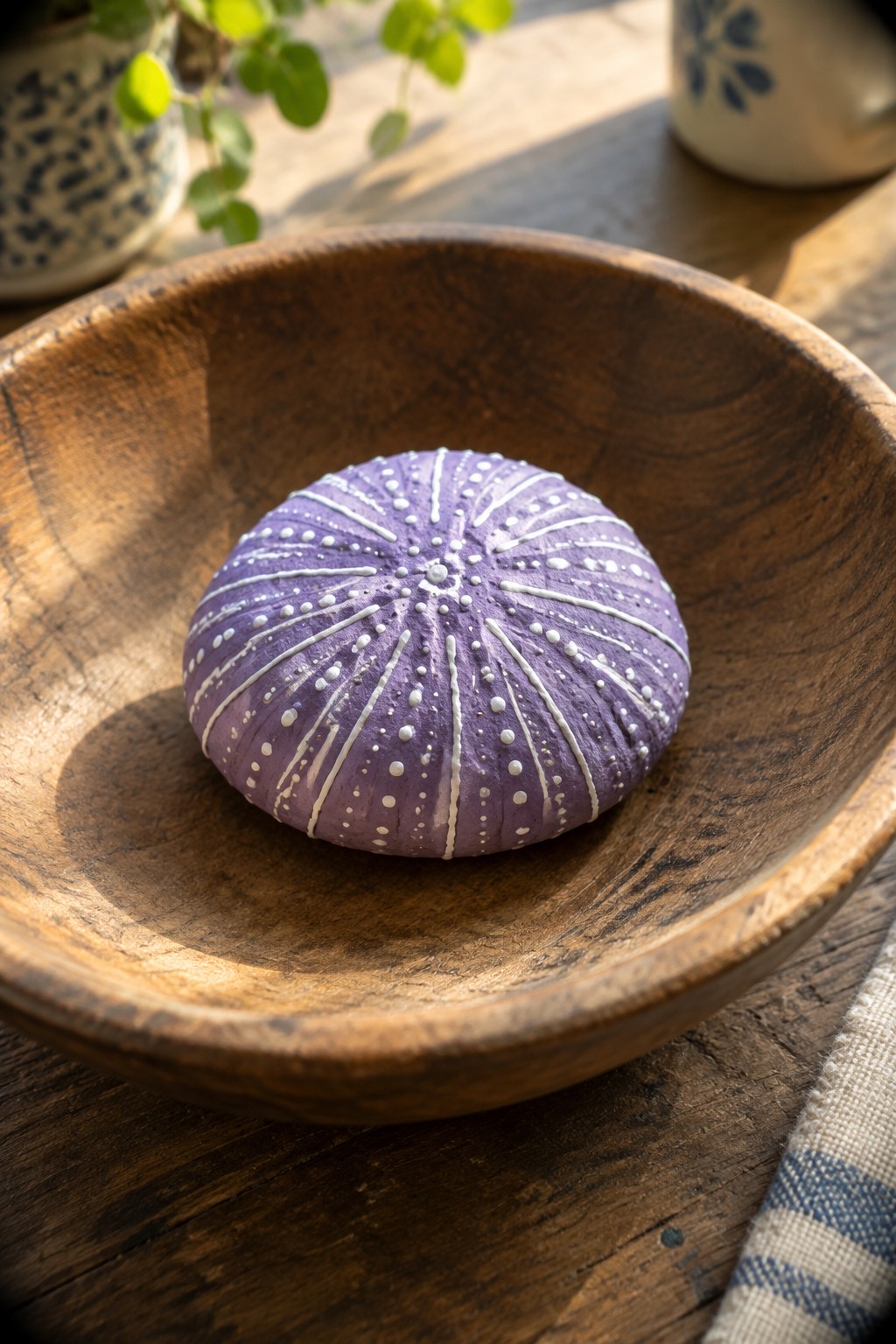
A smooth, rounded rock painted deep purple forms the base for a sea urchin design. White lines extend outward from the center with small dots placed along each line to suggest spines. The pattern follows the stone’s curved surface so the finished piece reads clearly as a painted rock rather than a flat illustration. This fits the ocean creature category by turning a simple shape into a recognizable sea urchin.
What makes this idea useful is how the radiating lines adapt to any rounded rock without needing exact symmetry. You could swap the purple for teal or orange to match other sea creatures in the same collection or shrink the design for smaller pebbles in a tabletop display. The motif works well in planters, on a porch step, or as part of a group of painted ocean rocks because the bold center point draws attention even from a distance.
Angelfish Painted on a Rounded Stone

A smooth gray stone serves as the base for this angelfish design that follows the rock’s natural oval shape. Coral, teal, and pale yellow stripes run across the fish body while the fins extend outward with layered brushwork that matches the curved surface. The rounded edges of the stone help define the fish outline without needing extra borders. This approach belongs in the sea creature rock category for ocean-themed painted stone projects.
The rock shape does a lot of the work here by giving the fish its body form right away. A painted rock like this works especially well as a shelf accent, in a windowsill grouping, or placed among plants in a patio pot. You could adapt the stripe pattern and fin details onto a smaller pebble for a set of matching stones or switch the colors to blues and greens for a different ocean fish. The clear color areas make it simple to adjust for other sea creature ideas in the same style.
Striped Shrimp on an Elongated Rock

An elongated stone works well for this ocean creature idea because its shape already suggests a shrimp body. Paint the rock with bold red and white stripes that wrap around the curved surface to create segmented sections. Add thin lines for the legs and long antennae at the head end, plus a fan tail at the opposite end to finish the sea creature design. The result is a painted physical rock that reads clearly as a shrimp when placed in soil or among other stones.
What makes this idea useful is how the rock shape does most of the work for the body outline. You can reuse the same stripe pattern and leg details on other narrow stones to make prawns or similar crustaceans. For garden decor this type of painted rock tucks neatly into planters or flower beds where the red stands out against dark soil. The small scale also makes it easy to test the design on a few different rocks before committing to a final version.
Narwhal Painted Rock for Ocean Themes

A smooth, rounded stone painted in deep blue serves as the base for a simple narwhal design that follows the rock’s natural curve. The sea creature is blocked in lighter blue tones with scattered white dots, a striped tusk, small fins, and a minimal face using basic lines for the eye and mouth. This approach fits the animal rock category, where the stone’s shape and existing color do much of the work in creating a recognizable ocean creature without extra layers.
What makes this idea useful is how the rounded form supports the narwhal’s body shape so the design stays compact. You can adapt it for other sea creatures by matching rock size and color to the animal’s silhouette and keeping details to color blocks and dots. A painted rock like this works especially well as a windowsill accent, bathroom shelf piece, or small addition to a coastal display. The same layout could be simplified further on a smaller pebble or expanded with extra sea life on a larger flat stone.
Orca Painted on a Rounded Stone
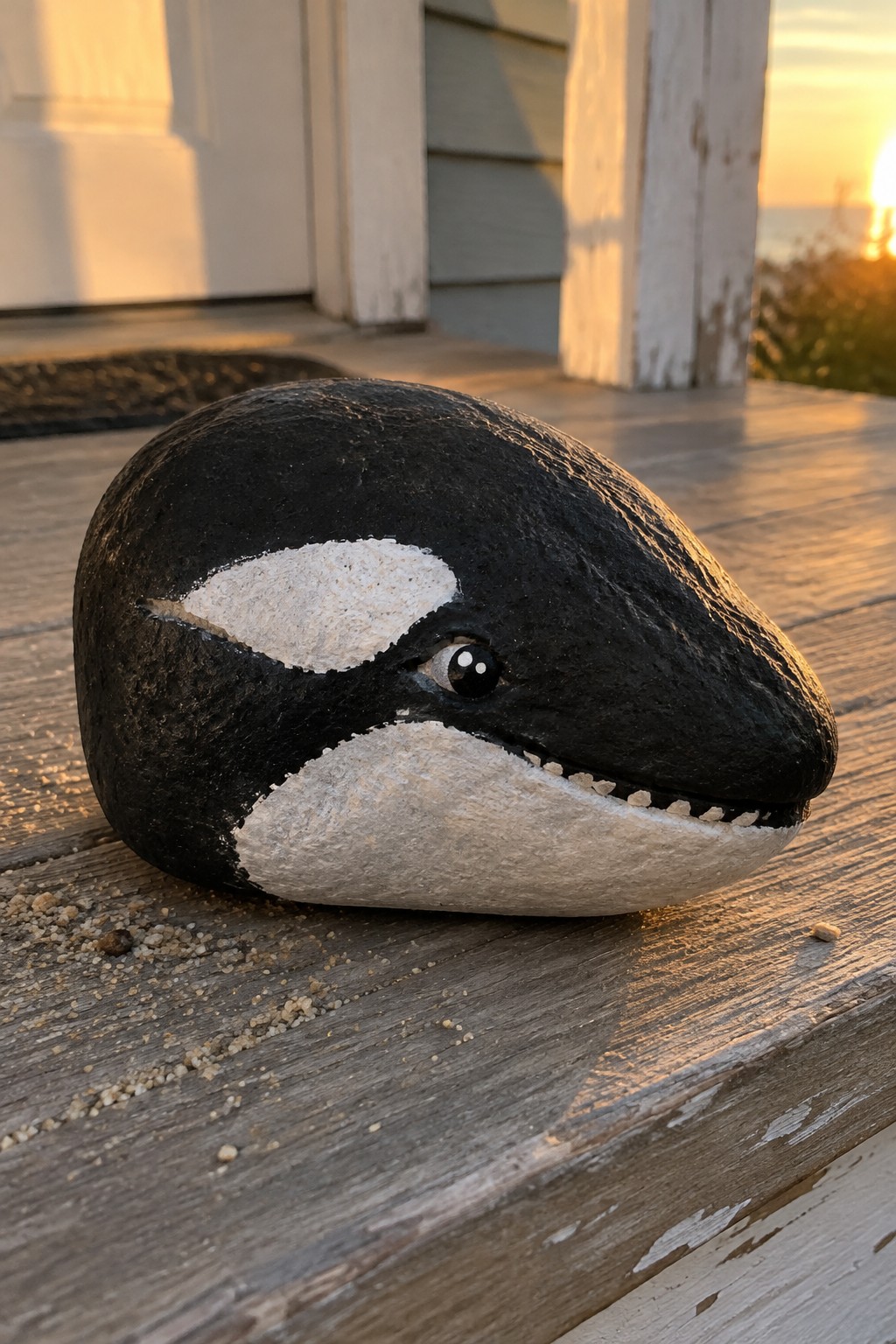
A smooth, rounded beach stone works well for this orca design because its natural oval shape already suggests a whale body. Black paint covers most of the surface while white areas block out the eye patch and lower jaw. Small white marks along the mouth line suggest teeth without needing fine detail. The project stays in the animal rock category and fits ocean-themed collections focused on sea creatures.
What makes this idea useful is how the rock shape does most of the work, so the painter only needs to place the white patches and eye correctly. The same approach scales easily to larger or smaller stones and can be adapted for other black-and-white sea animals like dolphins or penguins. A painted rock like this works especially well as porch decor, tucked into a planter, or added to a windowsill collection of ocean pieces. The simple color blocking also makes it quick to repeat for a small set.
Seahorse Design on an Elongated Stone

A seahorse painted across an elongated smooth stone uses yellow and teal washes to form the body, fins, and curled tail. The rock’s natural oval shape matches the seahorse’s posture, allowing the design to follow the curve without added borders or background space. This approach works as a sea creature rock project where the motif stays focused on one animal and the colors stay light enough to show the stone texture underneath.
The rock shape does a lot of the work here because the length supports the full seahorse outline without crowding. You can repeat the same idea on smaller pebbles using fewer colors or move it to a wider flat stone if you want room for extra fins or bubbles. For garden decor or patio trays, this type of painted rock pairs easily with shells or driftwood, and the motif could switch to a different ocean animal by changing just the head and tail lines.
School of Fish Painted on a Large Flat Garden Stone
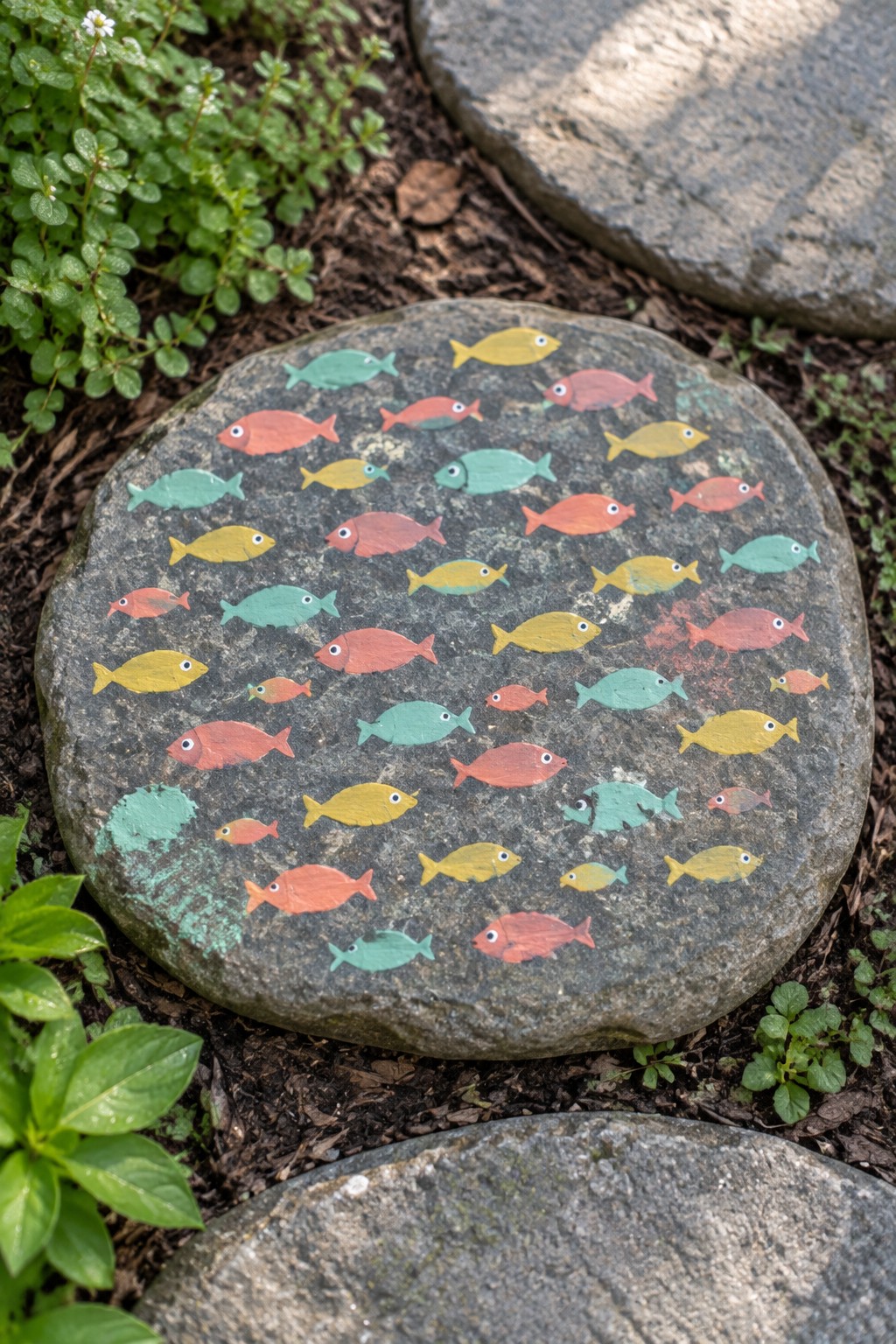
This project uses a large, rounded flat stone as the base for a dense arrangement of small fish in bright yellow, coral, and teal. Each fish is painted with a simple oval body, tail fin, and white eye dot, scattered across the dark textured surface to suggest a loose school moving in different directions. The natural roughness of the stone helps the colors stand out while keeping the overall look like an outdoor garden accent rather than a polished indoor piece. It fits the category of decorative stone craft with an ocean animal motif.
What makes this idea useful is the way the flat surface lets you fit many small shapes without crowding. A painted rock like this works especially well as a path marker or accent in mulch beds near water features. The small fish scale means you can easily adapt the same layout to a smaller stone by using fewer fish or switching to just two or three colors. For garden decor, this kind of painted rock stands out in photos because the high-contrast colors read clearly against the dark background.
Frequently Asked Questions
What kind of rocks work best for creating ocean rock art with sea creatures? Smooth, flat rocks around 3 to 6 inches wide are ideal because they provide a stable surface for painting details like fish scales or octopus tentacles. Look for river rocks or beach stones that feel comfortable in your hand, and wash them thoroughly with soap and water before drying completely to remove dirt or salt residue.
Which paints and supplies help achieve bright colorful results on these projects? Acrylic paints in shades of turquoise, coral, yellow, and purple offer strong coverage and mix well for custom ocean hues. Use fine-tipped brushes for small features such as eyes or fins, along with a white primer coat first to make colors pop. Keep a cup of water nearby for cleaning brushes between colors and consider adding a drop of dish soap to the paint for smoother application on porous surfaces.
How should I seal the finished rock art to protect the designs? Apply two thin coats of outdoor acrylic sealer after the paint dries fully, allowing each coat to cure for at least 24 hours. This step prevents fading from sunlight and water damage if you plan to place the rocks in a garden or near water features. Test the sealer on a small area first to ensure it does not alter the colors.
Are these rock art ideas suitable for kids to try? Yes, with adult supervision for younger children, these projects work well for ages 5 and up because they build fine motor skills through simple shapes like starfish or jellyfish. Choose nontoxic paints and larger rocks to reduce frustration, and start with basic outlines before adding details to keep everyone engaged and successful.
What are some practical ways to use or display the completed sea creature rocks? Place them along garden paths, in potted plants, or as paperweights on desks for daily enjoyment. They also make thoughtful gifts when packaged in small boxes with a note explaining the creature depicted. For indoor settings, arrange several rocks in a shallow bowl filled with sand to create a mini ocean scene that sparks conversations.
