


I have been painting rocks for a while now and lately I have been trying out designs with cats and dogs on them.
It turns out these animals make good subjects because their shapes are simple to sketch.
In my own attempts I found that even basic faces can look nice with just a few colors.
This article shares some ideas that beginners can follow step by step.
I hope these give you a starting point for your own projects.
Simple Pink Cat Face on a Rounded Pebble
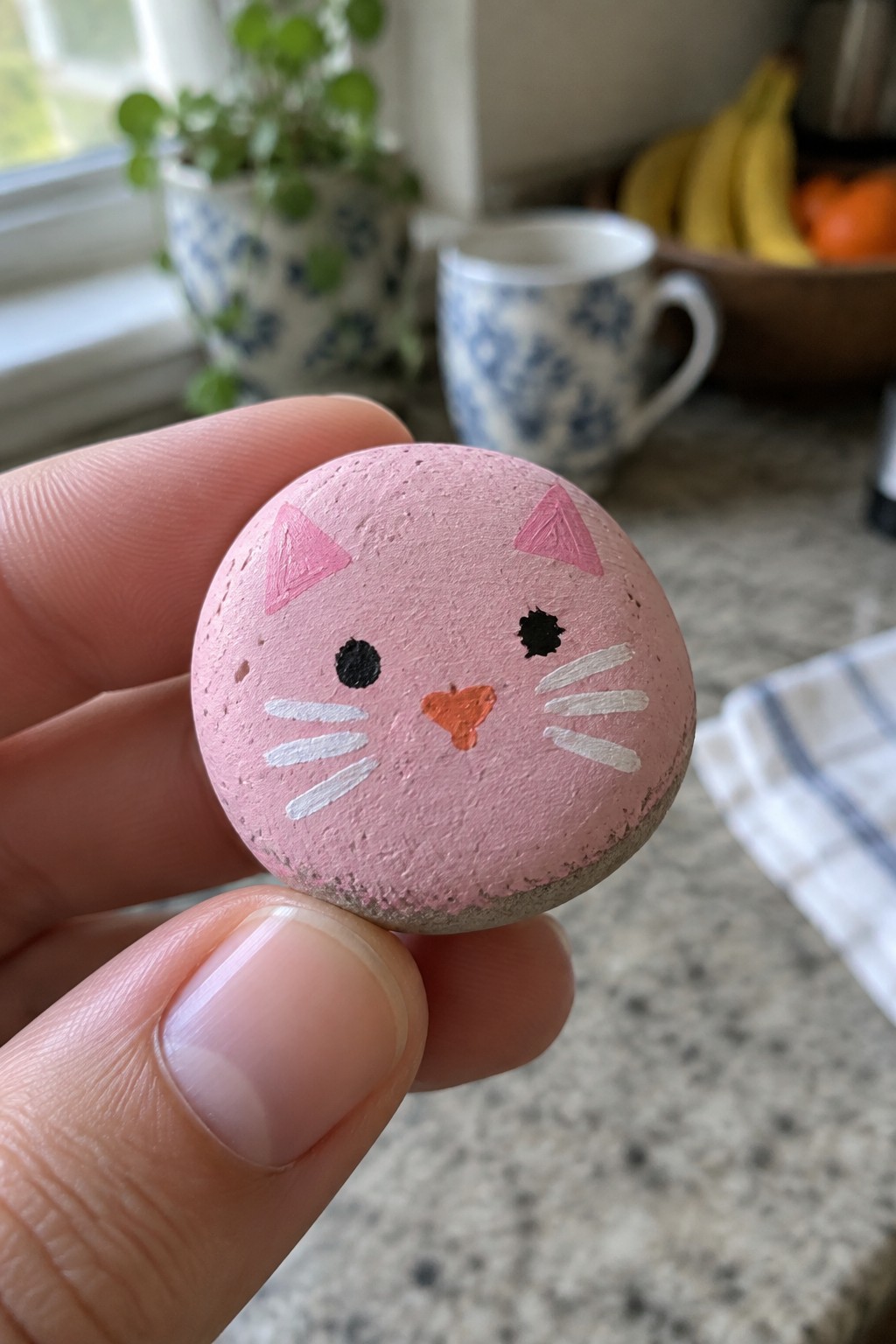
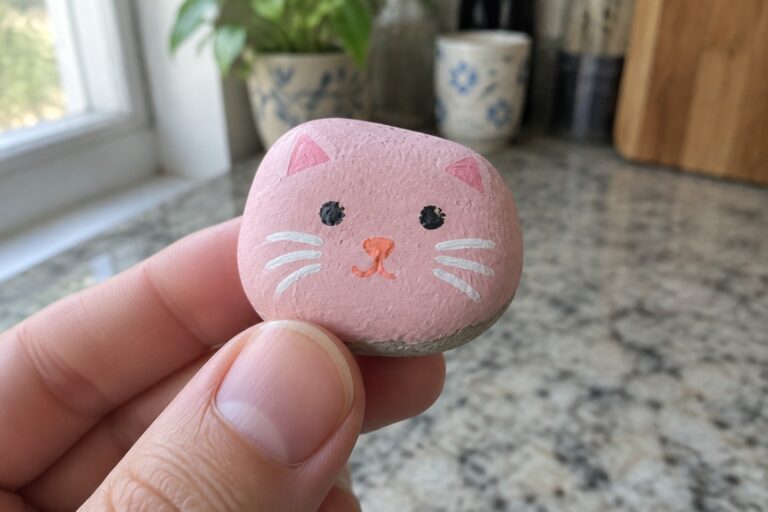
A small rounded pebble makes a good base for a cat face rock painting project. The stone receives an all-over pink coat that leaves just a narrow band of the original gray surface at the bottom edge. Two pink triangles mark the ears, black dots stand in for eyes, an orange triangle forms the nose, and short white lines create whiskers on both sides of the face. This style belongs to the animal rock category and relies on the pebble’s natural curve to shape the cat’s head.
The small size lets you finish the whole design in one sitting and keeps paint use low. A painted rock like this works especially well tucked into a potted plant, lined up on a windowsill, or added to a collection of pet-themed stones. The same face layout can switch to a dog by rounding the ears or changing the nose color, and the pink base can be swapped for any solid color without altering the rest of the steps.
Curled Tabby Cat Rock
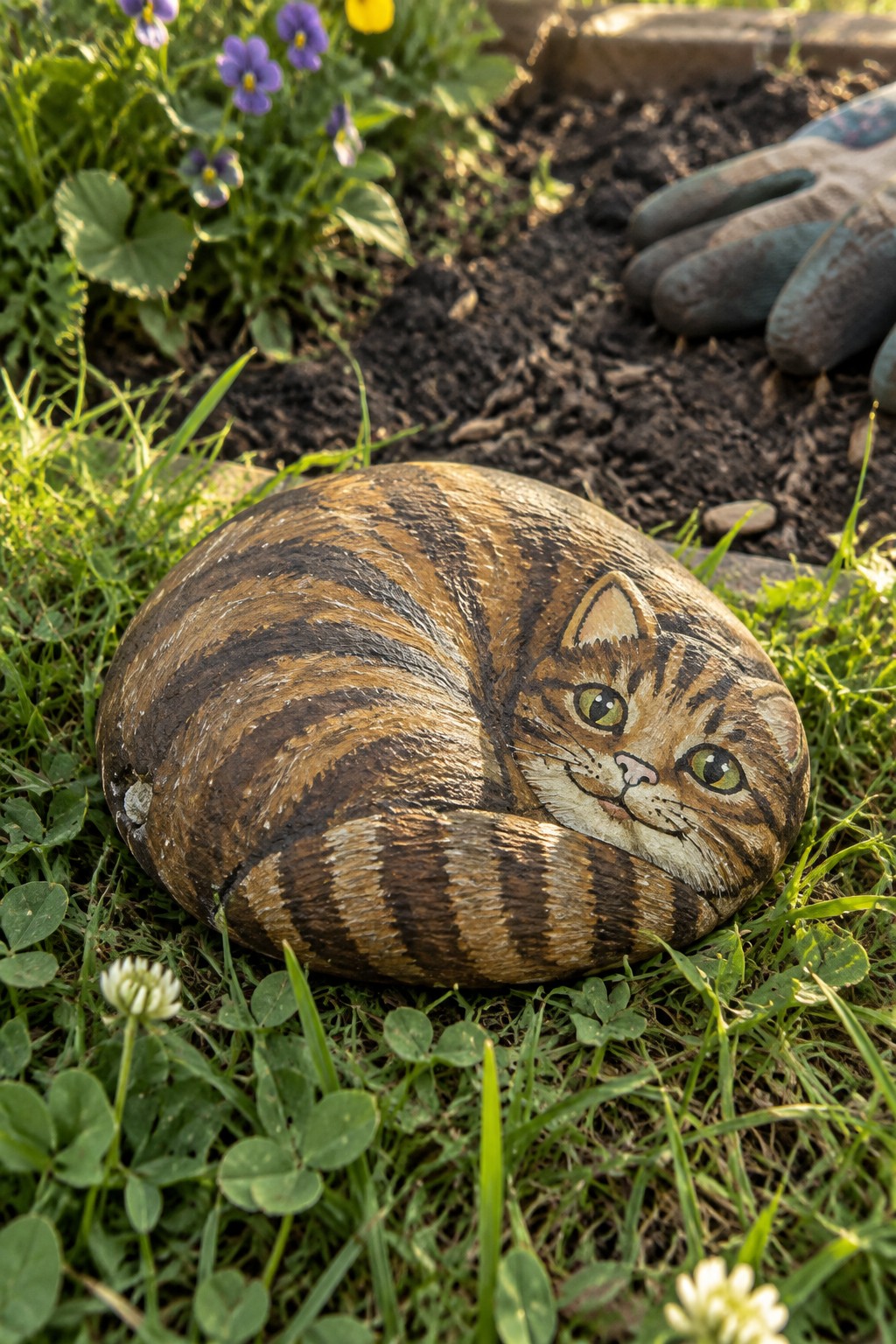
A smooth oval rock makes a strong base for this curled cat design because its rounded form matches the shape of a resting cat. Brown and black stripes follow the curve of the stone to create the body and tail, while the cat face with green eyes and whiskers sits at one end. The tail wraps along the lower edge so the whole rock reads as one complete animal rather than separate painted parts. This approach falls into the animal rock category and works especially well as garden decor.
The rock shape does a lot of the work here since the oval already suggests a curled body and lets the stripes flow naturally without extra outlining. You can adapt the same layout to any similar oval stone by keeping the face small and letting the stripes cover most of the surface. For a beginner version, use fewer stripes and thicker brush lines to finish faster. This type of painted rock stands out in photos for garden or patio displays because the natural stone edge stays visible around the design.
Light Blue Dog Face Rock
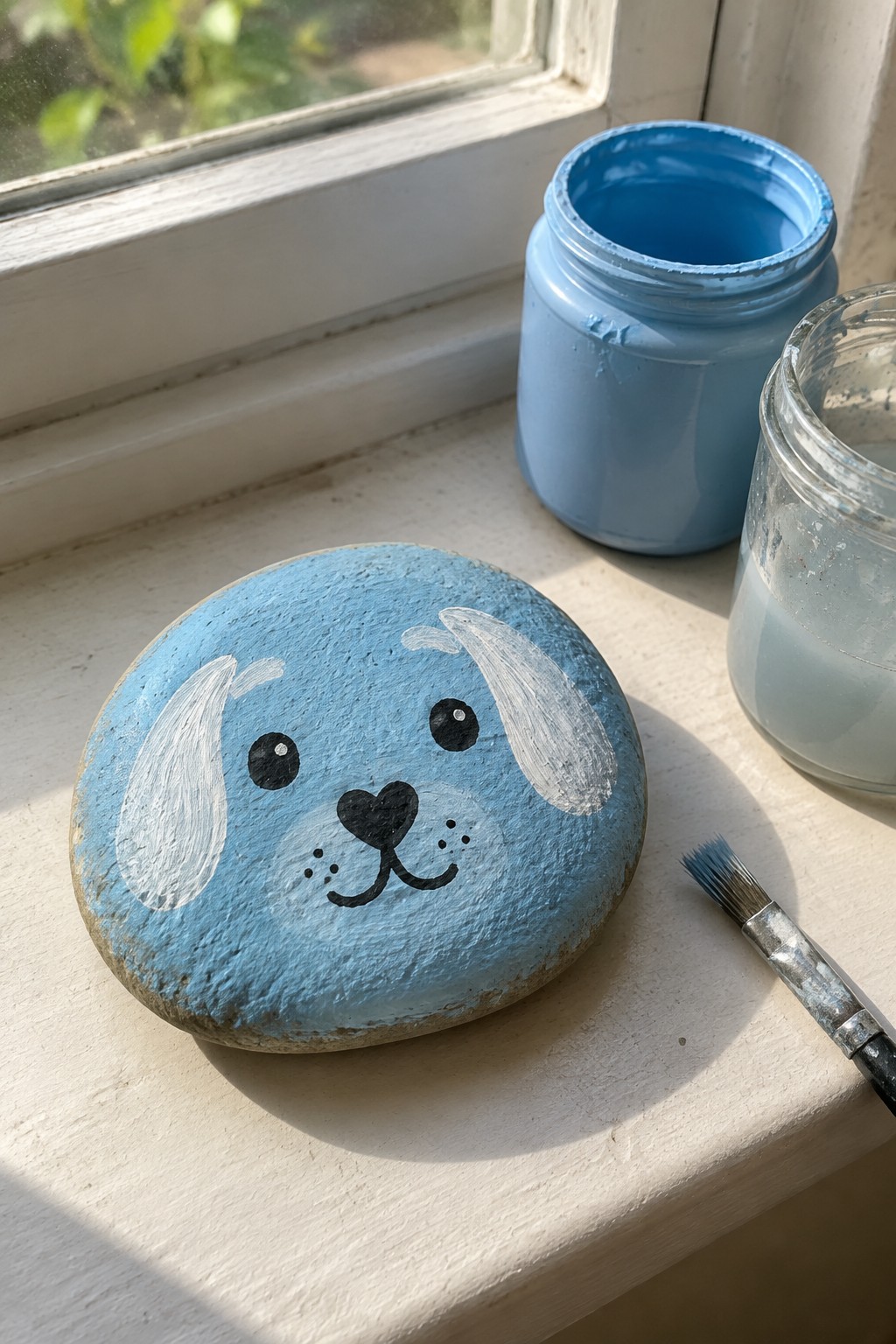
A smooth, rounded stone painted light blue serves as the base for this dog face design. White brushstrokes form two floppy ears that follow the curve of the rock, while black paint creates round eyes, a heart-shaped nose, and a simple muzzle with dots and whiskers. The flat top surface of the stone gives the face a clear, balanced layout that reads well from a short distance.
What makes this idea useful is how the natural stone shape already suggests the head, so the ears and features only need to sit in the right spots. You could easily change the base color or ear style to match other breeds on similar rounded stones. The small size makes it simple to group several dog rocks together in a planter or on a shelf. For a gift, the heart nose adds a quick recognizable detail without extra steps.
Cat and Dog Face Pebbles
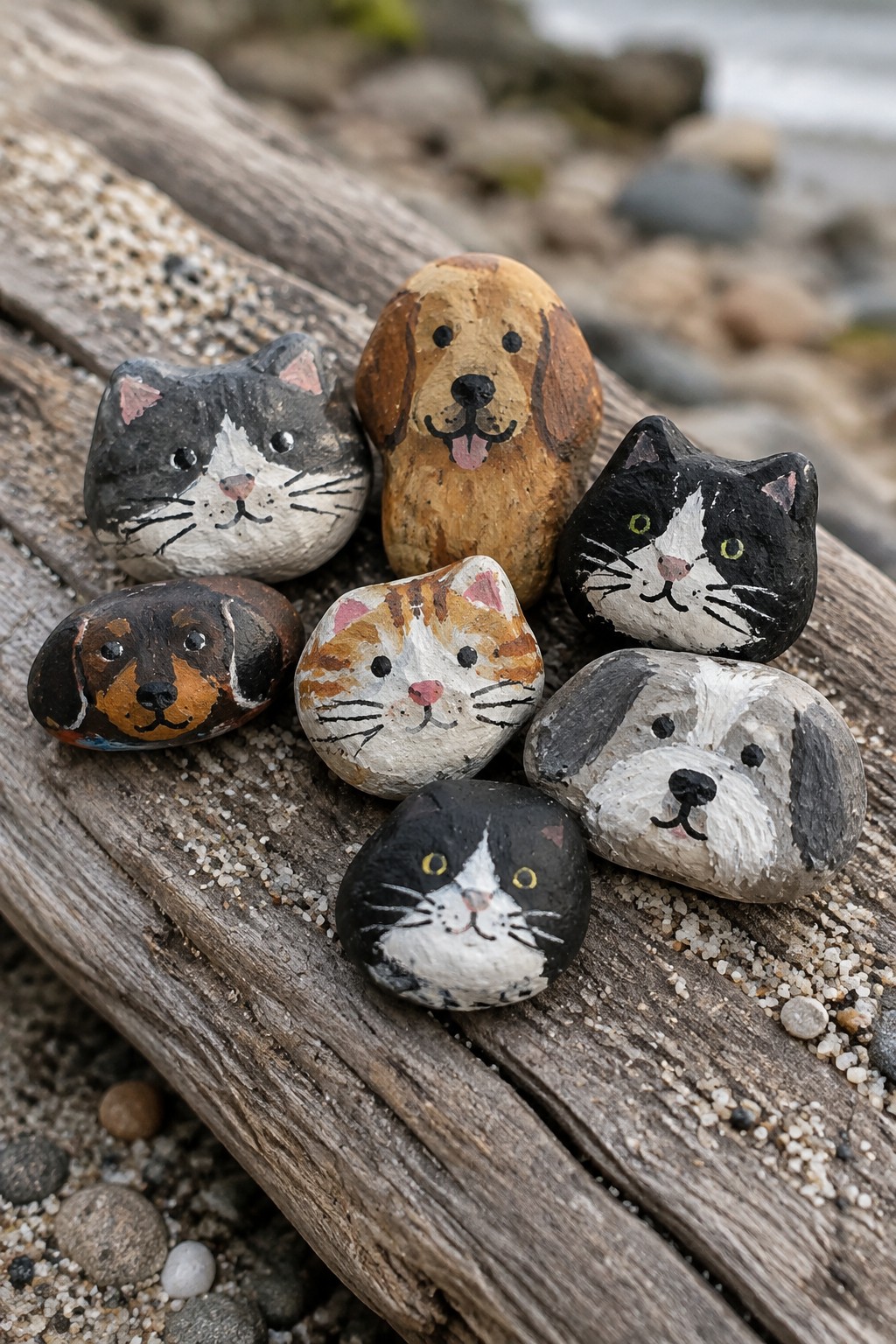
Small rounded stones painted with cat and dog faces create a straightforward animal rock project that uses basic color blocking and line details. The faces rely on contrasting paint areas for fur patterns, simple dots for eyes, and short brush lines for whiskers and mouths that sit directly on the curved stone surfaces. This style fits the painted pebble set category because the compact size lets multiple rocks work together without crowding any single design.
What makes this idea useful is how the small scale lets you paint several versions quickly on whatever stones you have on hand. These rocks work well tucked into planters, scattered along a garden path, or grouped on a windowsill where the rounded shapes keep them stable. You can repeat the same face in different colors or swap one cat pattern for a dog to match a pet you already own.
Dachshund Dog Rock
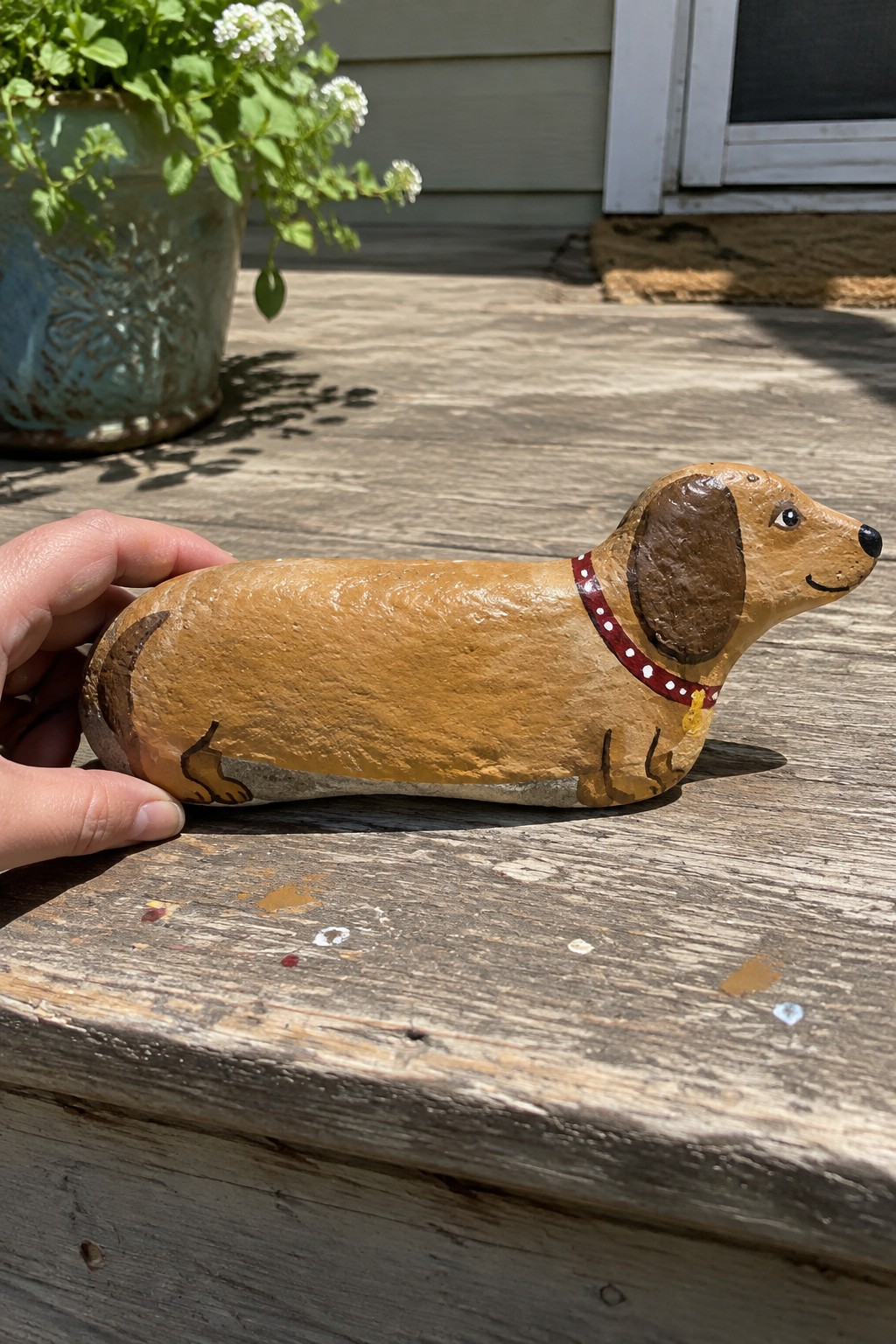
A smooth, elongated stone works as the base for a dachshund when painted in a solid tan-brown color with a darker brown ear and simple black outlines for the legs and paws. The rock’s natural length already matches the breed’s body shape, so the design only needs a few added details like a red collar with white dots, a small yellow tag, and a basic face to read clearly as a dog. This animal rock idea keeps the painting minimal because the stone itself supplies the main silhouette.
The rock shape does a lot of the work here, so the same approach can be used for other long dogs or even stretched-out cats by swapping the ear color and adjusting the leg lines. It sits well in a planter, on porch steps, or along a garden path as outdoor decor that blends with real plants and stones. For a beginner project, start with any narrow river rock and use the same color blocking to keep the work simple while still making the finished piece recognizable as a specific breed.
Calico Cat on a Rounded Stone

A smooth oval rock makes a natural base for this calico cat because its rounded form already suggests a curled body. Large sections of orange, black, and white paint cover the stone to match typical calico markings, while the face at one end gets the eyes, nose, ears, and whiskers added last. The design stays simple by letting the rock shape carry the pose instead of relying on detailed outlines or extra layers.
The rock shape does a lot of the work here, so the same idea adapts easily to other rounded stones or different cat color patterns like orange tabby or gray and white. This style works well as a small shelf accent, tucked into a planter, or placed along a windowsill. You can keep the face basic with just eyes and ears if you want a faster version, or add more patches for extra detail.
Pug Face on a Rounded Stone
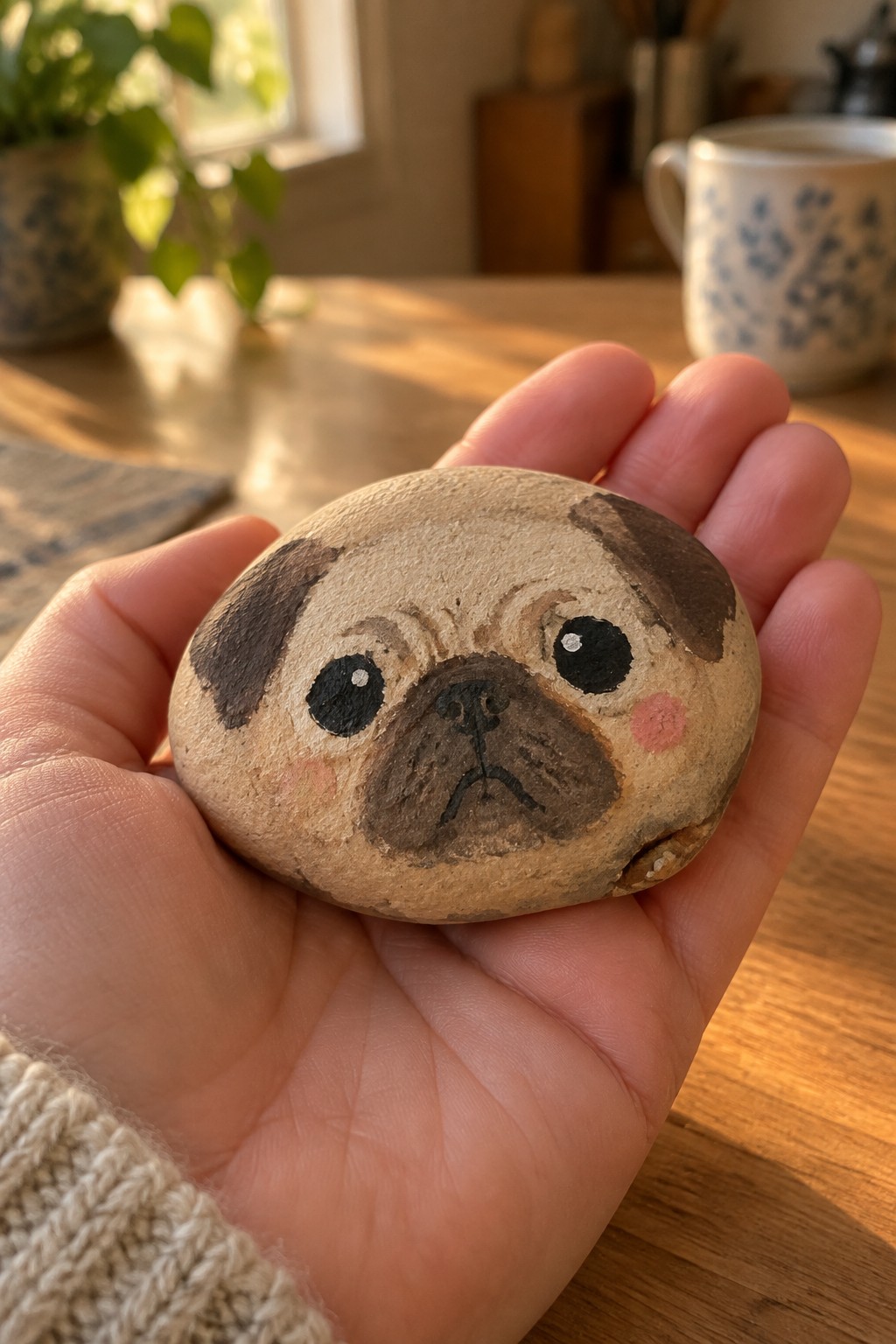
A smooth rounded stone painted as a pug face creates a straightforward dog rock project that uses the pebble’s natural shape. Dark paint blocks in the ears and snout area while the light base color of the stone forms the face. Simple black circles for eyes with small white highlights and a basic nose and mouth line keep the design readable even on a curved surface. This approach fits the animal rock category and works for beginners who want to paint a recognizable dog without complex details.
What makes this idea useful is how the same face layout can be changed into other short-faced breeds by adjusting ear placement or snout width. The rounded stone shape does a lot of the work here since it already matches a pug’s head form. A painted rock like this works especially well as a small shelf accent or a quick handmade gift. The small scale makes this easy to adapt onto other smooth stones found outdoors.
Sitting Cat Silhouette with Paw Prints
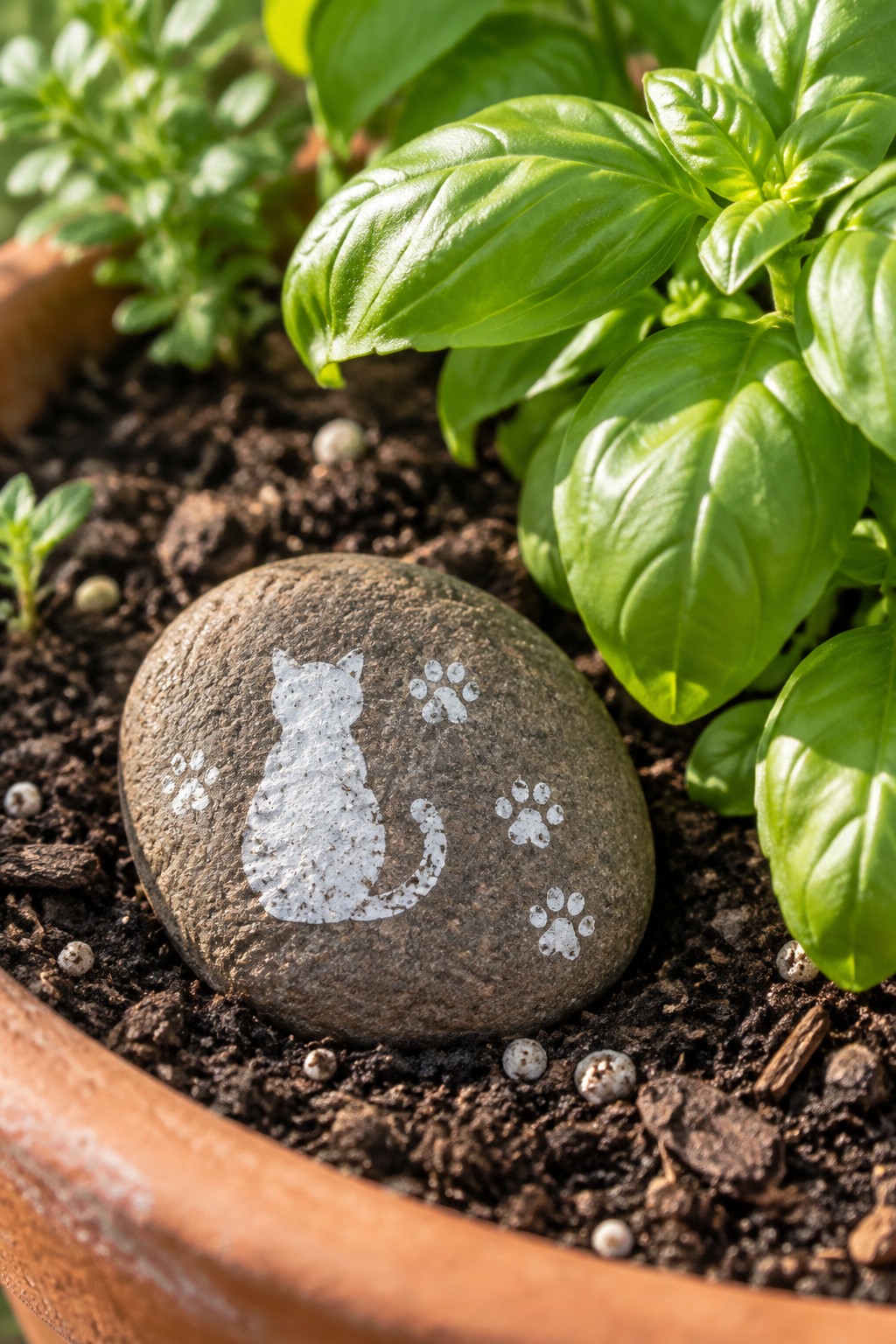
A smooth rounded stone painted with a simple white cat silhouette and several paw prints creates an easy animal-themed garden accent. The natural dark tone of the rock gives the white design clear contrast without extra outlining or shading. This approach works well as a small decorative stone for planters, flower beds, or mulch areas where the rounded shape helps it rest evenly.
The compact size and clean motif make it simple to repeat on other stones or adjust the paw print placement for variety. A painted rock like this fits nicely along a garden path edge or inside a large pot without needing extra hardware. You can change the cat color to match a pet or swap the paw prints for a different animal to create a quick matching set.
Mint Green Dog Rock with Floppy Ears
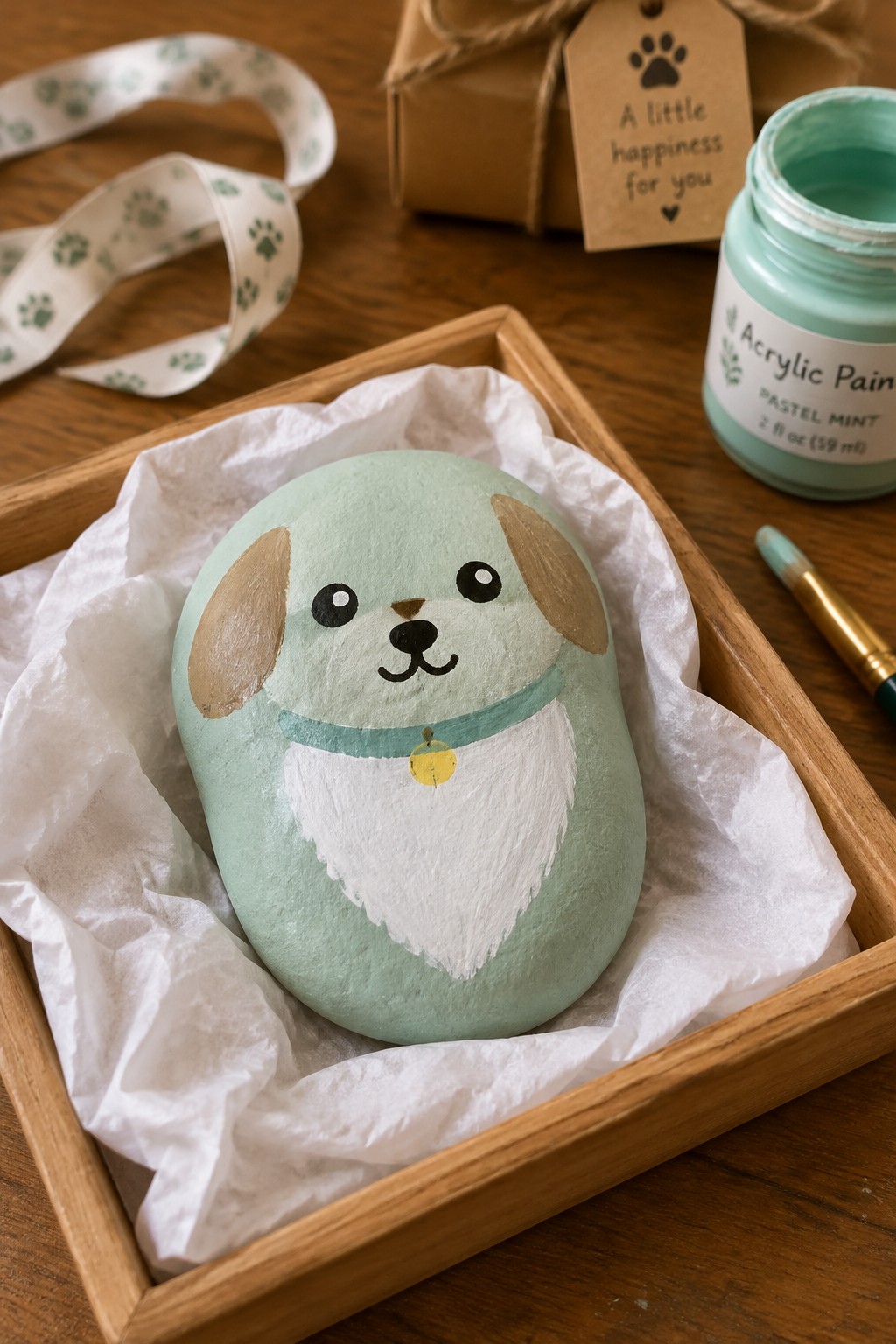
A smooth oval rock painted mint green forms the base for this dog design. Brown sections mark the ears on each side, black marks create the eyes, nose, and mouth, and a white area covers the lower face and chest. A thin teal band with a small yellow dot stands in for a collar and tag. This animal rock idea uses the stone’s natural rounded shape to suggest a dog’s head and body without extra carving or shaping.
The rock shape does a lot of the work here since the oval form already mimics a dog’s head and body in one piece. A painted rock like this works especially well as a shelf accent, tucked into a planter, or placed near a pet bed. The color blocking can be swapped to other shades or simplified by skipping the collar for a quicker version on smaller stones. The same face layout adapts easily to different rock sizes or even turns into a cat by changing the ear shape and removing the muzzle area.
Sleeping Black Cat on a Starry Purple Rock
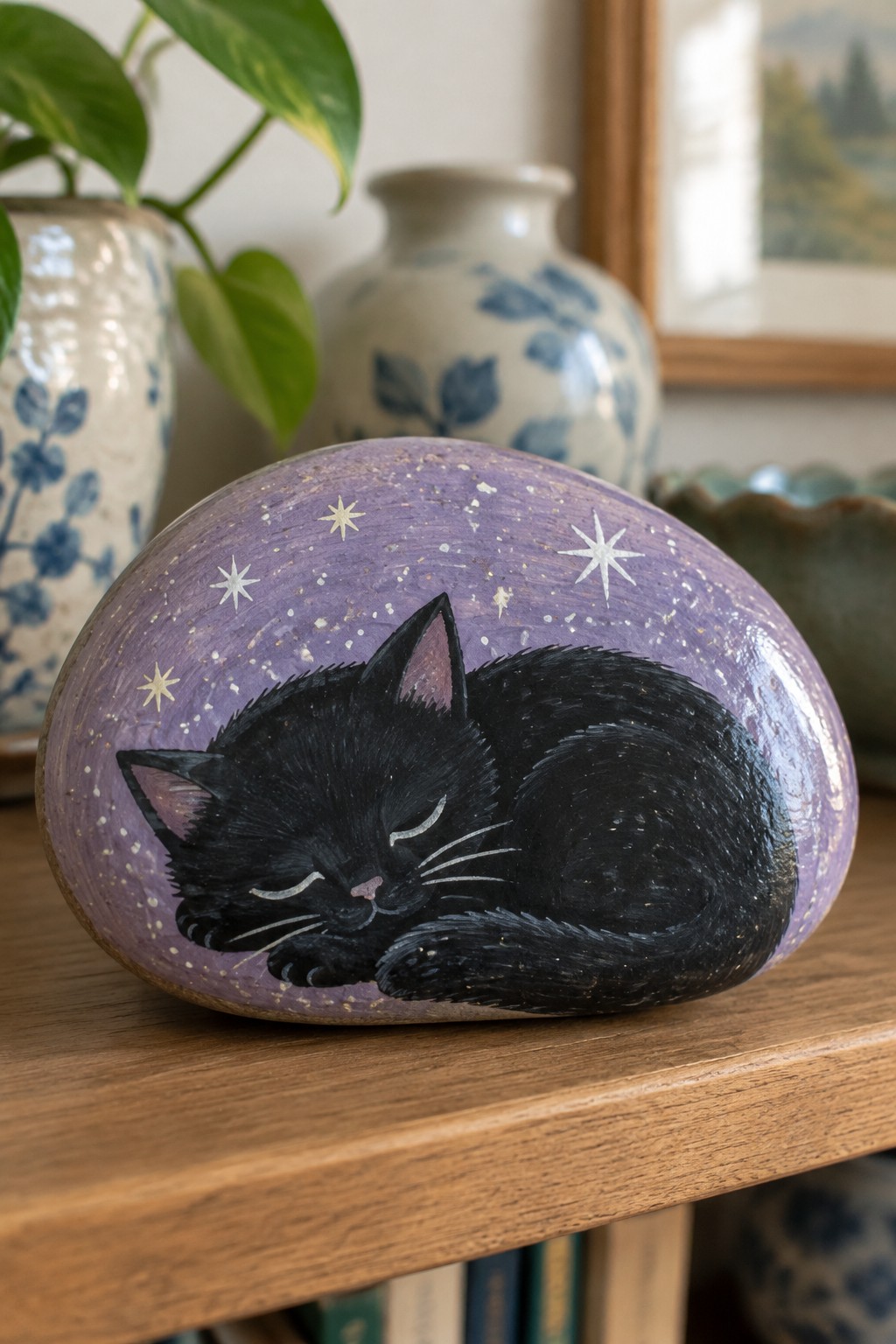
A smooth oval river rock makes a good base for this curled sleeping cat design. The black cat is painted with a tight body shape, closed eyes, and simple white whiskers and ear details against a purple background scattered with small white stars. The natural curve of the stone helps the cat’s back and tail follow the rock edge without needing complex shading. This type of animal rock uses basic color blocking for the main subject and a few dots and lines for the night sky effect.
What makes this idea useful is how the rounded stone shape already suggests a curled animal body. You can swap the purple for other background colors or change the cat to orange or gray fur with the same layout. A painted rock like this works especially well tucked into a plant pot or placed on a windowsill. The small scale makes it easy to try on any smooth stone you have, and the star accents can be simplified to just a few dots if you want fewer details.
Cat and Dog Face Rocks on Rounded Stones
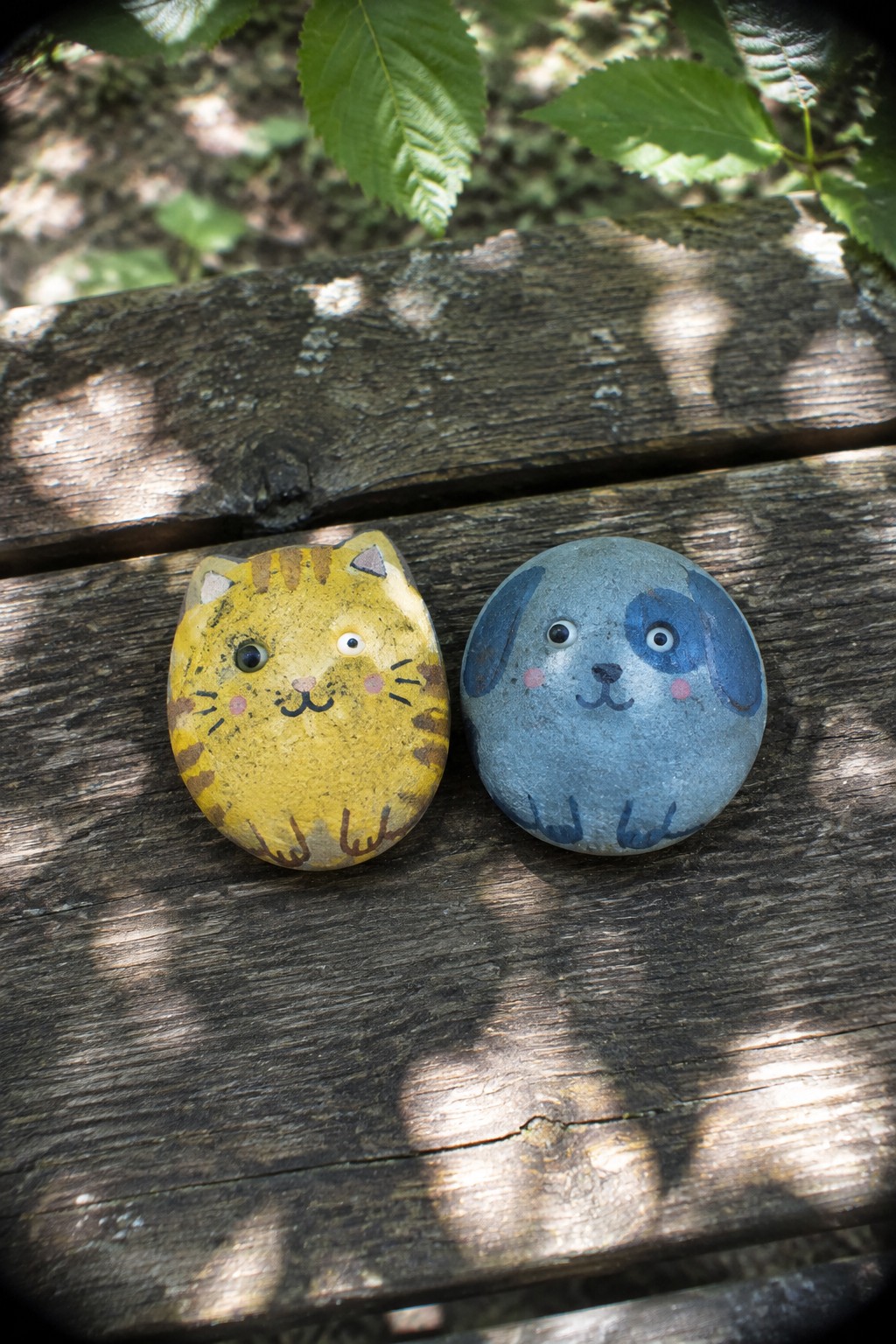
Painting simple animal faces on two separate rounded stones creates an easy matching pair for beginners. The yellow stone uses brown stripes and small ear shapes to form a cat, while the blue stone adds side ear details and basic facial lines for a dog. The natural curves of the stones help the faces sit evenly without extra shaping. This approach fits the painted pebble set style of animal rock crafts.
What makes this idea useful is how the basic face layout works on most oval or round stones you already have. You can change the ear style or swap colors to match different pets or use up leftover paint. A small pair like this fits well in a planter, on a shelf, or as a quick gift without needing much space. The same face shapes scale easily to larger or smaller stones if you want to make more.
Multiple Dog Faces on One Flat Rock
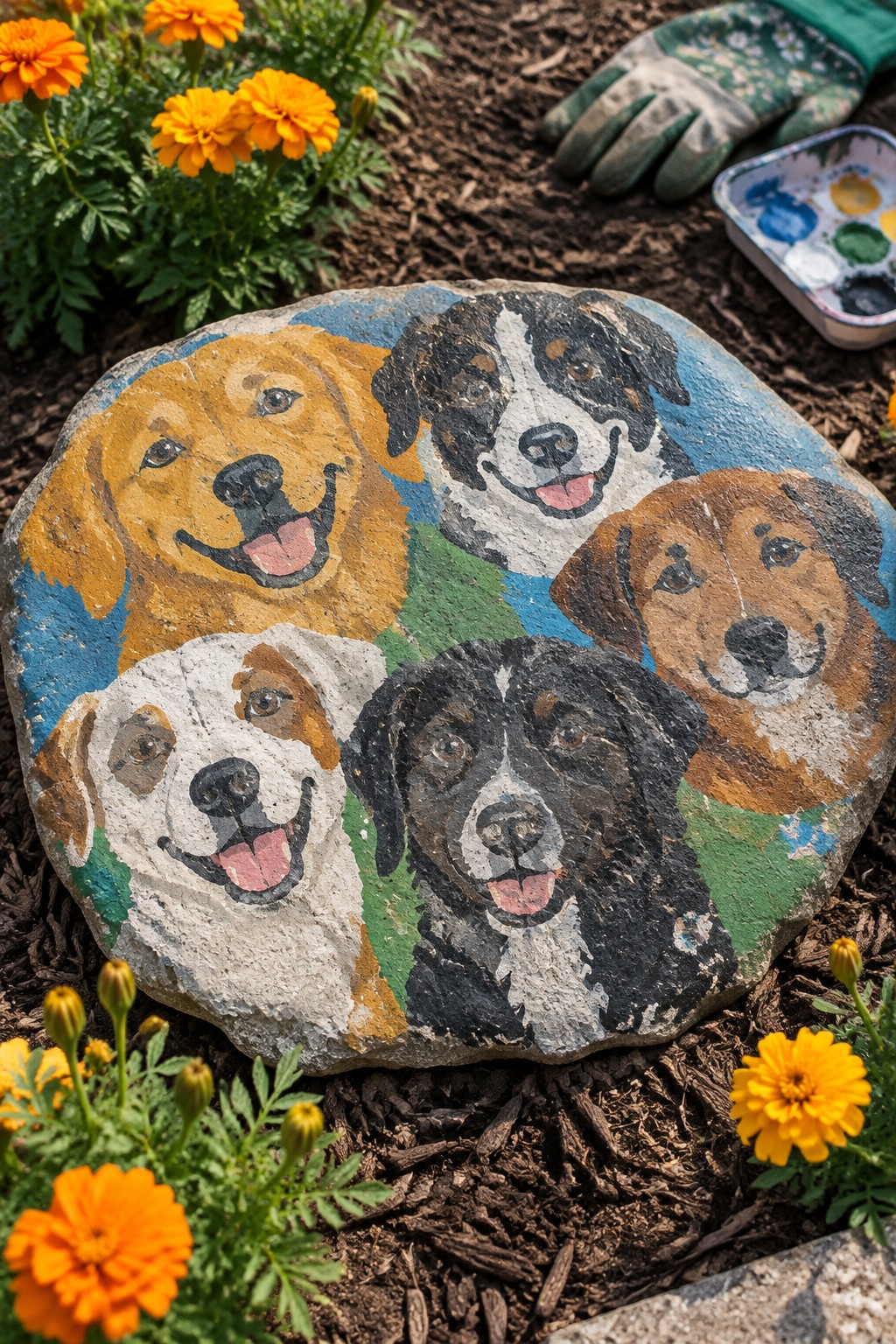
A large flat stone with plenty of surface area makes it easy to paint several dog faces side by side using simple color blocks and clear outlines. Different breeds stand out through varied ear shapes, snout colors, and fur patterns set against a shared blue background with green patches filling the gaps. This style keeps the project as one decorative garden stone instead of separate pieces.
What makes this idea useful is how the wide surface lets beginners practice multiple faces in one session without gathering lots of rocks. The rounded shape sits naturally in flower beds or mulch, and the same layout could be reduced to three dogs or swapped with different breeds to match your own pets. For garden decor, this kind of painted rock adds a focal point near plants without needing extra stands or frames.
Oval Stone Painted as a Siamese Cat
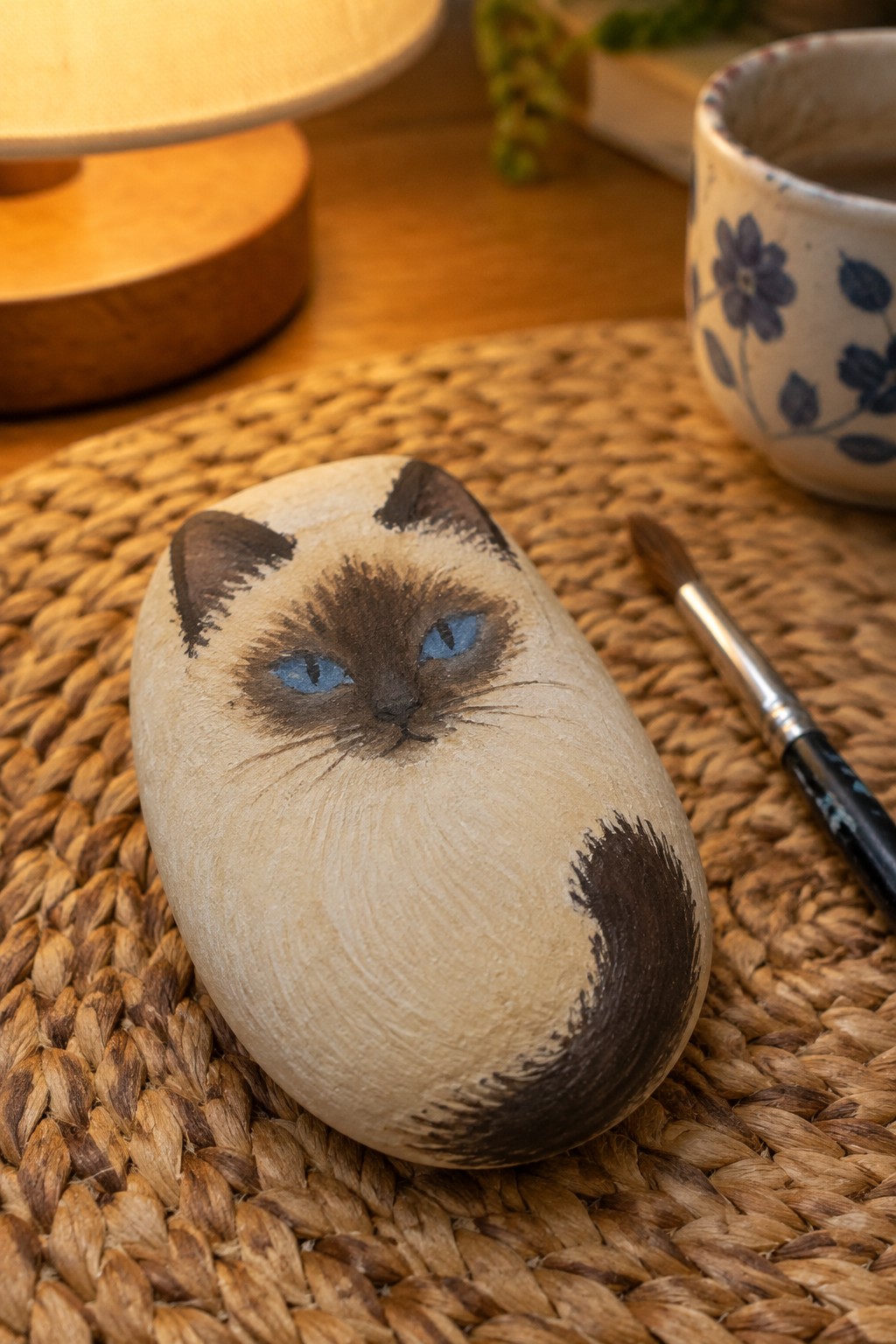
A smooth oval rock forms the base for this cat design, with the rounded shape supplying the body and head in one piece. The painting uses simple color blocking to create the dark face, ears, and tail tip against a light base, while the blue eyes stand out as the main focal point. The tail marking curves around the end of the stone to follow its natural contour. This approach belongs to the animal rock category and keeps the project limited to basic shapes and a few color zones.
The rock shape does a lot of the work here by matching a cat’s typical proportions without extra carving. The same color blocking method can be switched to other breeds by adjusting the face patches or eye color. A painted rock like this works especially well as a desk accent or inside a potted plant arrangement. The small scale also makes it easy to repeat the idea on several stones for a matching set.
Rounded Pebble Cat Face with Closed Eyes
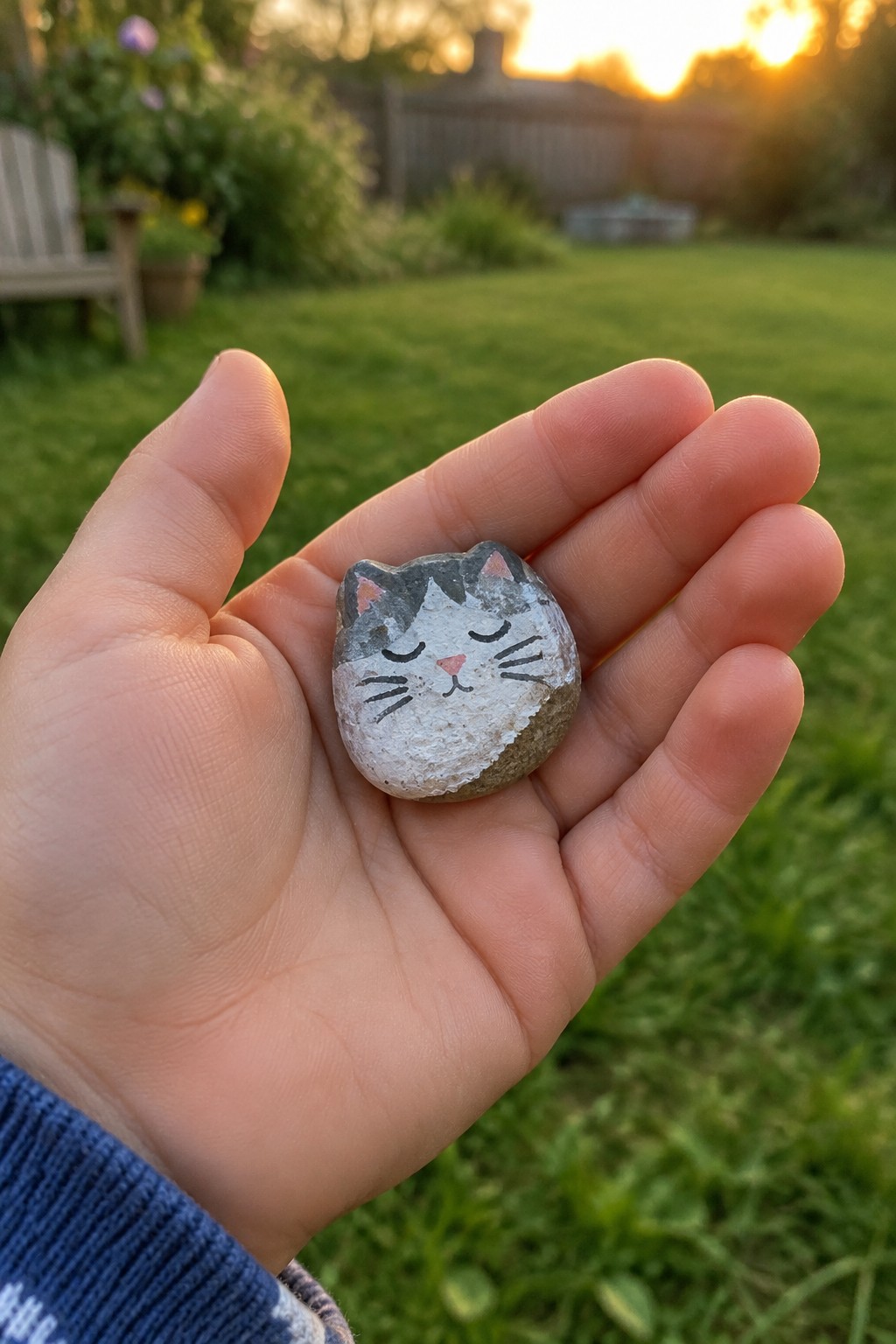
A small rounded stone makes a good base for a cat face rock painting. Gray paint covers the top section to form the head and ears while white fills the lower face area. Black lines create closed eyes, whiskers, and a simple mouth, with pink added to the inner ears and nose. The natural curve of the pebble helps define the cat’s rounded head shape without extra shaping.
This painted rock works well tucked into a planter or along a garden path edge. The same face layout can be adjusted for other stone sizes by moving the ear placement or swapping the gray for orange or black tones. Its compact size makes it easy to add to a shelf display or include in a small gift set of painted pebbles. The basic color blocks and line details keep the design straightforward to repeat on similar stones.
Oval Rock Corgi Dog Painting
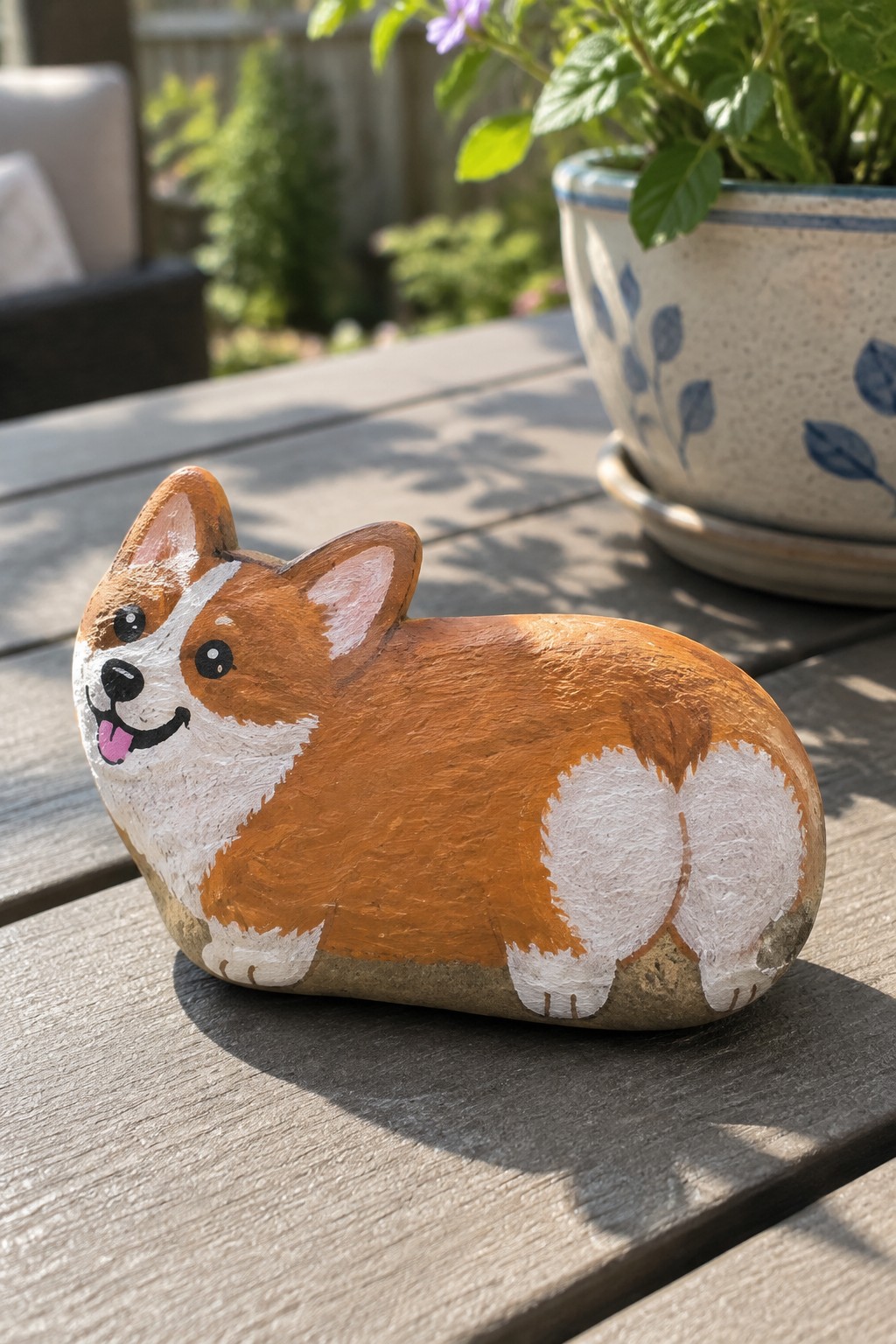
A smooth oval river rock serves as the body for this corgi painting, with its natural length and low profile matching a dog lying down. Brown and white paint blocks create the main fur sections while black outlines add the face, ears, and paws. The rock’s curved surface helps the design sit naturally without extra shaping. This approach falls into the animal rock category and works because the stone shape already suggests the animal’s form.
The rock shape does a lot of the work here by matching the low profile of a resting dog. You could adapt the same color blocking approach to other dog breeds or even cats by changing the ear shape and tail position. A painted rock like this works especially well as a shelf accent or tucked into a planter on a patio. The small scale keeps the project quick for beginners who want a recognizable pet without needing fine detail work.
Puppy in a Bone Sweater Rock
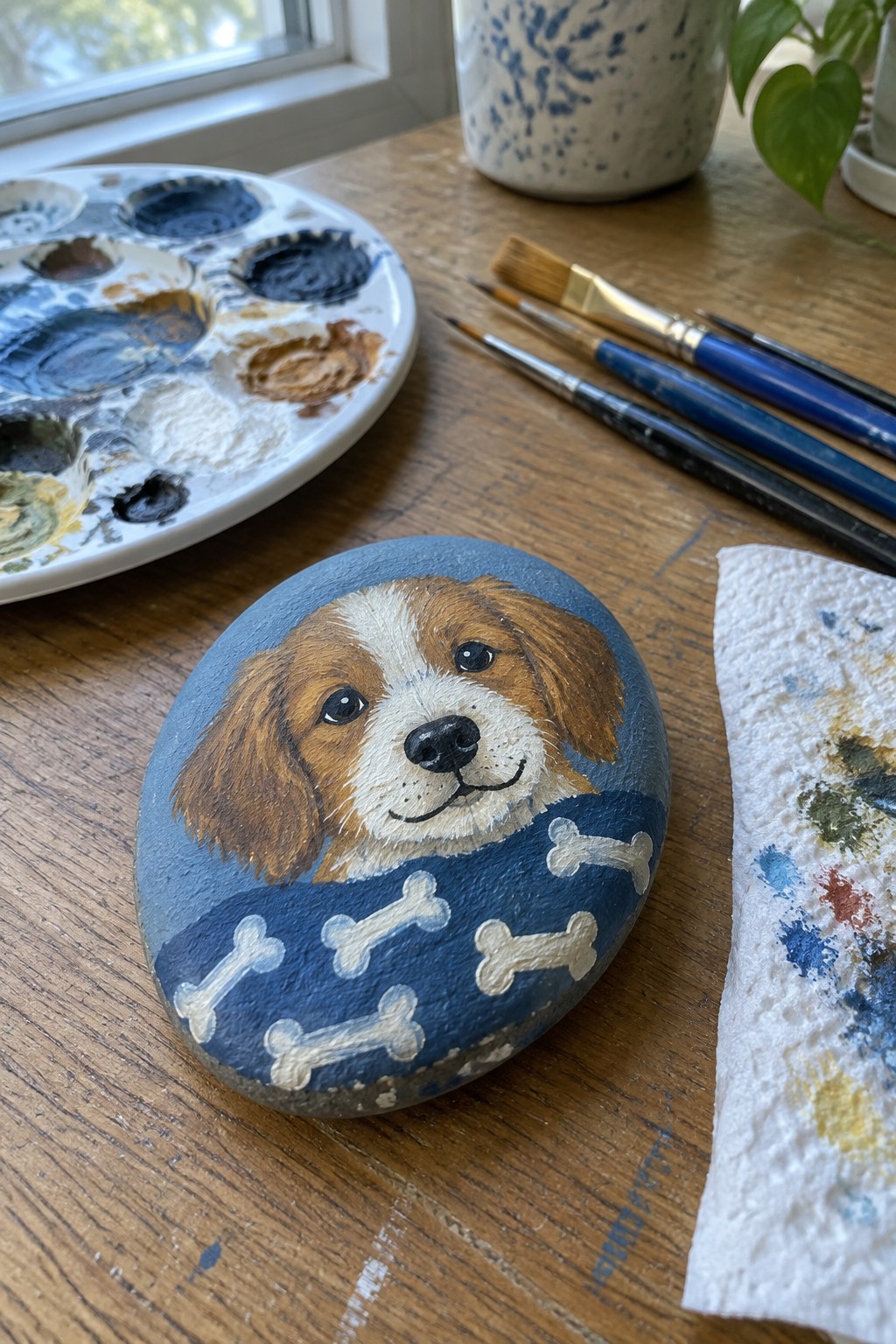
A smooth rounded stone works well for this dog rock project. The upper half shows a brown and white puppy face with floppy ears and a black nose, while the lower half uses a solid blue section filled with simple white bone shapes to suggest a sweater. The natural curve of the rock helps the face sit forward, and the clear color split between the head and body keeps the design easy to read from a distance. This approach fits the animal rock category and pairs nicely with other pet-themed stones.
What makes this idea useful is how the bone pattern adds a clear pet theme without any lettering. The rounded shape lets the rock sit steady in a planter, on a windowsill, or in a small dish with other accents. You can swap the blue for a different color or reduce the number of bones if you want a quicker version on a smaller stone. For garden decor or a gift, the same layout works on any oval rock and photographs clearly for sharing.
Simple Cat and Dog Silhouette Rocks
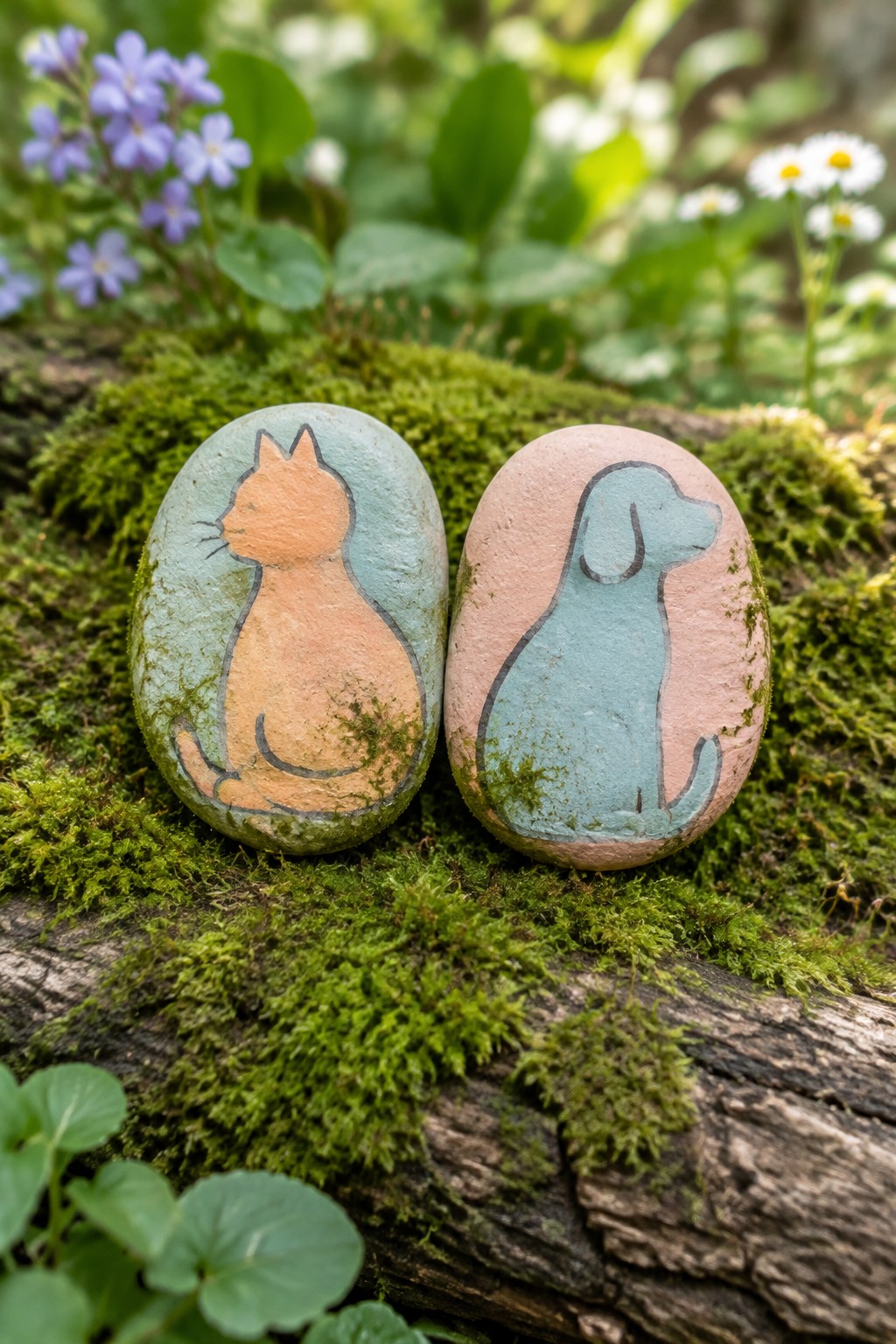
A pair of oval stones painted with solid animal silhouettes creates an easy pet rock project for beginners. One smooth rock uses a soft green base with an orange cat shape blocked in and outlined, while the matching oval stone uses a pinkish base with a blue dog silhouette in the same style. The rounded edges and flat sitting poses let the simple color areas and dark outlines read clearly without needing extra details. This approach works as a painted pebble set in the animal rock category.
What makes this idea useful is how the oval rock shapes already suggest sitting animal forms, so the design stays minimal. You could swap the colors or add small collars to turn the same idea into other pets on similar stones. These painted rocks fit well as shelf accents or tucked into planters and flower beds. The paired set also photographs cleanly for Pinterest when the two rocks sit side by side.
Frequently Asked Questions
What supplies do I need for these cat and dog rock painting projects?
Gather smooth rocks from a craft store or outdoor spots, acrylic paints in basic colors like black, white, brown, and pink, fine tip paint pens for details, paintbrushes of various sizes, a palette for mixing, and a sealant spray. Start with inexpensive supplies to experiment with the 17 ideas without pressure, and consider adding googly eyes or glitter for extra cuteness on beginner friendly designs.
How do I choose the right rocks for painting cute animals?
Look for flat, smooth stones that fit in your palm, as these provide a stable surface for cat and dog faces or full bodies. Avoid jagged or porous rocks that absorb too much paint, and clean them thoroughly with soap and water before starting. This preparation helps the 17 ideas turn out neatly, especially for beginners who want quick successes with simple shapes.
What techniques can beginners use to paint detailed features like eyes and fur?
Begin with a base coat of light color for the animal’s face, then use small brushes or paint pens to add eyes, noses, and whiskers in thin layers. Practice on paper first to build confidence, and layer colors gradually for fur texture by dabbing rather than stroking. These steps make the 17 cute ideas accessible, allowing you to create expressive cats and dogs without advanced skills.
How should I seal my painted rocks to make them last?
Apply a clear acrylic sealant in thin coats after the paint dries fully, letting each layer cure for several hours. Use an outdoor formula if the rocks will sit in gardens or face weather, and test on a spare rock first. This protects the 17 designs from fading or chipping, ensuring your cat and dog creations remain vibrant for display or gifting.
Can I personalize these ideas for different breeds of cats and dogs?
Yes, adjust ear shapes, fur patterns, and color choices to match specific breeds like tabby cats or golden retrievers by referencing photos for inspiration. Start with the basic outlines from the 17 ideas and add breed specific markings using stencils if needed. This approach keeps projects beginner friendly while making each rock unique and meaningful.
