


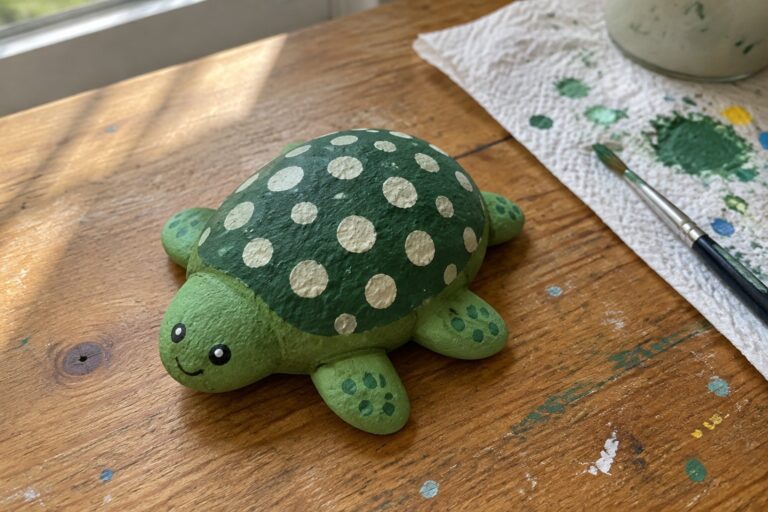
I like painting rocks into turtles because the shape is easy to handle.
My shell designs stay simple with just a few lines or dots.
I have collected 21 different patterns that I think work really well.
These projects do not require a lot of supplies or skill.
They make nice little decorations once they are done.
Green Turtle Rock with White Polka Dot Shell
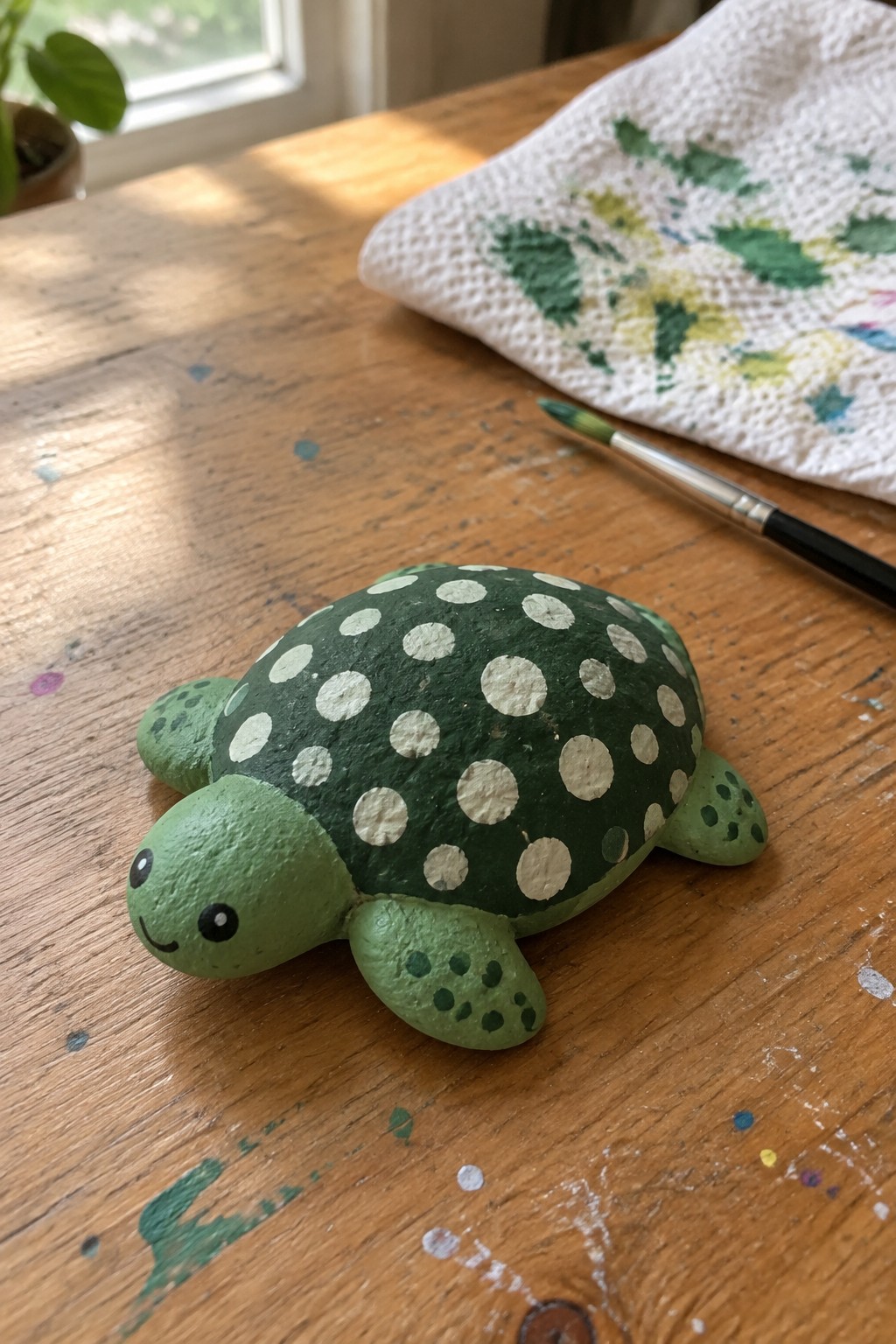
A turtle rock painting starts with a rounded stone that already suggests a low, domed body. The shell area gets painted dark green and filled with rows of white dots while the head and legs stay a lighter green with a few small dark spots added for texture. This keeps the design simple yet readable as a turtle because the dot pattern fills the shell space without extra outlines or shading.
What makes this idea useful is how the natural curve of the stone does most of the shaping work, so only the head and legs need to be painted on. A painted rock like this works especially well in a planter or along a garden path where the green color blends with plants but the white dots catch the eye. The same dot approach could be swapped for stripes or fewer larger circles if you want to try the idea on a flatter or longer stone.
Striped Green Shell Turtle Rock
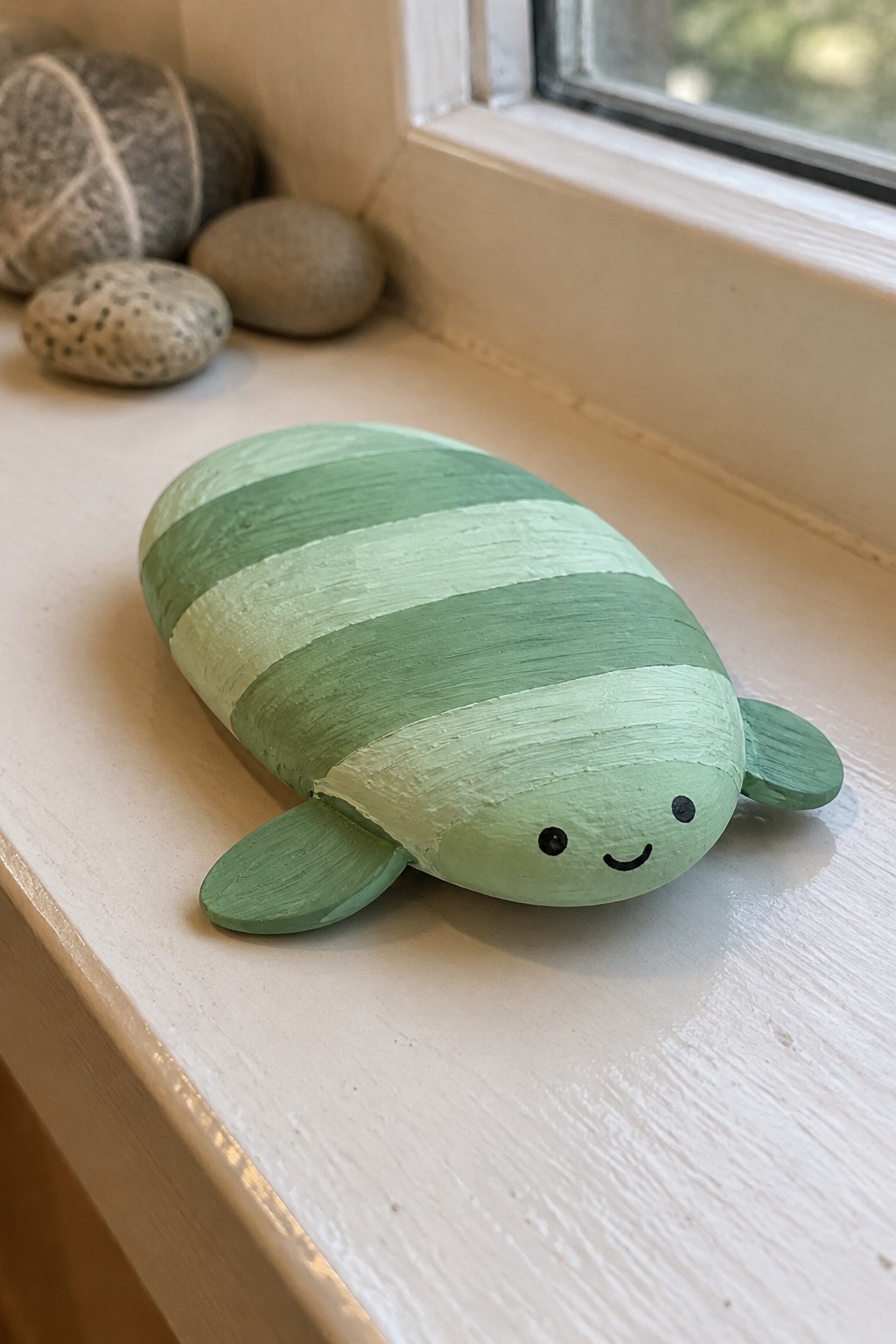
A smooth oval river rock forms the base for this turtle design, with its rounded shape naturally suggesting the body and head. Horizontal bands of green paint in several shades create a simple shell pattern that follows the curve of the stone without extra outlines. Small flippers are added at the sides and a basic face with dot eyes and a curved line sits at the front end. This approach belongs to the animal rock category where the stone’s existing form does most of the shaping work.
The rock shape does a lot of the work here, letting the stripes stay clean and readable from a distance. A painted rock like this works especially well as garden path markers or accents inside large planters where the green tones blend with foliage. You could easily change the stripe widths or shift to blues and grays for a different turtle variation on a similar oval stone. The small scale makes this easy to adapt for a set of turtles using rocks found on the same beach or river walk.
Turtle Rocks with Spiral Dot and Star Shell Patterns
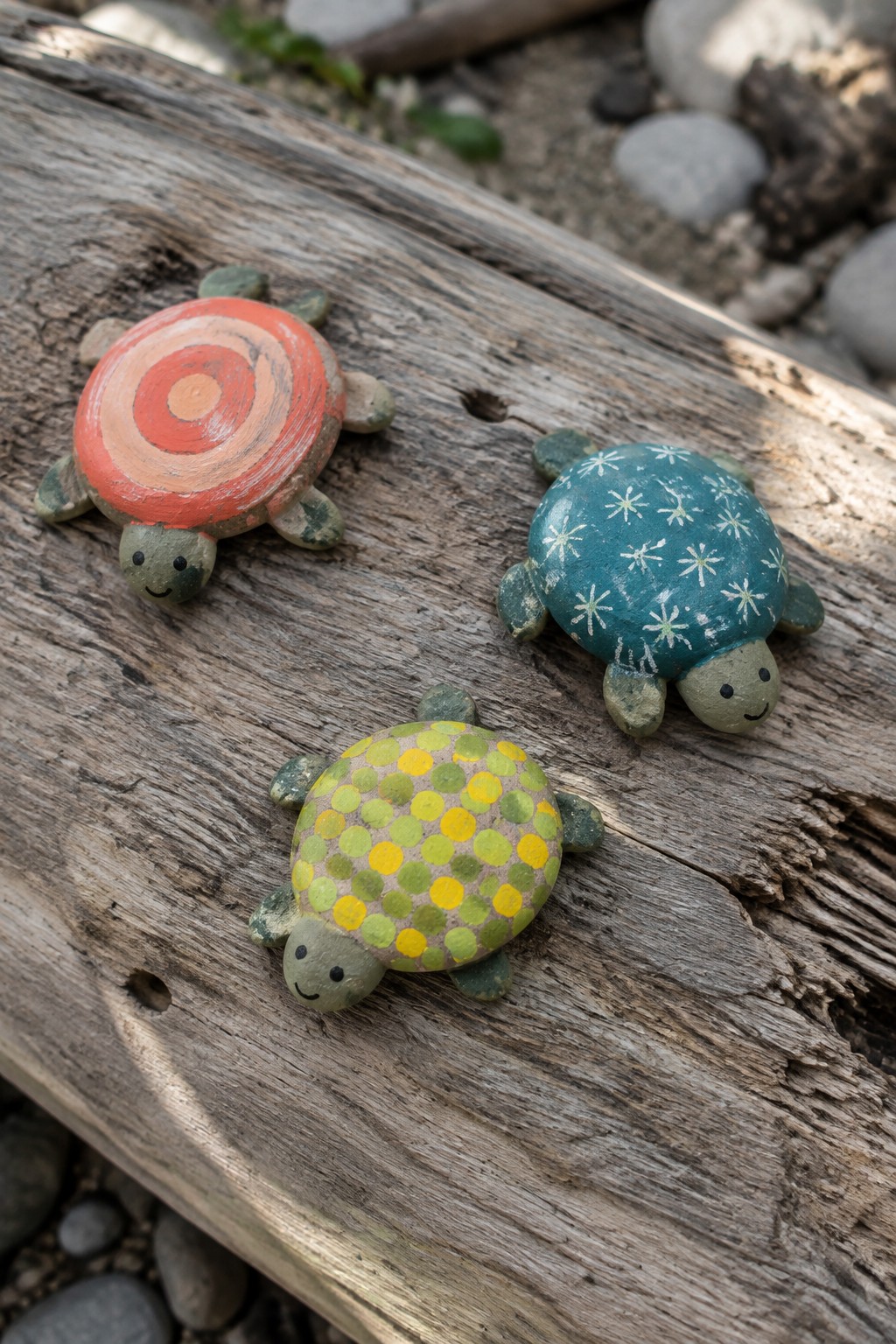
Small rounded stones make effective turtle bases because their domed shape already mimics a shell while the flatter underside allows them to sit steadily. Paint the shell area with simple repeating motifs such as red concentric circles, white starbursts on teal, or yellow and green dots over a gray base, then add a small head and stubby feet in muted green with minimal face details. These patterns stay legible even when the stone curves, and the limited color palettes keep each turtle distinct without complicated layering.
What makes this idea useful is how quickly the same three motifs can be adjusted to fit different stone sizes or color schemes you already have. The finished turtles work well scattered in garden beds, tucked into planters, or grouped on a shelf as a small collection. You can swap the dot colors for seasonal tones or stretch the spiral into loose rings if your brush control varies. Their compact scale also lets you finish several in one session for gifts or to fill a windowsill display.
Turtle Rock with Segmented Shell Pattern
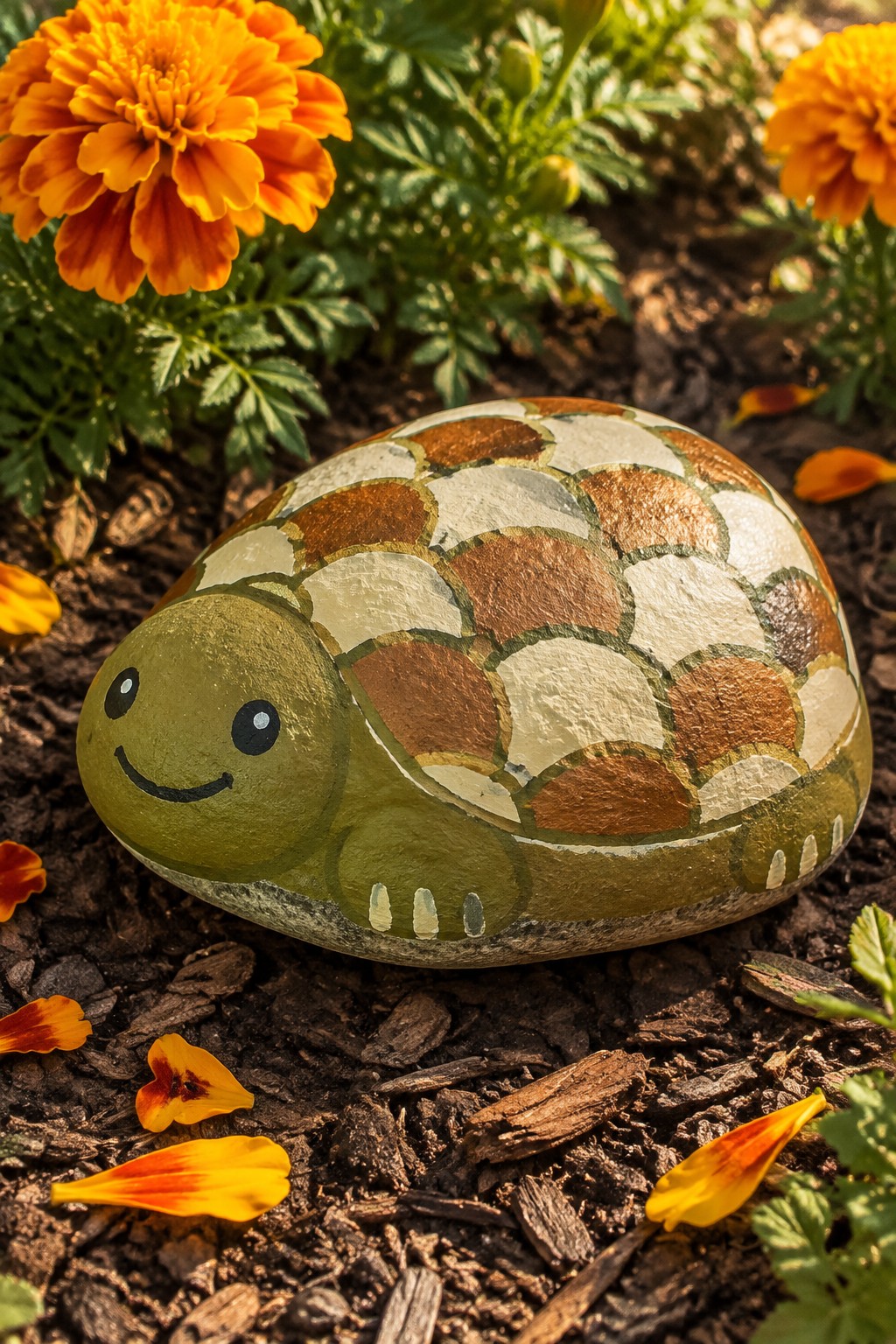
A smooth oval rock serves as the base for this turtle painting project, with green paint covering the head and body sections to match the natural stone curves. The shell area uses a repeating pattern of brown and cream segments outlined in green to suggest scales, while simple black dots and a curved line create the face. This approach relies on the stone’s rounded form to shape the animal without added materials, making it a straightforward animal rock craft for garden use.
The rock shape does a lot of the work here by already suggesting a turtle body before any paint goes on. This painted stone would sit well in a flower bed, planter, or along a garden path where it blends with soil and plants. You could adapt the shell by using just two colors or larger blocks on a flatter rock for faster versions. The same segmented pattern could shift to different shades to match other turtle varieties or even become a different animal shell entirely.
Concentric Spiral Turtle Rock
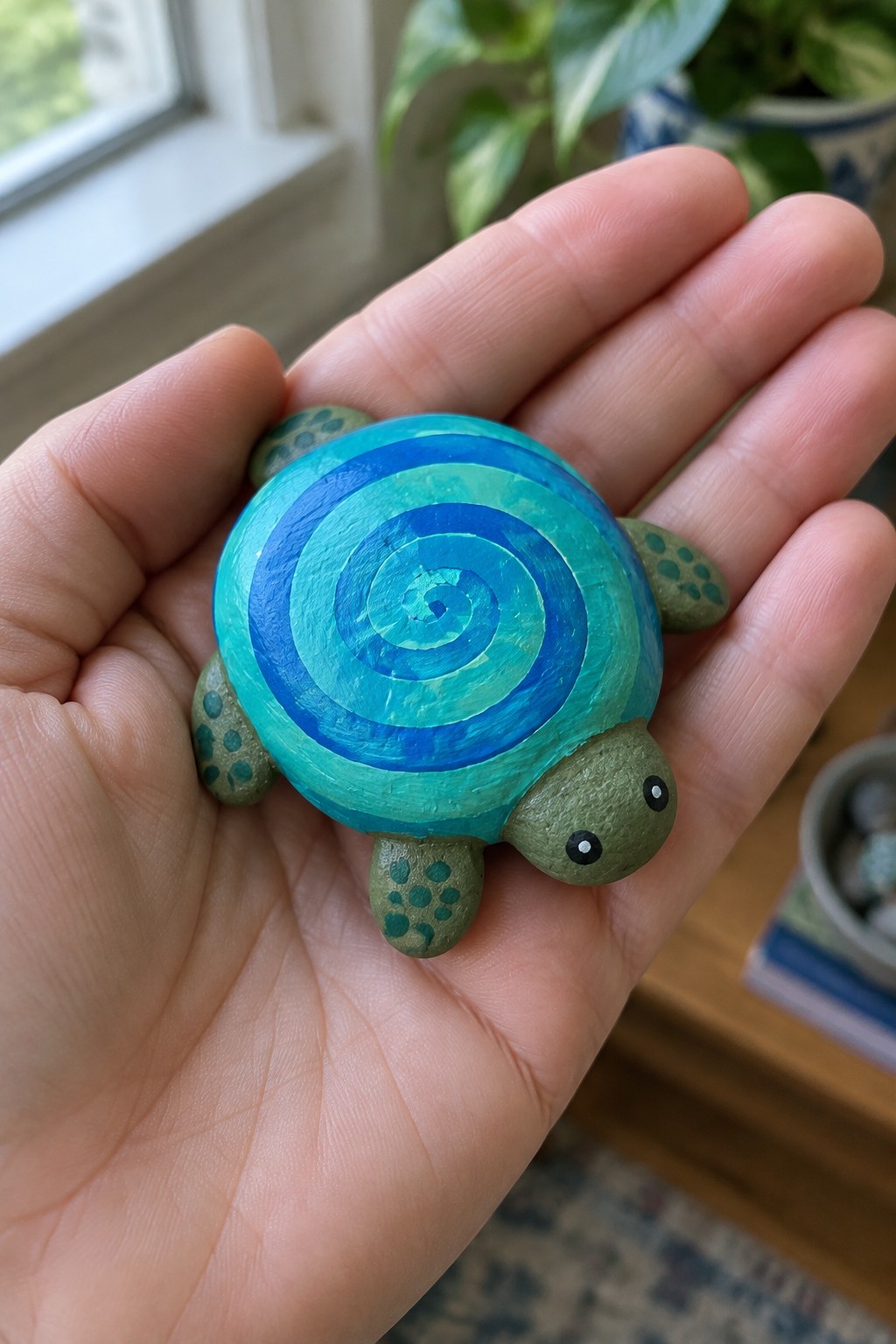
A small rounded stone works well as the base for this turtle rock because its natural curve forms the domed shell without extra shaping. The shell uses simple concentric rings in layered blues over a turquoise ground, while the head, legs, and tail stay in solid green with repeated dot clusters for quick detail. This animal rock idea keeps the pattern to basic color bands and spots so the design reads clearly even on a curved surface.
The rock shape does a lot of the work here since the oval form already suggests a turtle body and lets the spiral stay centered without tricky perspective. For garden decor this type of painted rock can sit in a planter or along a path edge where the blue-green tones pick up surrounding foliage. The same shell approach adapts easily to other sizes by adding or removing rings, and the dot pattern on the limbs can be swapped for stripes if you want to change the look for a larger stone.
Triangle Grid Shell Turtle Rock
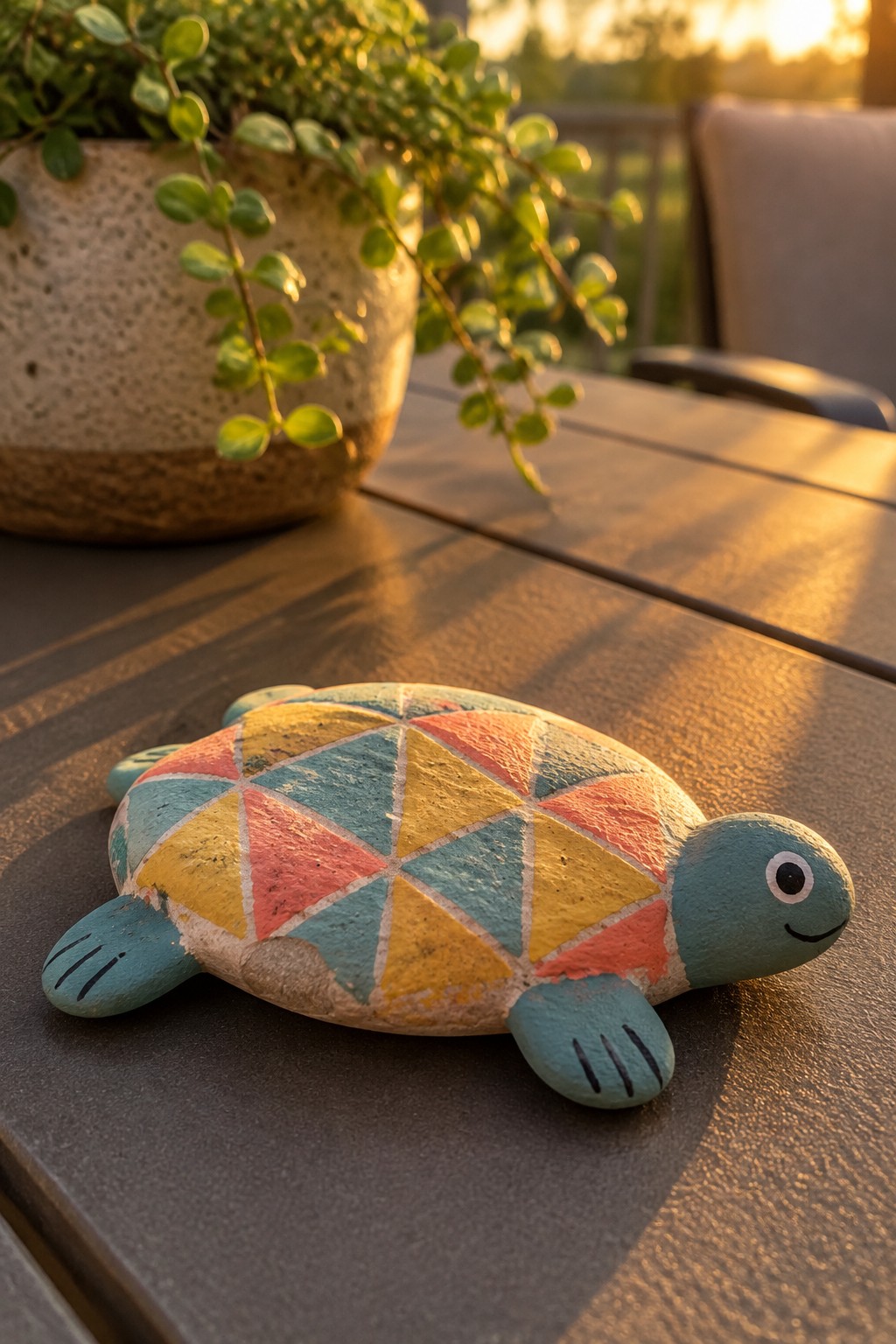
A smooth rounded rock forms the base for this turtle project. The shell uses a grid of triangles filled with blocks of teal, yellow, coral, and orange, separated by white lines for a clean geometric pattern. The head and flippers stay in solid teal with basic black lines for the eye, smile, and claws. This keeps the focus on the shell as a simple color-blocked design that follows the curve of the stone.
The rock shape does a lot of the work here since the oval form already suggests a turtle body. You can adapt the triangle grid by using fewer colors or wider sections on a flatter stone if you want a quicker version. This type of painted rock works especially well in planters or along garden paths because the low profile and bright shell stand out against soil or mulch. For a different look, swap the colors to match your existing outdoor decor while keeping the same layout.
Turtle Rocks With Simple Patterned Shells
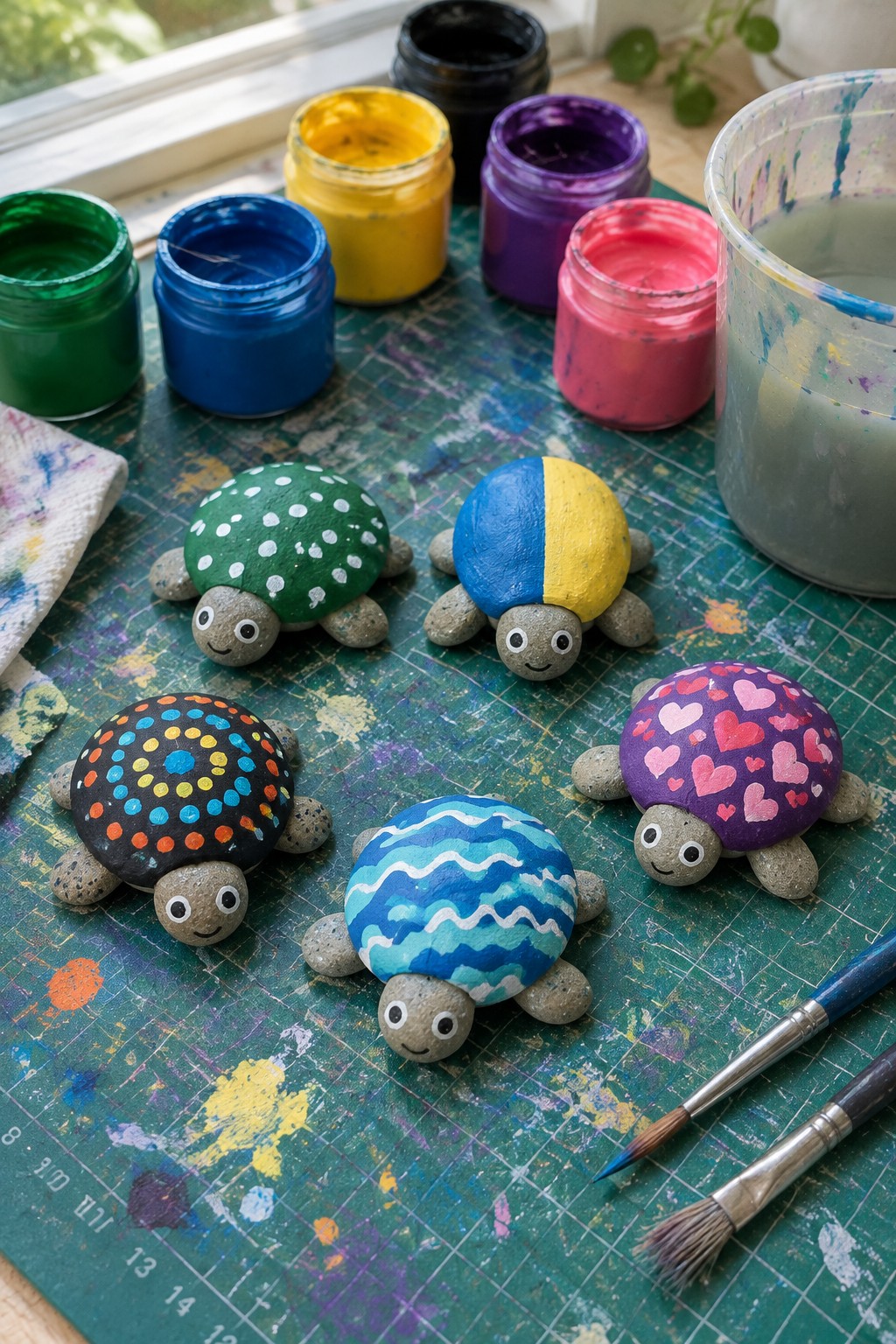
Paint rounded stones as turtles by treating the main rock as the shell and adding smaller stones or painted shapes for the head and legs. The shells use straightforward patterns such as white dots on green, blue and yellow color blocks, multicolored dots on black, wavy blue lines, and pink hearts on purple. These designs rely on basic shapes and color areas that sit cleanly on the curved rock surface.
What makes this idea useful is that the natural round form of the stone already suggests a shell, so the work stays limited to painting simple motifs. You can swap in stripes, stars, or solid colors to create a whole set without changing the base shape. These turtles fit well in planters, along garden paths, or as small indoor accents, and the same patterns scale easily to different stone sizes.
Turtle Rock with a Daisy Shell Pattern
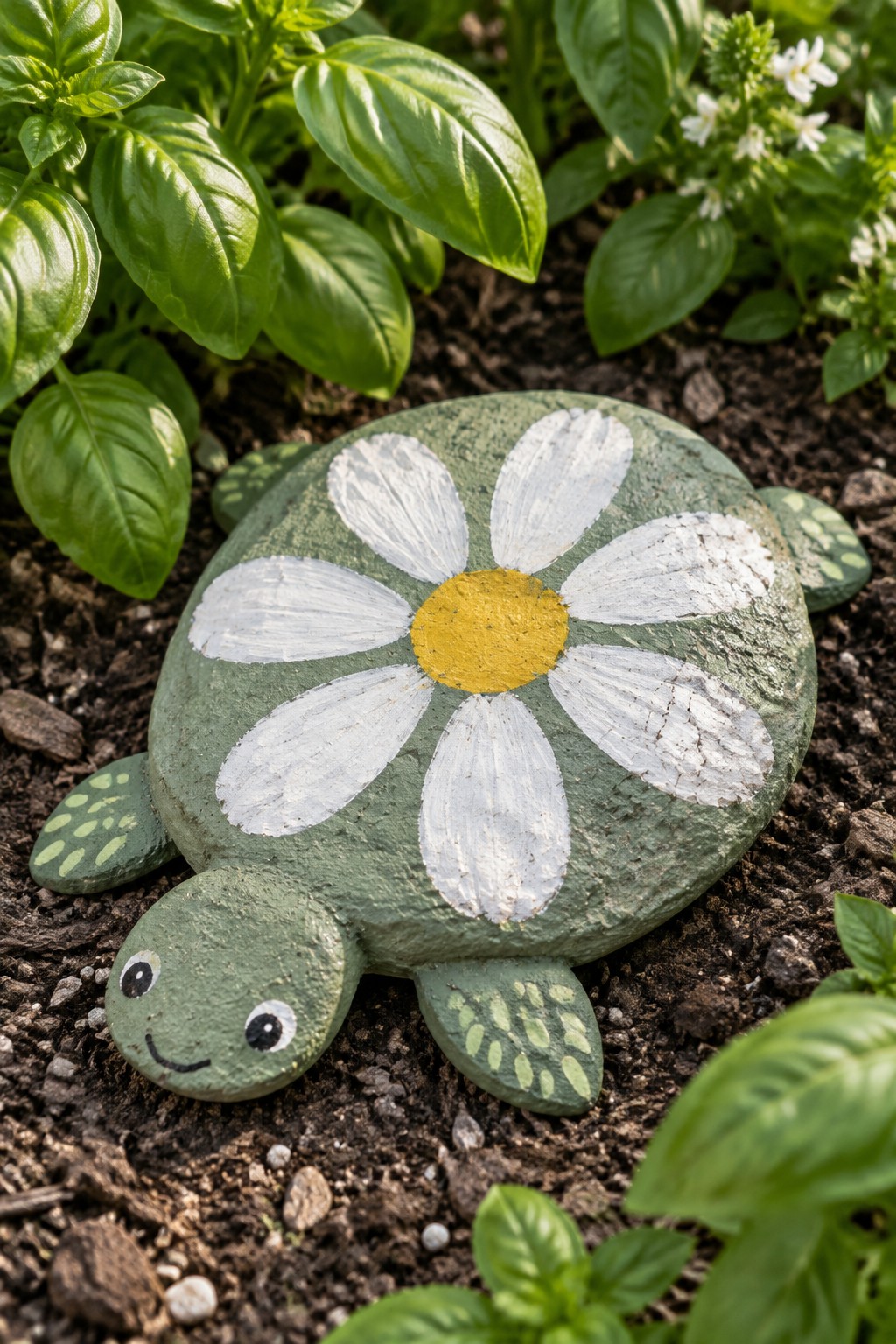
A rounded garden stone gets painted green to create a turtle shape, with the domed surface acting as the shell. A large daisy covers the shell using white petals and a solid yellow center, while the head shows two eyes and a simple mouth line. Light green dots mark the legs and tail area. This approach turns a basic rock into an animal garden accent by using the natural curve for the shell and keeping the flower motif large and centered.
The rock shape does a lot of the work here since the domed form already suggests a turtle shell. You could change the daisy to another simple flower like a sunflower or coneflower and keep the same green base for quick variations. This painted rock works especially well tucked into mulch or placed near herb pots where the green blends with the plants. The small size also makes it easy to repeat the idea on several stones for a matching set along a garden path.
Sunburst Lines on a Teal Turtle Rock
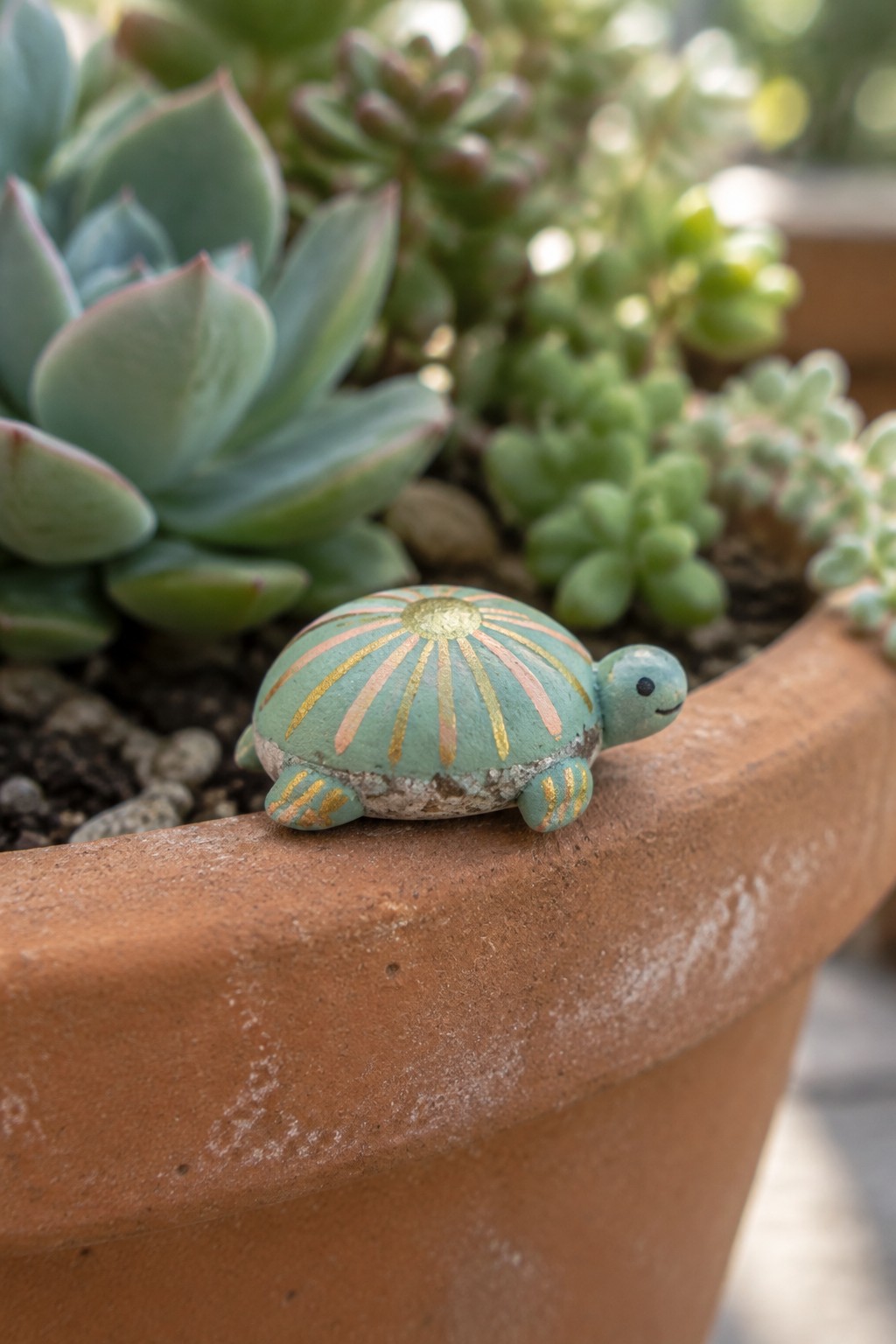
A small rounded stone works well for this turtle idea because its curved top naturally supports a shell shape. Paint the rock in teal, then add straight radiating lines in gold and soft pink from the center of the shell outward to form a simple sunburst pattern. Keep the head, feet, and eye small and minimal so the shell lines stay the main focus. The design fits the category of animal rock with a basic shell motif that suits garden or planter display.
What makes this idea useful is how the straight line pattern stays easy to paint even on an uneven rock surface. You could swap the teal for other colors to match different pots or change the line colors for a new look without redrawing the whole turtle. For garden decor this type of painted rock sits nicely on terracotta edges or in succulent beds where the small size keeps it from getting lost. The same radiating shell approach can be tried on flatter stones for a different proportion or scaled down for a set of smaller pebbles.
Striped Shell with Scattered Dots
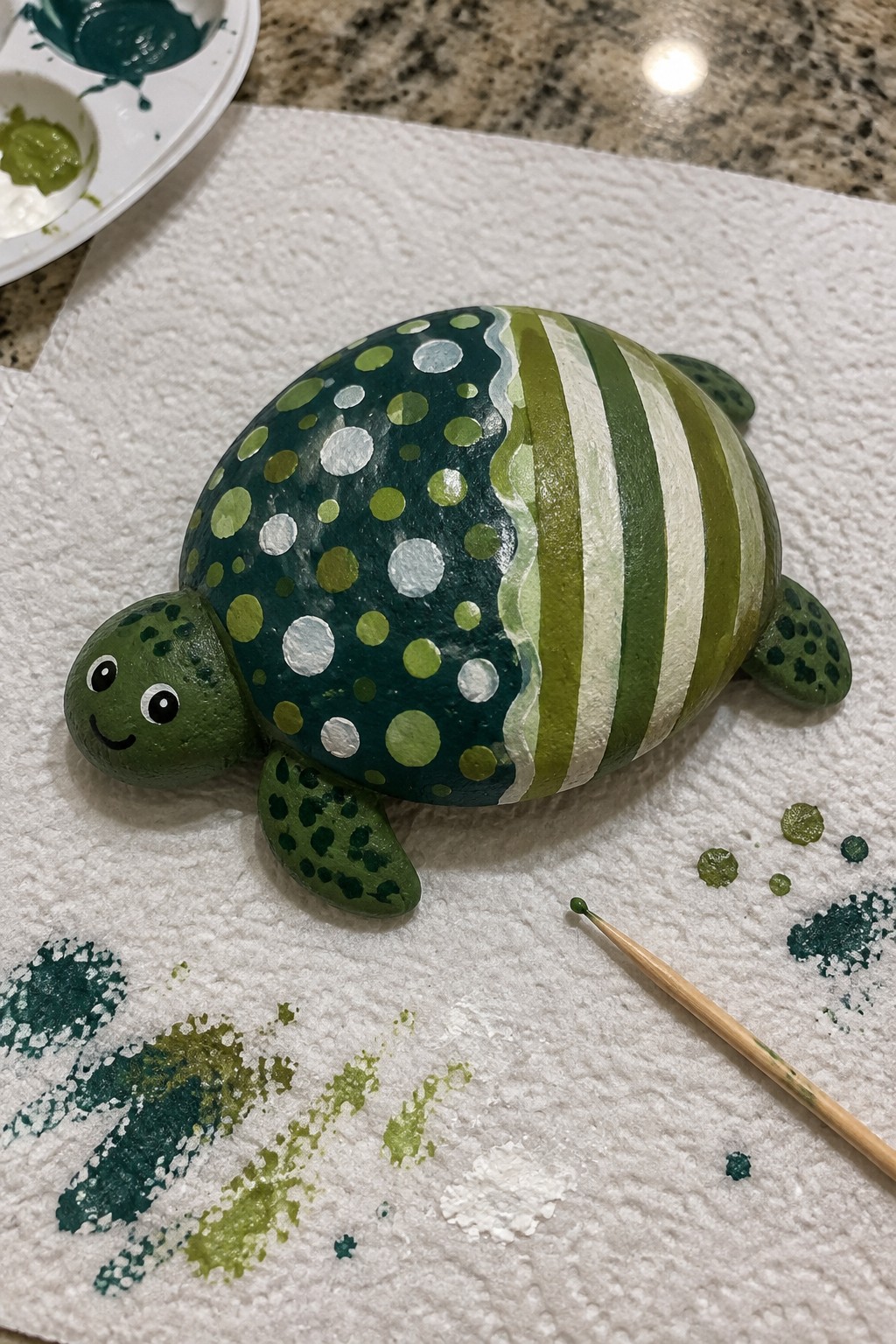
A rounded river rock works well for this turtle design because its natural oval shape already suggests a shell. The painter used a dark green base color, then added vertical stripes in two lighter greens plus white, with a wavy white line separating the sections. Scattered dots in matching greens and white fill the remaining shell space, while the head and flippers stay a solid green with simple black spots and a basic face. This approach keeps the shell pattern clear without needing fine detail work.
What makes this idea useful is how the stripes and dots create contrast that reads well from a distance, which helps when the rock sits in a garden bed or planter. The same layout adapts easily by swapping the green palette for other colors or by using fewer stripes on a smaller stone. For porch or patio displays, the rounded form lets the rock sit stably without tipping. The design also translates quickly to a set of rocks if you want matching pieces for a table arrangement.
Gradient Shell Turtle on a Rounded Stone
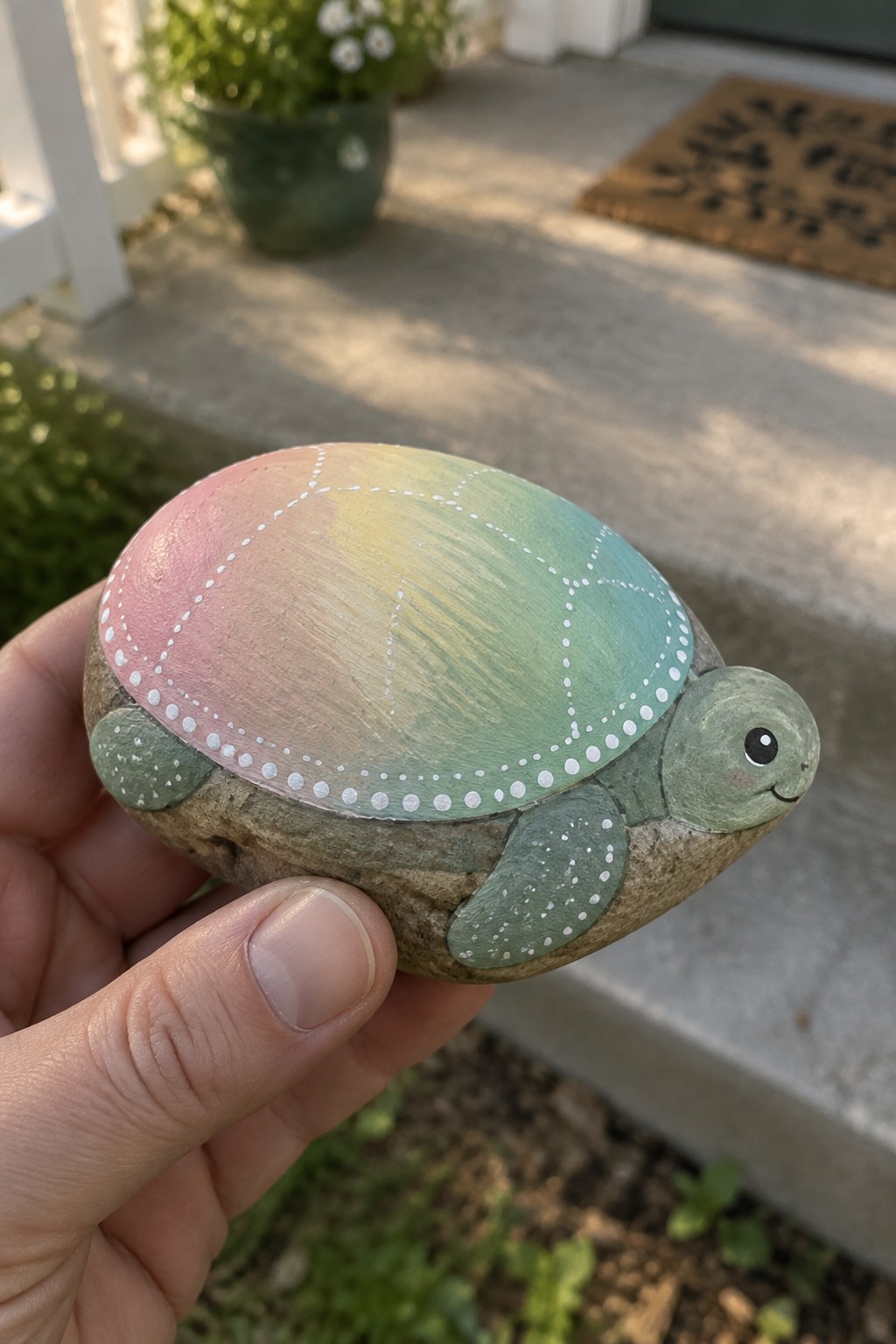
A turtle rock painting project uses an oval, smooth stone that already has the basic body shape. The shell gets a soft color wash from pink to yellow to teal, then simple rows of white dots divide it into sections without any complicated line work. Green paint covers the head and flippers, with more white dots along the edges to finish the look.
This idea works well in a garden bed or on a porch step because the rounded stone sits naturally without tipping. The dotted shell pattern is easy to copy on other oval rocks or change to different color blends if you want more contrast. You could keep the same layout but use brighter shades or skip the gradient for solid color blocks on a flatter stone.
Checkered Shell Turtle Rock
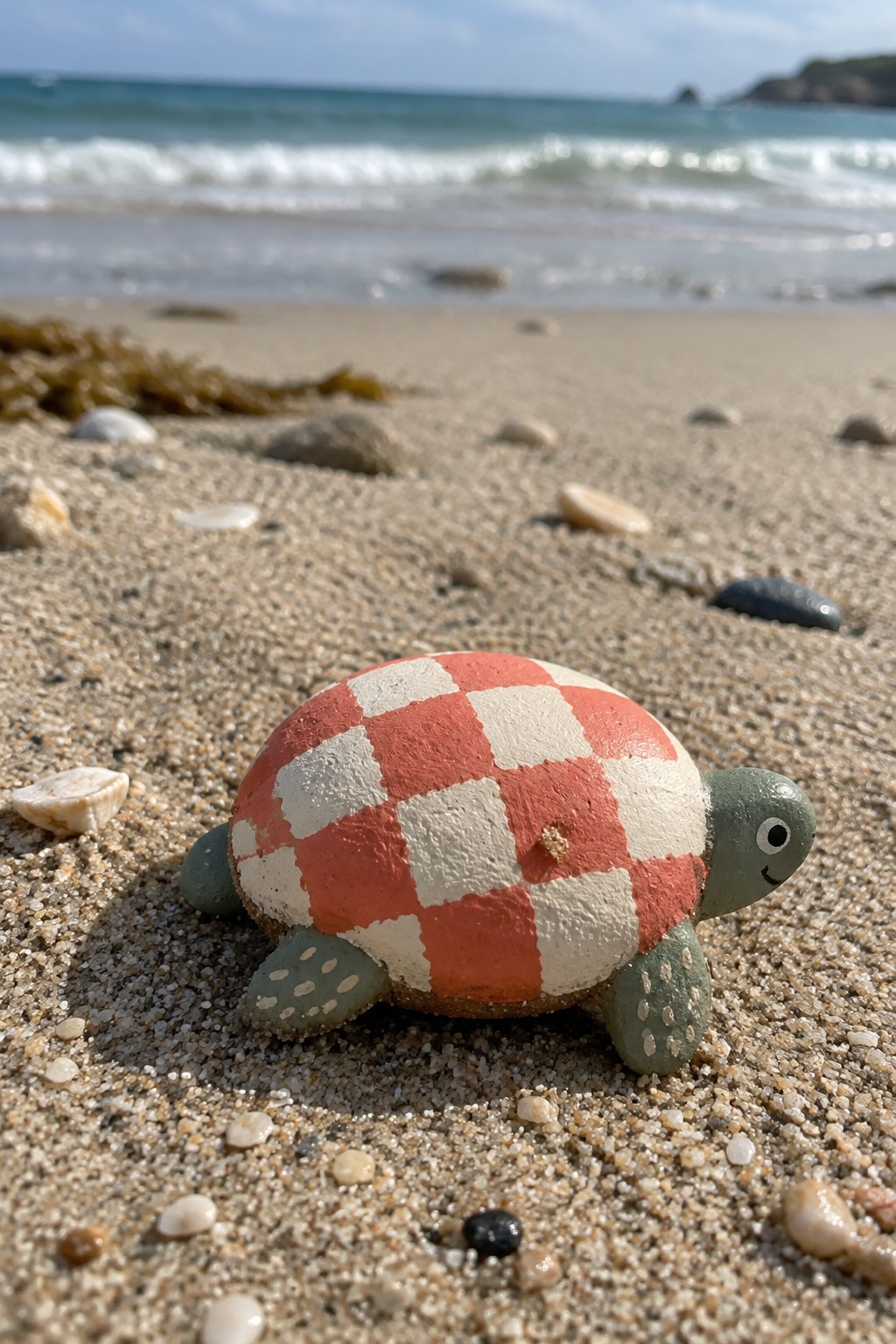
A rounded beach stone forms the base for this turtle rock, with the domed top painted in a simple alternating red and white square pattern to create the shell. The head and legs are painted green, with small white dots added to the feet for basic detail, and a minimal face completes the animal shape. This approach uses color blocking on the shell to keep the design clean while still reading clearly as a turtle.
The checkered shell pattern works well because the squares follow the curved surface without needing fine lines or shading. You could easily change the red squares to blue or green to match different planters or garden beds, or scale the same layout down onto smaller pebbles for a group display. This style stands out in a turtle rock collection because the high-contrast blocks stay visible even from a short distance.
Turtle Rock With Leaf Vein Shell Pattern
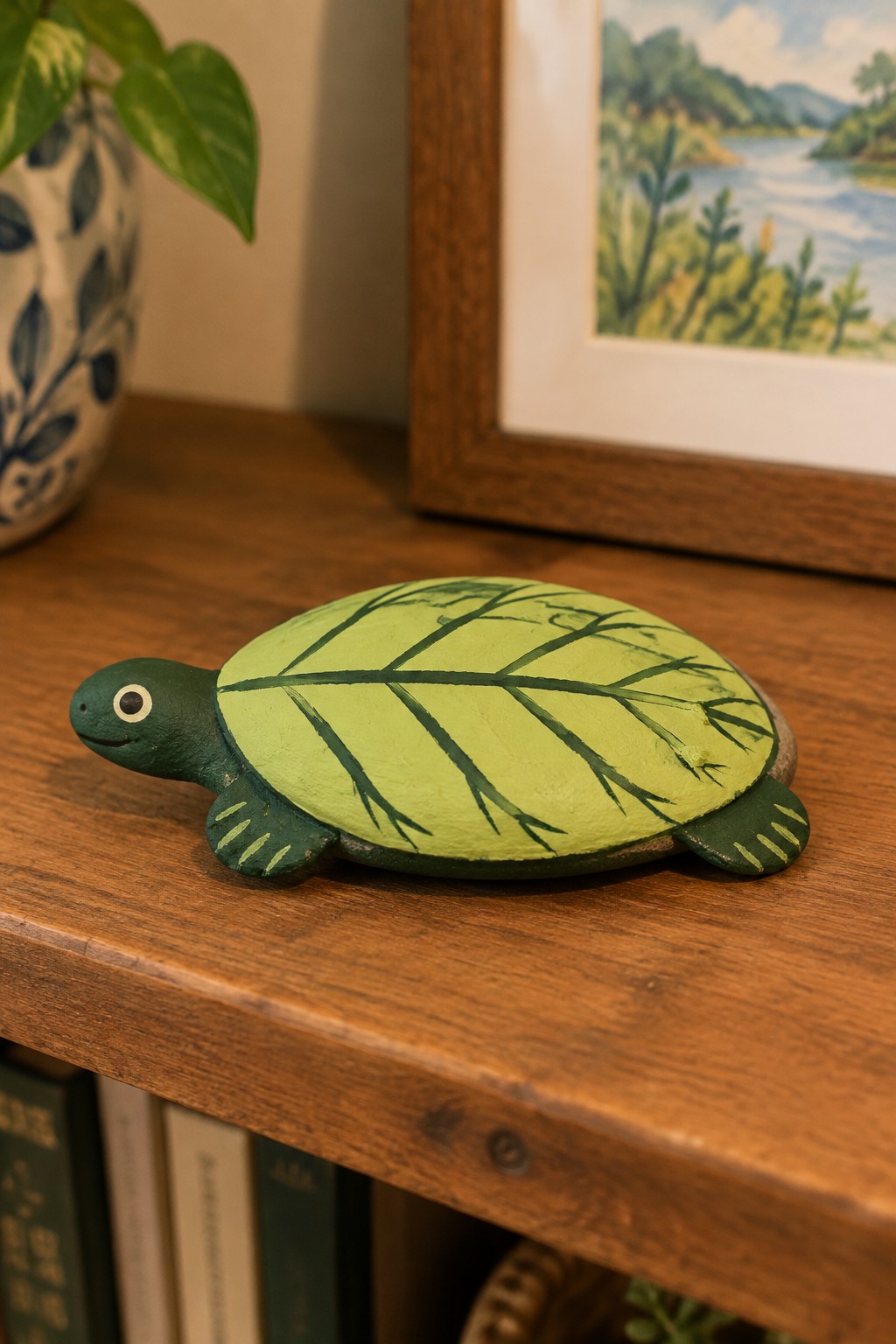
A turtle rock uses an oval stone where the top surface becomes the shell and the front curve forms the head. Paint the head and legs in dark green, then cover the shell area in a lighter green and add branching dark lines that look like leaf veins. The small white circle with a black dot for an eye keeps the face simple while still readable from a short distance. This approach fits the animal rock category and relies on the stone’s natural shape to carry the turtle form.
The rock shape does a lot of the work here since the oval curve already suggests a shell without extra carving. A painted rock like this works especially well as garden path accents or tucked into planter edges where the green tones match real foliage. You can reuse the same leaf vein idea on a rounder stone or change the shell color to brown or gray while keeping the dark line pattern. The small scale makes it simple to paint a few at once for a shelf display or to give away as small garden gifts.
Rainbow Striped Shell Turtle
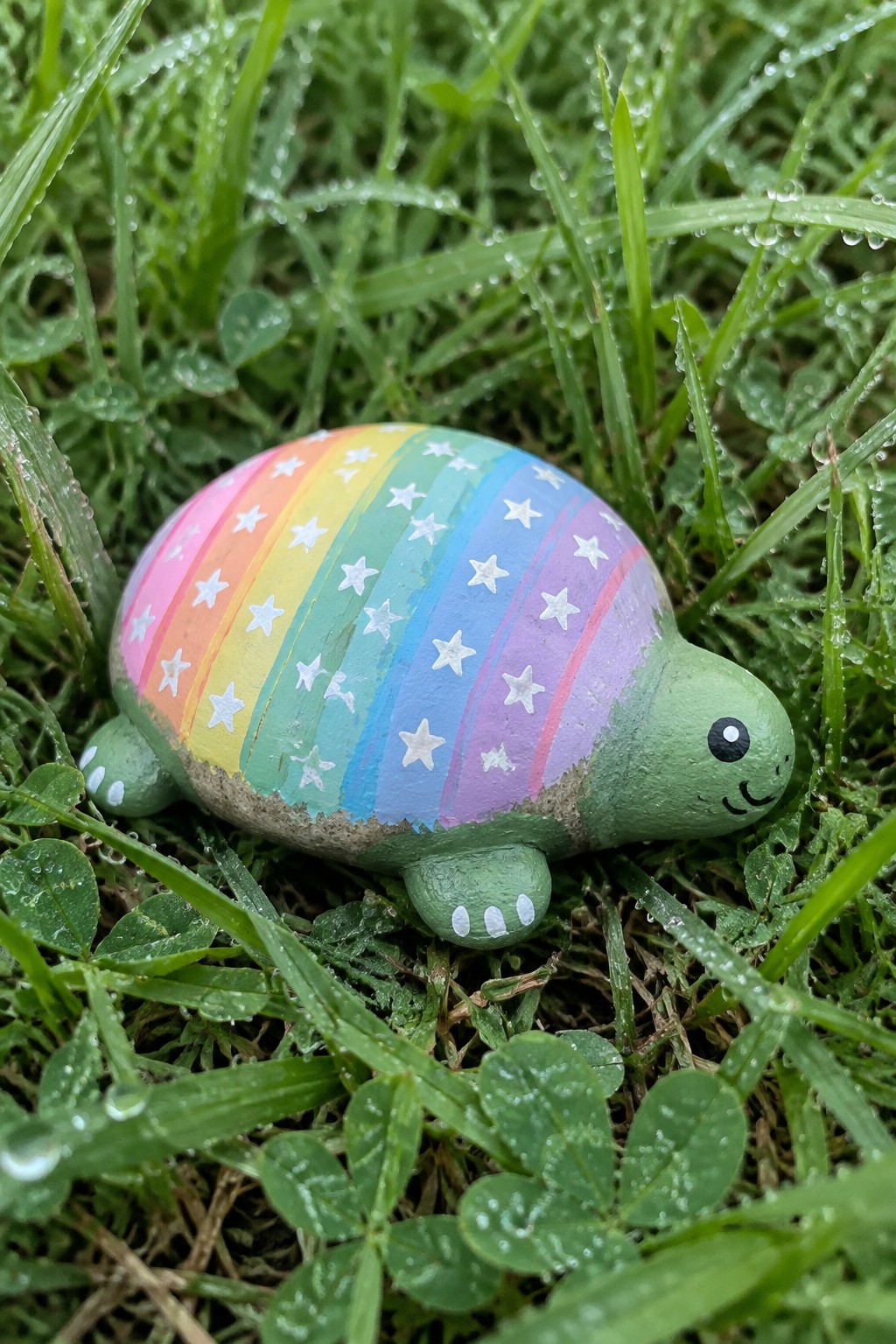
A small rounded rock serves as the base for this turtle where the domed surface becomes the shell. Horizontal rainbow stripes run across the shell with white stars placed at regular intervals, while the head and legs are painted solid green with basic black details for the face and white dots on the feet. This creates a clear animal rock that uses the stone’s natural shape and simple color bands rather than complex detailing.
What makes this idea useful is how the curved rock already suggests a turtle body so the design stays focused on the shell pattern. The striped layout with stars could be swapped for other simple repeating motifs or limited to three colors for faster painting. A painted rock like this works especially well tucked into planters or along garden paths where the bright bands catch attention from a short distance. The compact size also makes it straightforward to paint several matching versions for a small collection.
Patchwork Shell Turtle Rock
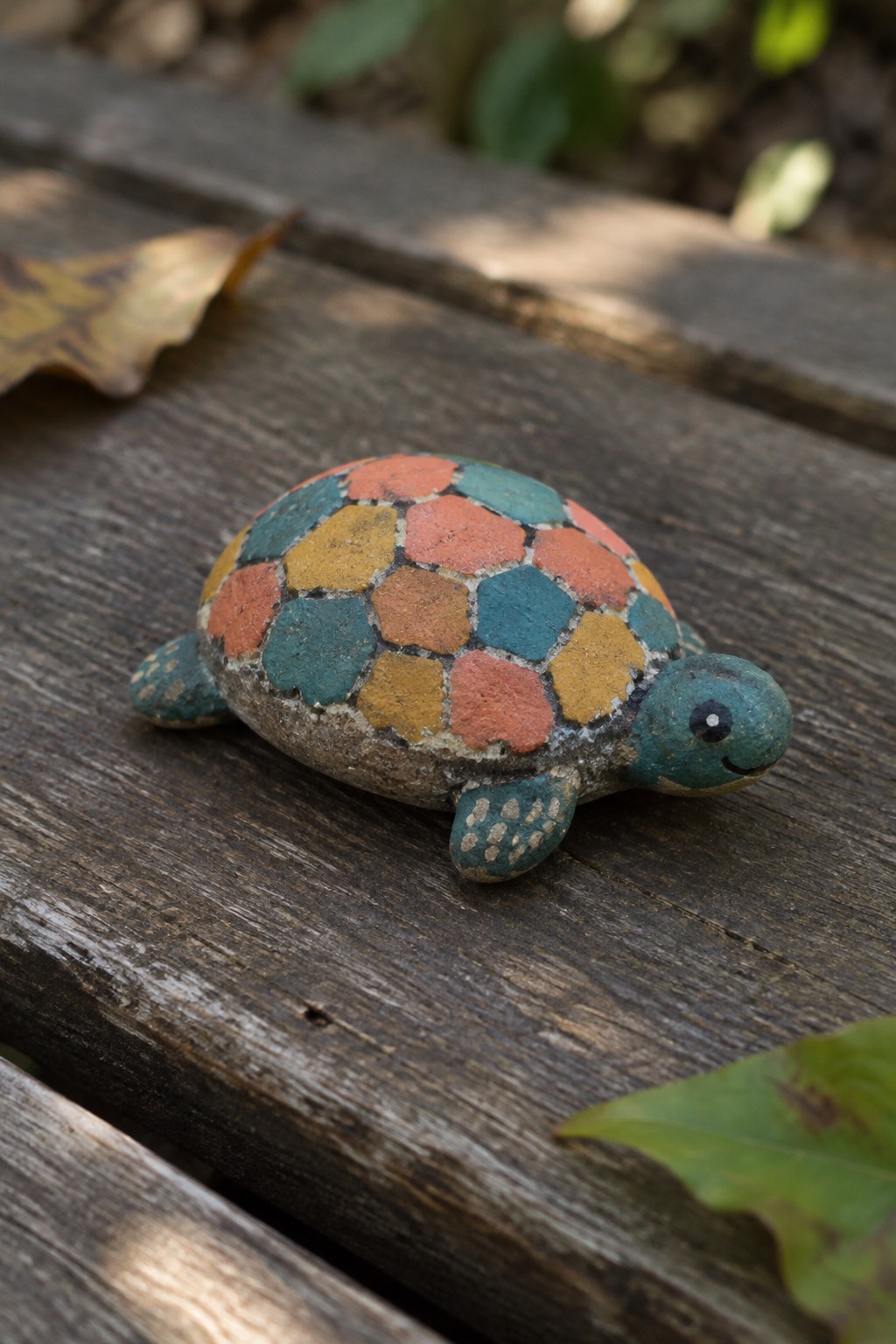
A smooth rounded stone works well as the base for this turtle rock painting project. The top surface gets divided into irregular polygons that are filled with blocks of coral, teal, and mustard yellow to form the shell. Black lines separate the color sections and follow the curve of the rock so the pattern stays readable from different angles. This fits the animal rock category and relies on simple color blocking rather than fine detail.
What makes this idea useful is how the small scale lets you tuck the finished piece into a planter, along a garden path, or on a windowsill without taking up much space. You can repeat the same shape layout with different color combinations to build a whole set or simplify it to three colors if you want a faster project. The natural curve of the stone helps the head and feet sit at the right angle without extra shaping. This kind of bold block pattern shows up clearly in photos, which makes it easy to adapt for your own collection.
Turtle Rocks With Simple Shell Patterns
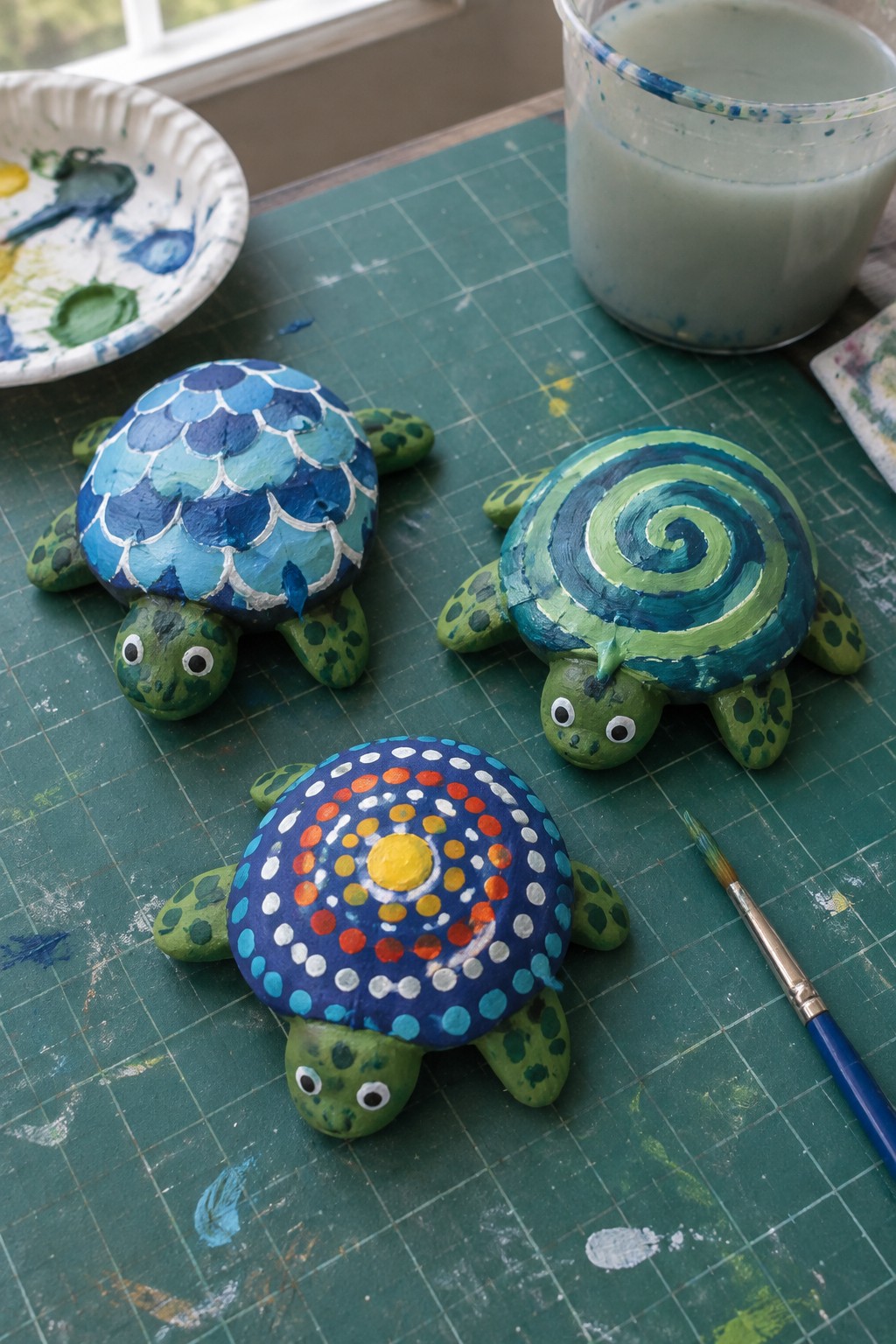
Choose rounded stones and paint them as turtles by coating the body and legs in green with darker spots, then adding a domed shell area on top. The three examples use basic repeating motifs that follow the rock curve: overlapping blue half-circles for a scaled effect, a loose green and blue spiral, and concentric rings of orange, red, and blue dots around a yellow center. These patterns stay clear and readable because they rely on color contrast and simple shapes rather than fine detail.
What makes this idea useful is how the shell can be reworked with any repeating mark such as stripes, zigzags, or solid blocks while keeping the same turtle body layout. A painted rock like this works especially well as garden accents in flower beds or along paths where the colors stand out against soil and plants. The small scale makes this easy to adapt for different stone sizes by shrinking the pattern or using fewer colors.
Turtle Rock With Heart-Patterned Shell
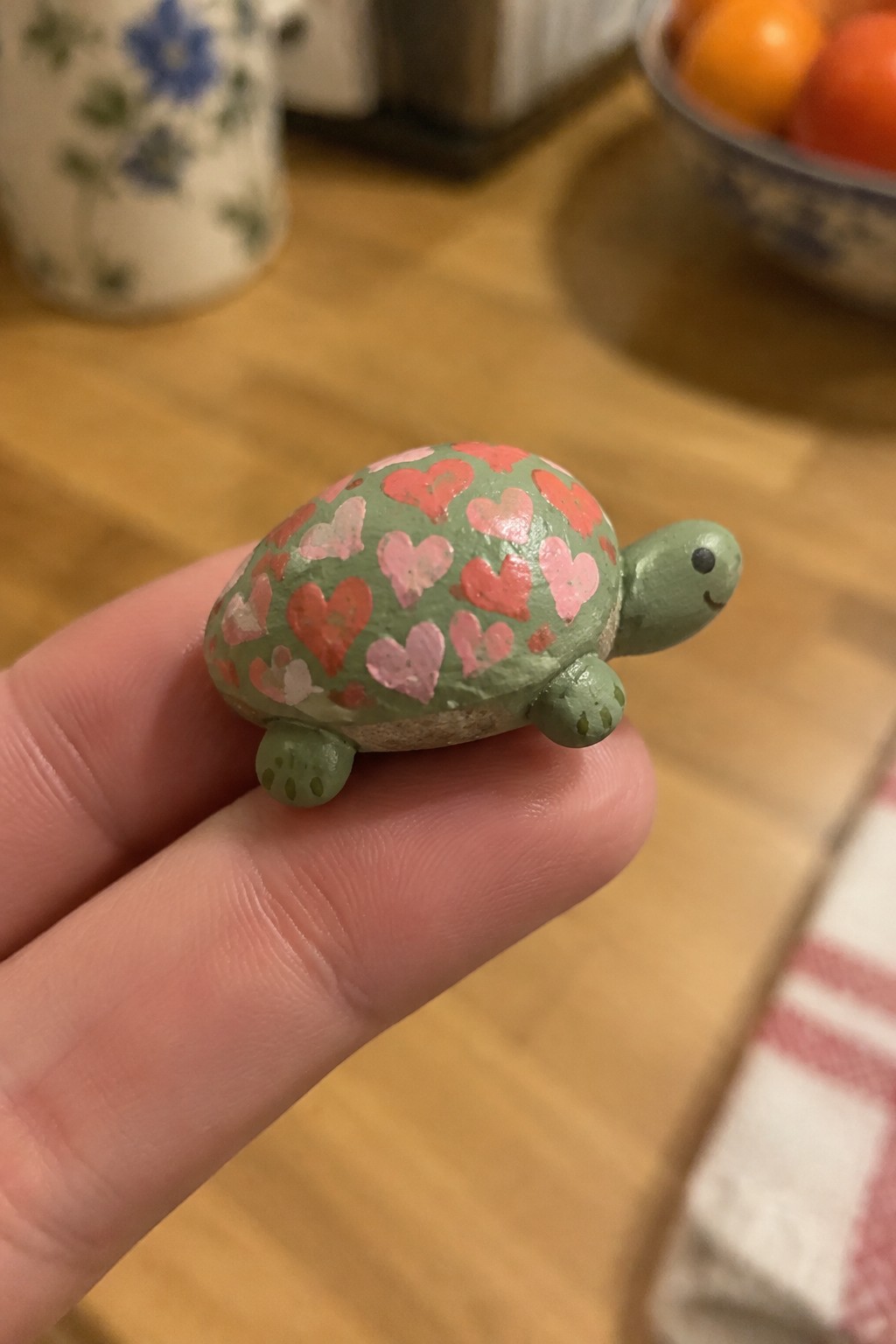
A small rounded stone works as the base for this turtle by keeping its natural dome shape for the shell. The shell is painted green and covered with scattered red and pink hearts of varying sizes, while the head and legs stay in the same green with simple black details for the eye and mouth. Small dots on the feet add a bit of texture without extra steps. This fits the animal rock category where the painted design follows the stone’s existing form rather than fighting it.
The rock shape does a lot of the work here since the curve already suggests a turtle shell and needs only the pattern on top. A painted rock like this works especially well as a small gift or shelf accent because the hearts can be changed to stars, dots, or stripes for different looks. The small scale makes this easy to adapt onto other smooth stones you find, and the same idea would stand out in a collection of turtle rocks on Pinterest when the shell pattern stays simple and bold.
Sun Ray Shell Turtle Rock
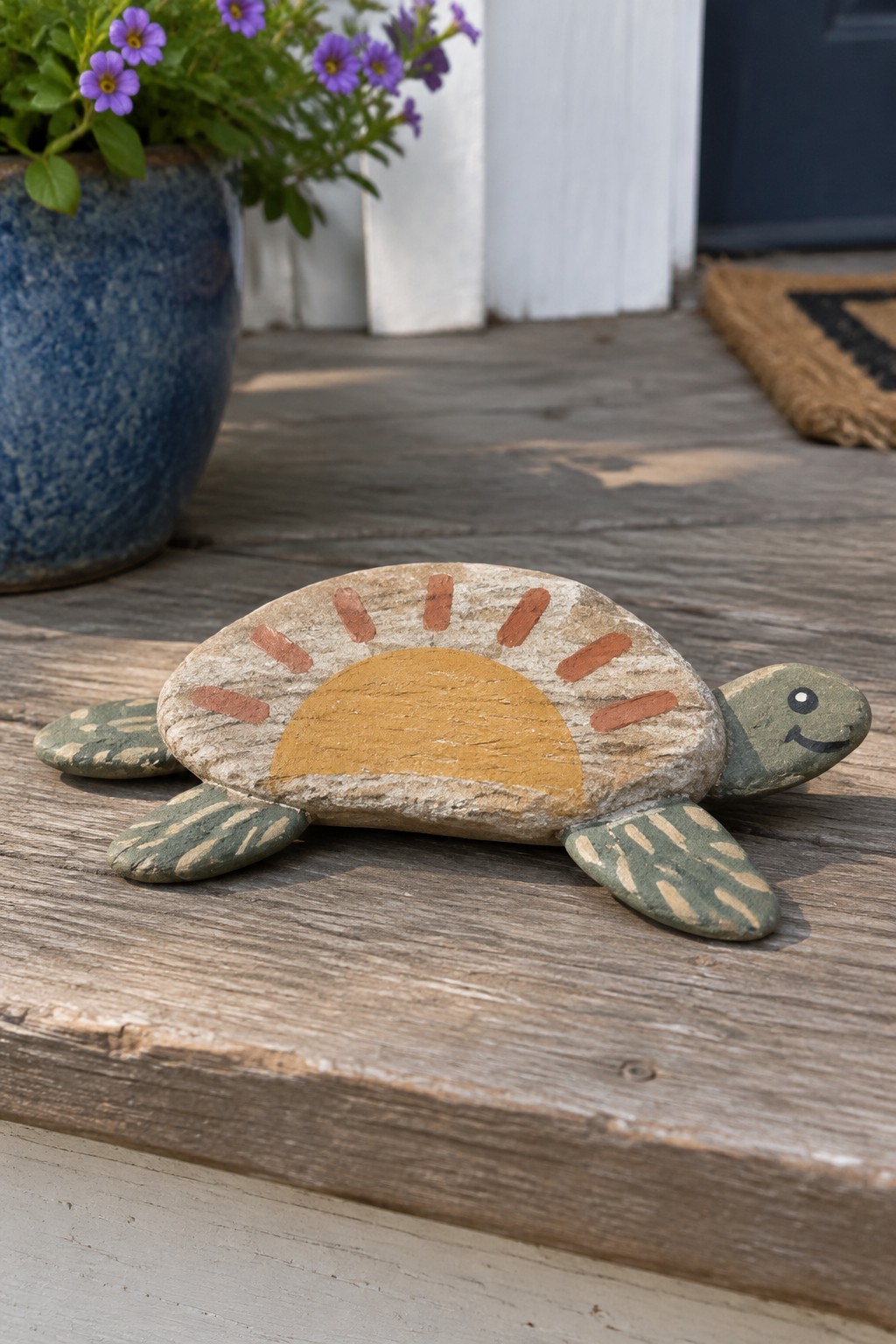
A flat oval stone serves as the turtle body while smaller attached rocks form the head and flippers. The shell features a solid yellow half-circle at the center with short orange lines painted outward in a simple radiating pattern. The head and flippers are painted green with basic stripe details and a small face, keeping the whole design to a few colors and loose brushwork that follows the rock’s natural shape.
The rock shape does most of the work here since the oval form already suggests a turtle shell. What makes this idea useful is how the sun ray pattern stays simple yet gives the shell clear visual structure that works on many different stone sizes. For garden decor this type of painted rock sits nicely in planters or along porch steps, and the same radiating lines could easily shift to stripes, dots, or a moon shape on another rock. The small scale also makes it quick to paint and easy to repeat as a set.
Turtle Rocks With Grid and Circle Shell Designs
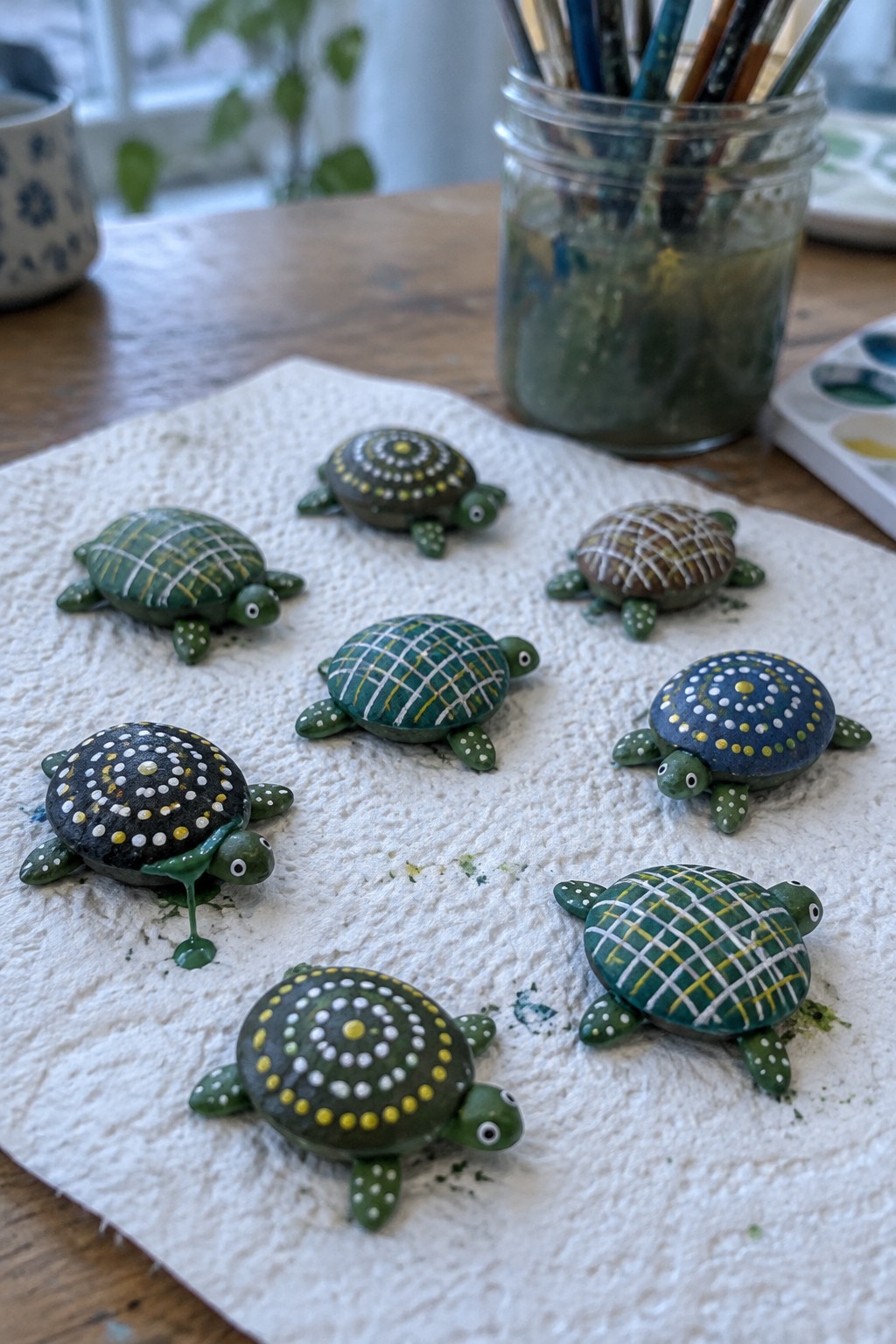
Small rounded stones form the base for these turtle rocks, with the natural curve of each stone used to shape the body and shell. Simple patterns cover the shells, including crosshatch grids in green and white, concentric circles with dots, and basic color blocks in blue or dark green. Legs, heads, and spots are added in matching greens with white or yellow accents to complete the turtle shape. This style works as an animal rock project that builds a painted rock collection through repeated simple motifs.
What makes this idea useful is how the rounded stone shape does most of the work once the shell pattern and limbs are painted on. The small scale makes these easy to line up along a garden path, place in a planter, or group on a shelf without taking much space. You could swap the grid for stripes or change the dot colors while keeping the same turtle outline and color palette. A set like this stands out on Pinterest because the consistent animal shape paired with varied but basic shell patterns feels like a complete, repeatable collection.
Flower Patterns on a Green Turtle Rock
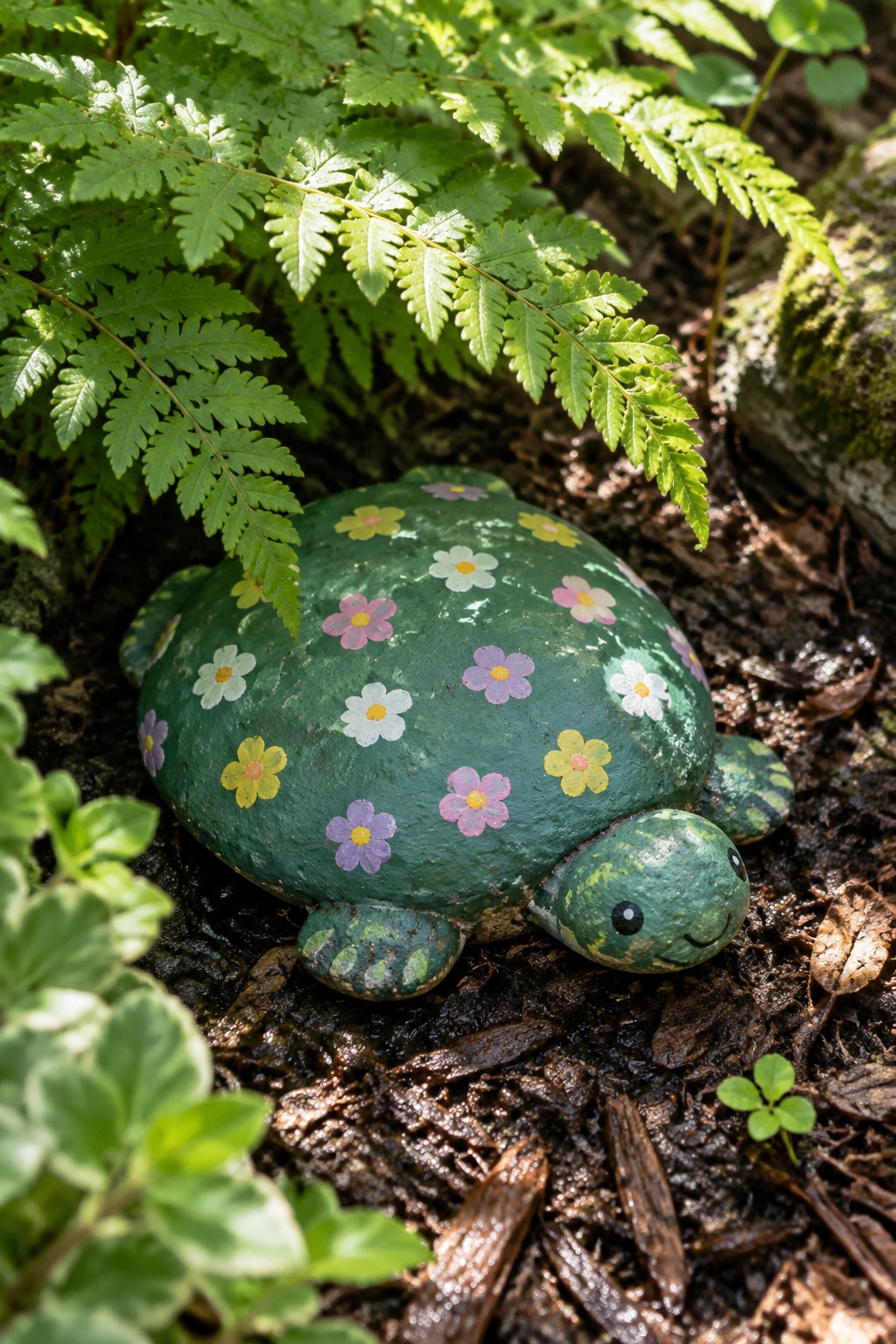
A rounded garden stone gets painted green to create a simple turtle shape with a domed shell and small head. The shell surface holds scattered flower shapes in yellow, pink, white, and purple, each with a basic center dot. This keeps the design focused on the natural curve of the rock while turning it into a clear animal form for outdoor use.
What makes this idea useful is how the flower pattern can be swapped for different colors or simplified to just dots and basic petals on the same stone shape. The rounded form already suggests a turtle shell so the painting stays straightforward without extra outlining. For garden decor this type of painted rock sits well in mulch beds or near ferns where the green blends with plants yet the flowers add a visible accent. The same layout works on smaller stones by reducing the number of flowers to fit the surface.
Sun Ray Turtle Rock
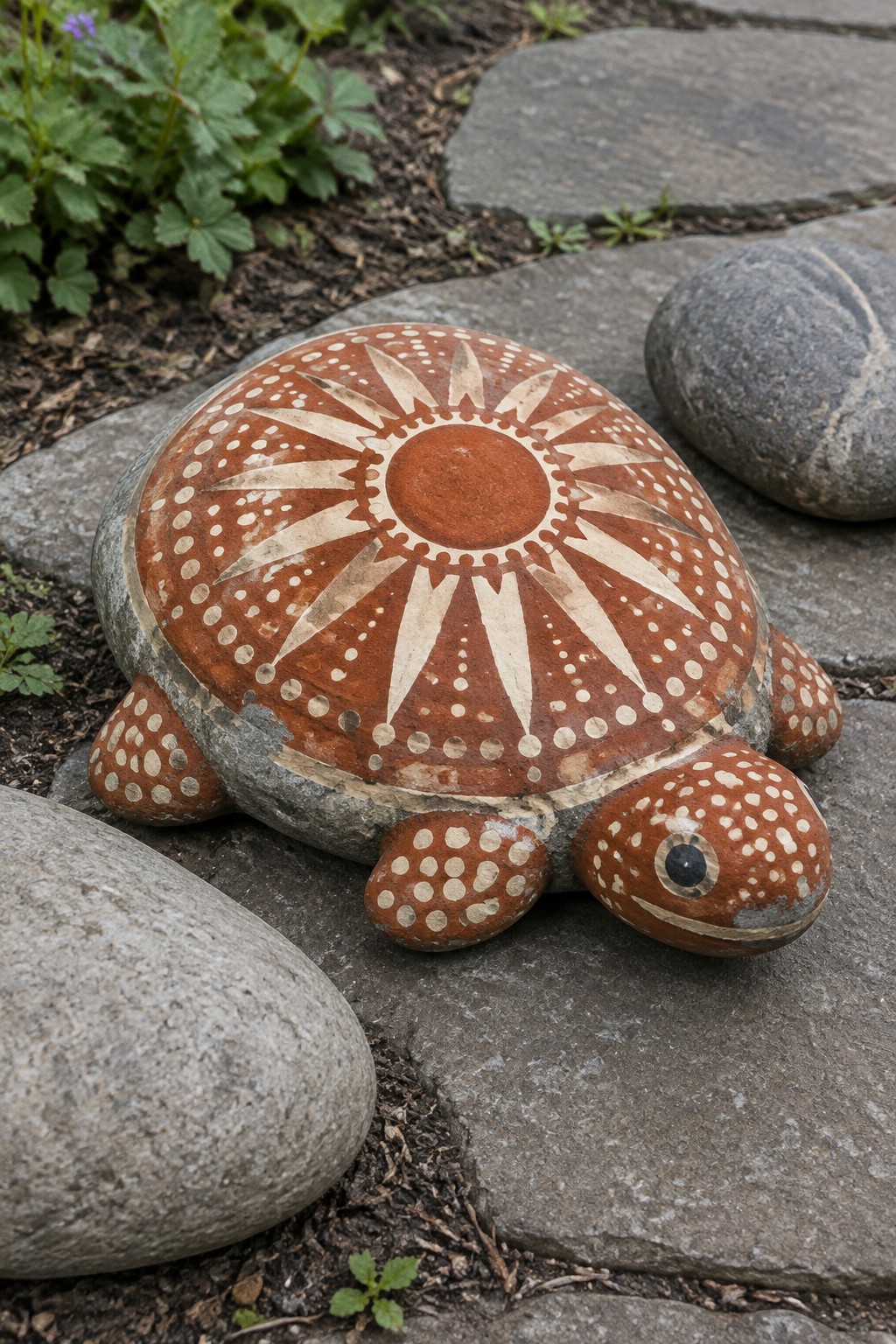
A turtle rock painting project starts with a rounded garden stone shaped into a simple turtle by adding a head and four legs. The shell gets painted in a warm terracotta base color, then a sun motif is added using straight radiating lines and rings of small dots in cream. The head and legs repeat the dotted pattern, so the finished piece reads clearly as a turtle even from a short distance.
What makes this idea useful is how the natural curve of the stone already suggests a domed shell, so the painter only needs to add the sun lines and dots. The same sun layout could be changed to simple spirals or concentric rings for other turtle rocks in the same collection. For garden decor, this type of painted rock sits well on paths or between pavers where the terracotta color contrasts with gray stone. The small scale also makes it easy to repeat the design on several rocks of different sizes.
Frequently Asked Questions
1. What supplies do I need to start painting turtle rocks with simple shell patterns? Acrylic paints in colors like green, brown, and black work well for the base and details. Gather smooth oval rocks, various paintbrush sizes, a palette for mixing, and a clear outdoor sealant. Cotton swabs can help with tiny dots or lines if you want even simpler application.
2. How do I create basic shell patterns on the rocks? Paint the whole rock in a solid base color first and let it dry. Then add simple shapes such as triangles, straight lines, or small circles using a fine brush to divide the shell area. These basic marks suggest the segmented look of a turtle shell without needing complex drawing skills.
3. Which rocks work best for these turtle designs? Choose flat, smooth stones that are three to six inches long and naturally oval. River rocks or stones from craft stores often have the right shape and surface to hold paint evenly and resemble a turtle shell when viewed from above.
4. How do I protect the finished painted turtle rocks for outdoor use? Let all paint dry completely, then spray on two or three thin coats of clear acrylic sealant made for outdoor projects. Allow each coat to dry before adding the next. This creates a barrier against rain, sun, and general wear so the designs last longer outside.
5. Can I involve kids in making these painted turtle rocks? Yes, this project suits older children with supervision. Let them handle the base coat and simple pattern steps while an adult manages the sealant. Provide smocks and work on a covered surface to keep the activity tidy and enjoyable for everyone.
